Dashati 1
Agni’s manifold presence invoked to establish and empower the sacrifice
Agni
Invocatory and energizing—urgent ‘come-hither’ movement with ritual brightness
R̥ṣi attribution is not provided in the input; these verses are RV-derived in many recensions but dashati-level r̥ṣi identification should be taken from the Anukramaṇī of the relevant Sāmaveda śākhā.
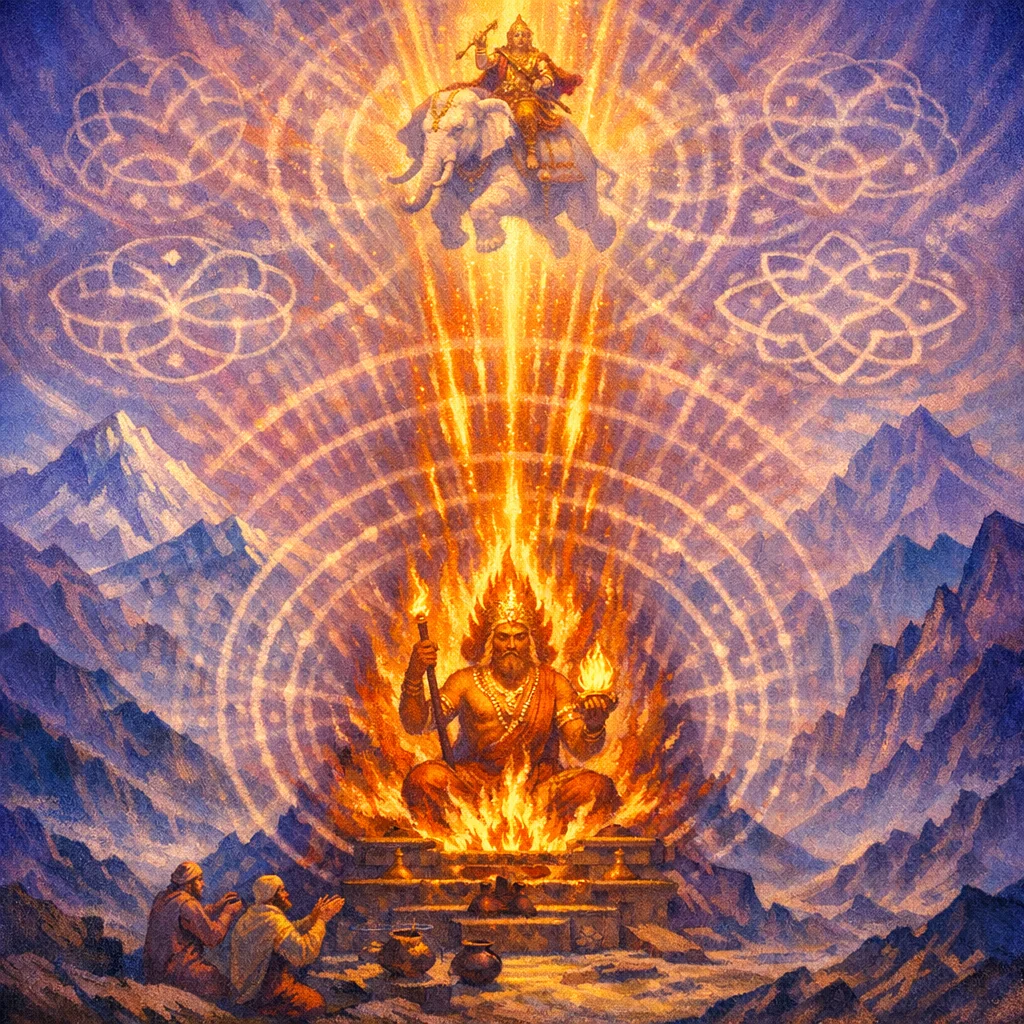
Invoca-se a presença multiforme de Agni para estabelecer e fortalecer o sacrifício: ele é o fogo antiquíssimo e sempre renovado, aceso pelo louvor e pela oblação; os três fogos rituais (gārhapatya, āhavanīya, dakṣiṇa) são um único Agni divino. Em complemento, chama-se a força aliada de Indra, cuja vinda é impulsionada pelo canto do hino. A fala sagrada (vacas, brahman) e a ação ritual correta «trazem» a divindade: Agni torna-se presente como portador da oferta e poder sacerdotal, crescendo por meio da stotra e da āhuti.
Mantras
Mantra 1
विश्वेभिरग्ने अग्निभिरिमं यज्ञमिदं वचः चनो घाः सहसा यहो
Com todos os teus fogos, Agni, vem a este sacrifício e a este nosso hino; vem a nós com força, ó vigoroso.
Mantra 2
ऊर्ज्जो नपातमा हुवे ऽग्निं पावकशोचिषम् अस्मिन्यज्ञे स्वध्वरे
Ūrjo napātam — Agni — eu invoco, Agni de fulgor purificador; que ele esteja presente neste sacrifício, neste rito bem ordenado (svadhvara).
Mantra 3
स नो मित्रमहस्त्वमग्ने शुक्रेण शोचिषा देवैरा सत्सि बर्हिषि
Ó Agni, amigo benfazejo, sê para nós um bem: com tua chama luminosa, vem com os deuses e assenta-te sobre o barhis, a relva sagrada.
Frequently Asked Questions
It repeatedly calls Agni to the sacrifice in all his forms and explains, by implication, that praise and offering make him present and powerful within the rite.
Indra is invited as a supportive, praise-delighting deity—his arrival is ‘carried’ by the hymn, complementing Agni who carries the oblations.
It points to Agni’s manifold manifestations used in sacrifice—especially the household and altar fires—understood as one divine Agni functioning in different stations.