
Shloka 13
Karma Yoga — Karma Yoga
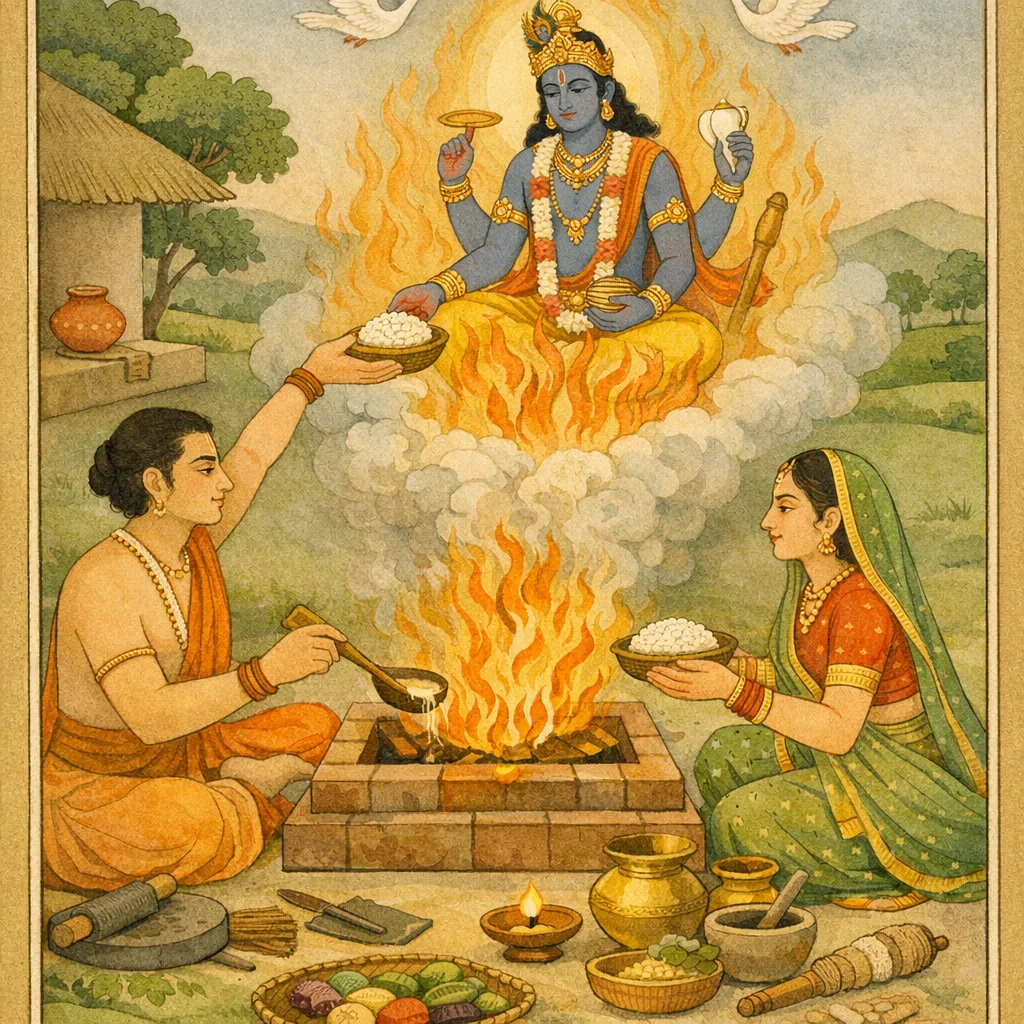
यज्ञशिष्टाशिनः सन्तो मुच्यन्ते सर्वकिल्बिषैः । भुञ्जते ते त्वघं पापा ये पचन्त्यात्मकारणात् ॥ ३.१३ ॥
yajña-śiṣṭāśinaḥ santo mucyante sarva-kilbiṣaiḥ | bhuñjate te tv aghaṁ pāpā ye pacanty ātma-kāraṇāt || 3.13 ||

Os virtuosos que se alimentam dos restos do sacrifício (yajña) são libertos de todas as faltas; mas os pecadores que cozinham apenas para si mesmos comem pecado.
The virtuous who eat the remnants of sacrifice are freed from all sins; but the sinful who cook only for their own sake eat sin.
Those who eat what remains from sacrifice, being disciplined/virtuous, are released from all taints; but those wrongdoers who prepare food for their own purpose partake of wrongdoing.
Most traditional renderings construe yājñika ‘remnants’ as sanctified food (prasāda) and interpret ‘sin’ ethically; academic readings often gloss kilbiṣa/agha as ‘moral taint’ and treat the verse as a social-ritual ethic of reciprocity rather than a claim about food itself. No major variant affecting sense is prominent for this verse in common recensions.
FAQs
The verse frames consumption as shaped by intention: taking only for oneself reinforces self-centered habits, while sharing/ritual offering cultivates restraint and prosocial orientation.
It links action and its moral residue (kilbiṣa/agha): actions aligned with offering (yajña) reduce binding impressions, whereas purely self-referential action increases binding tendencies.
It continues Krishna’s argument that ordinary life (eating, work) can be integrated into dharma through yajña—understood as offering and reciprocity—rather than private gain.
Read as an ethic of mindful consumption: acknowledge sources and communities that support one’s life, practice gratitude, and share resources rather than treating them as solely personal entitlement.