
Shloka 27
Dhyana Yoga — Atma Samyama Yoga
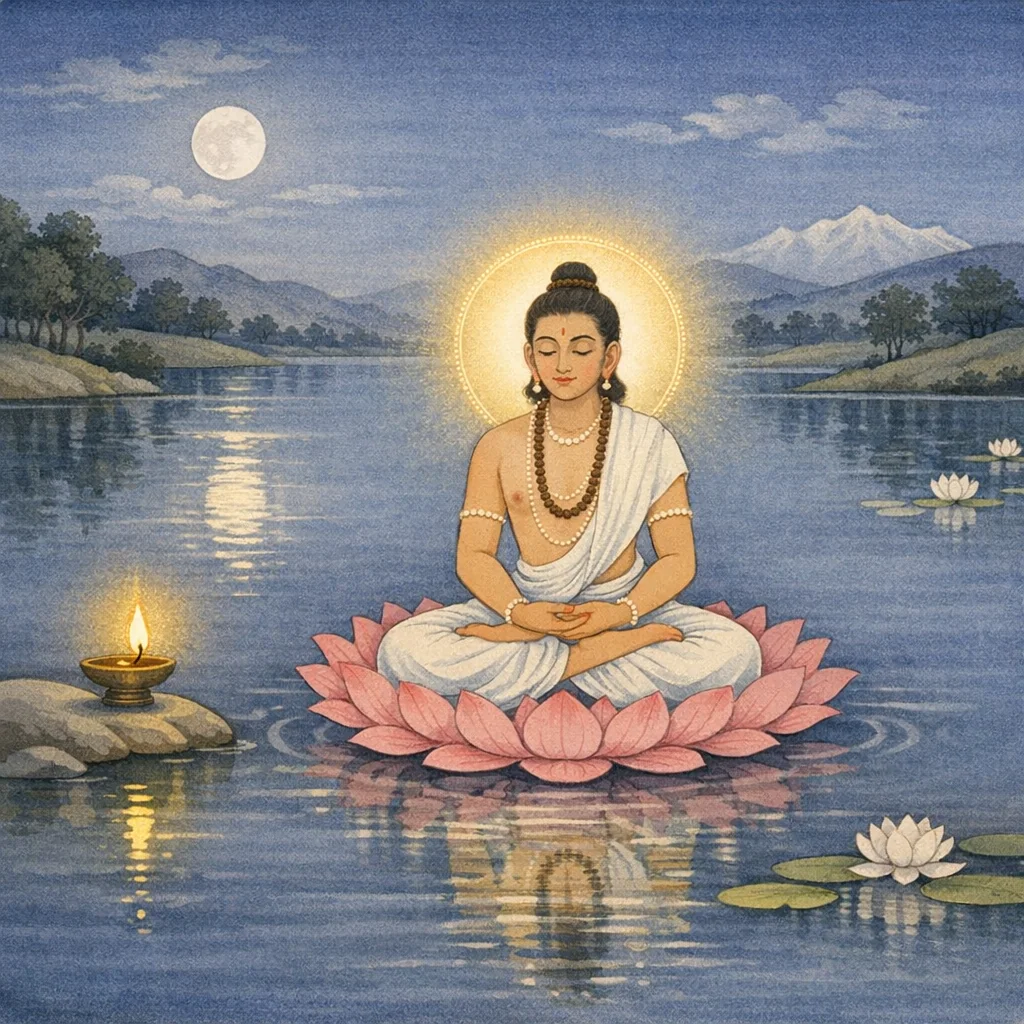
प्रशान्तमनसं ह्येनं योगिनं सुखमुत्तमम् । उपैति शान्तरजसं ब्रह्मभूतमकल्मषम् ॥ ६.२७ ॥
praśāntamanasaṁ hy enaṁ yoginaṁ sukham uttamam | upaiti śāntarajasaṁ brahmabhūtam akalmaṣam || 6.27 ||

A esse iogue, de mente plenamente apaziguada, sobrevém a bem-aventurança suprema: suas paixões foram serenadas, ele se tornou Brahman e está sem mácula.
जिसका मन पूर्णतया शान्त है, ऐसे इस योगी को उत्तम सुख प्राप्त होता है—जिसका रजोगुण शान्त हो गया है, जो ब्रह्मरूप हो गया है और जो निष्पाप है।
To this yogin whose mind is tranquil, whose rajas has been calmed, who has become ‘brahman’ (brahmabhūta), and who is free from defilement—supreme happiness comes.
‘Brahmabhūta’ is interpreted across traditions as (i) identity with brahman (nondual emphasis) or (ii) ‘attained to the state conducive to brahman’ (qualified/non-identitarian reading). ‘Akalmaṣa’ can mean ethically purified or free from mental impurities; both converge in the yogic ideal.
FAQs
It links well-being to reduced agitation (rajas) and a settled mind. The ‘supreme happiness’ is framed as a consequence of sustained calm and inner purification.
‘Brahmabhūta’ indicates participation in or realization of brahman as one’s fundamental nature, paired with ‘akalmaṣa’ (freedom from impurity) as a condition for such realization.
This verse summarizes the fruit of the method taught in 6.24–26: tranquility, diminished rajas, purity, and the resulting highest happiness.
Cultivate conditions that lower agitation—ethical consistency, moderated stimulation, and regular contemplative practice—so that calm becomes trait-like rather than momentary.