
Bhagavad Gita — Dhyana Yoga, Shloka 19
Atma Samyama Yoga
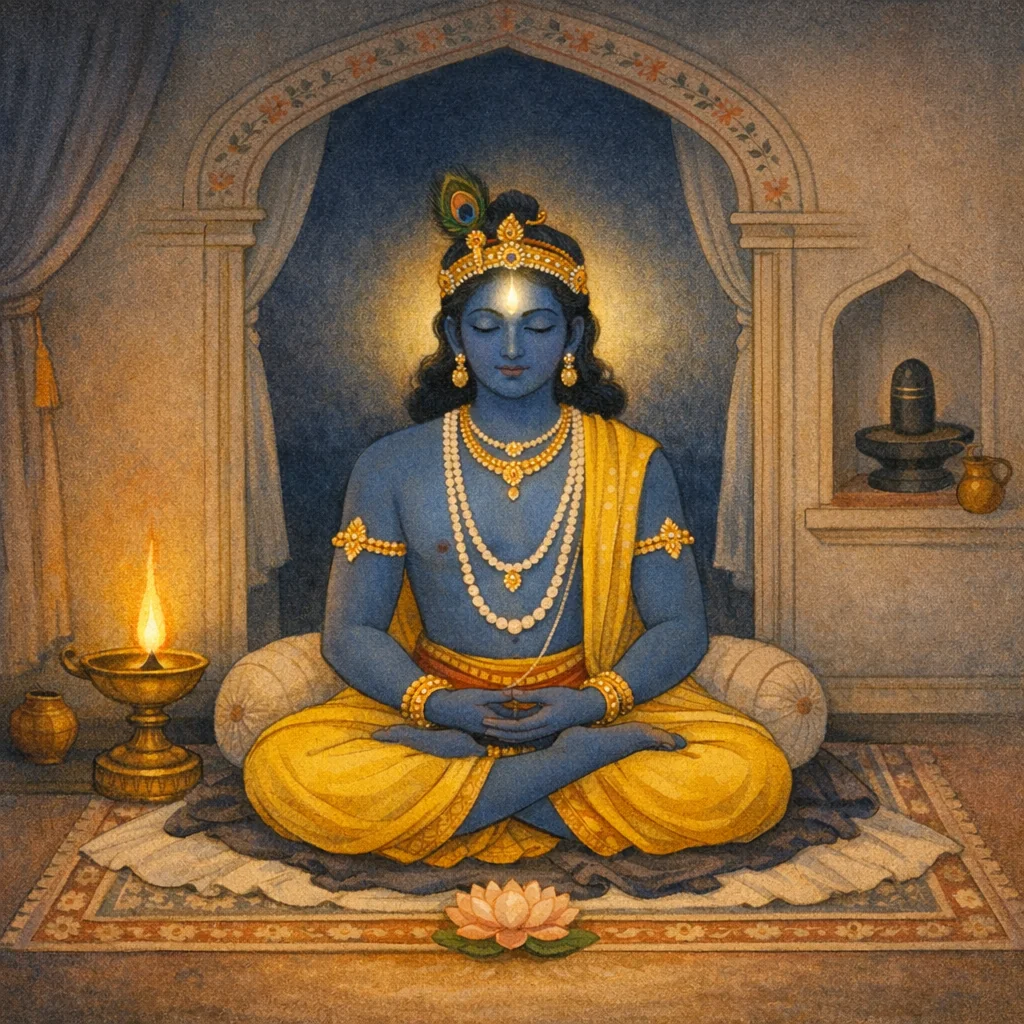
यथा दीपो निवातस्थो नेङ्गते सोपमा स्मृता । योगिनो यतचित्तस्य युञ्जतो योगमात्मनः ॥ ६.१९ ॥
yathā dīpo nivātastho neṅgate sopamā smṛtā | yogino yatacittasya yuñjato yogam ātmanaḥ || 6.19 ||

Assim como a chama de uma lâmpada, colocada num lugar sem vento, não tremula, tal é a comparação do iogue de mente dominada, que se aplica ao yoga do Si mesmo.
जिस प्रकार वायुरहित स्थान में स्थित दीपक की लौ चंचल नहीं होती, वही उपमा आत्मा के योग में लगे हुए संयमित चित्तवाले योगी की कही गई है।
As a lamp set in a windless place does not flicker—this is remembered as the simile for the yogin of restrained mind, practicing the yoga of the Self.
The verse is textually steady. ‘आत्मनः’ is variously construed as (a) ‘of oneself’ (reflexive: one’s own yoga) or (b) ‘of the Self’ (ātman as object), affecting whether the emphasis is on self-discipline or metaphysical Self as the contemplative focus.
FAQs
The lamp simile depicts reduced distractibility: when external ‘winds’ (stimuli, impulses) are minimized, attention becomes steady and less prone to oscillation.
Steadiness is not merely calmness but supports insight into the Self (ātman) by preventing the mind from scattering across objects.
Following the definition of ‘yukta’ (6.18), this verse provides an image to recognize the quality of meditative equipoise.
Create ‘windless’ conditions: reduce interruptions, set a consistent time/place, and treat returning to the object of meditation as maintaining a steady flame.