
Shloka 17
Bhakti Yoga — Bhakti Yoga
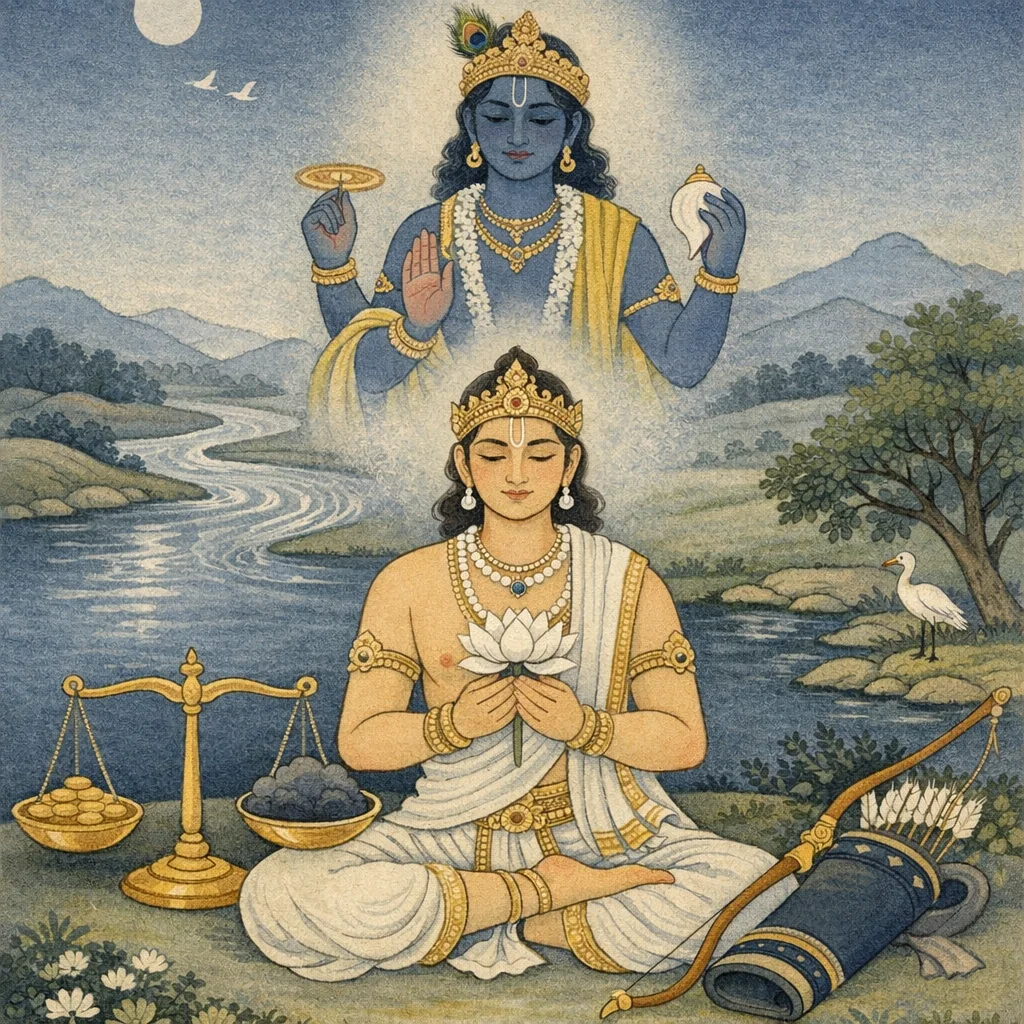
यो न हृष्यति न द्वेष्टि न शोचति न काङ्क्षति । शुभाशुभपरित्यागी भक्तिमान्यः स मे प्रियः ॥ १२.१७ ॥
yo na hṛṣyati na dveṣṭi na śocati na kāṅkṣati | śubhāśubha-parityāgī bhaktimān yaḥ sa me priyaḥ || 12.17 ||

Aquele que não se exulta nem odeia, não se entristece nem deseja, e que renunciou tanto ao auspicioso quanto ao inauspicioso — esse devoto Me é querido.
He who neither rejoices nor hates, neither grieves nor desires, and who has renounced both the auspicious and the inauspicious—such a devoted person is dear to Me.
One who does not exult, does not hate, does not grieve, does not crave; one who has relinquished the auspicious and the inauspicious—who is devoted, he is dear to Me.
‘Renouncing the auspicious and inauspicious’ is interpreted either as (a) relinquishing attachment to merit/demerit as personal possession, or (b) transcending dualistic valuation while maintaining ethical discernment. Traditional commentators often guard against reading it as moral indifference.
FAQs
The verse maps emotional balance: reduced spikes of excitement and avoidance of hostility, grief spirals, and compulsive wanting.
Relinquishing ‘good/bad’ as personal stakes suggests a perspective where the self is not defined by changing fortunes or moral accounting as possession.
It continues the devotee’s profile by focusing on inner reactions to life’s fluctuations, consistent with the Gītā’s broader emphasis on steadiness.
Notice emotional triggers and practice cognitive reappraisal; pursue ethical action while reducing identity investment in praise/blame or “winning/losing.”