Adhyaya 206
Agastyārghyadāna-kathana (On the Giving of the Agastya Honor-Offering)
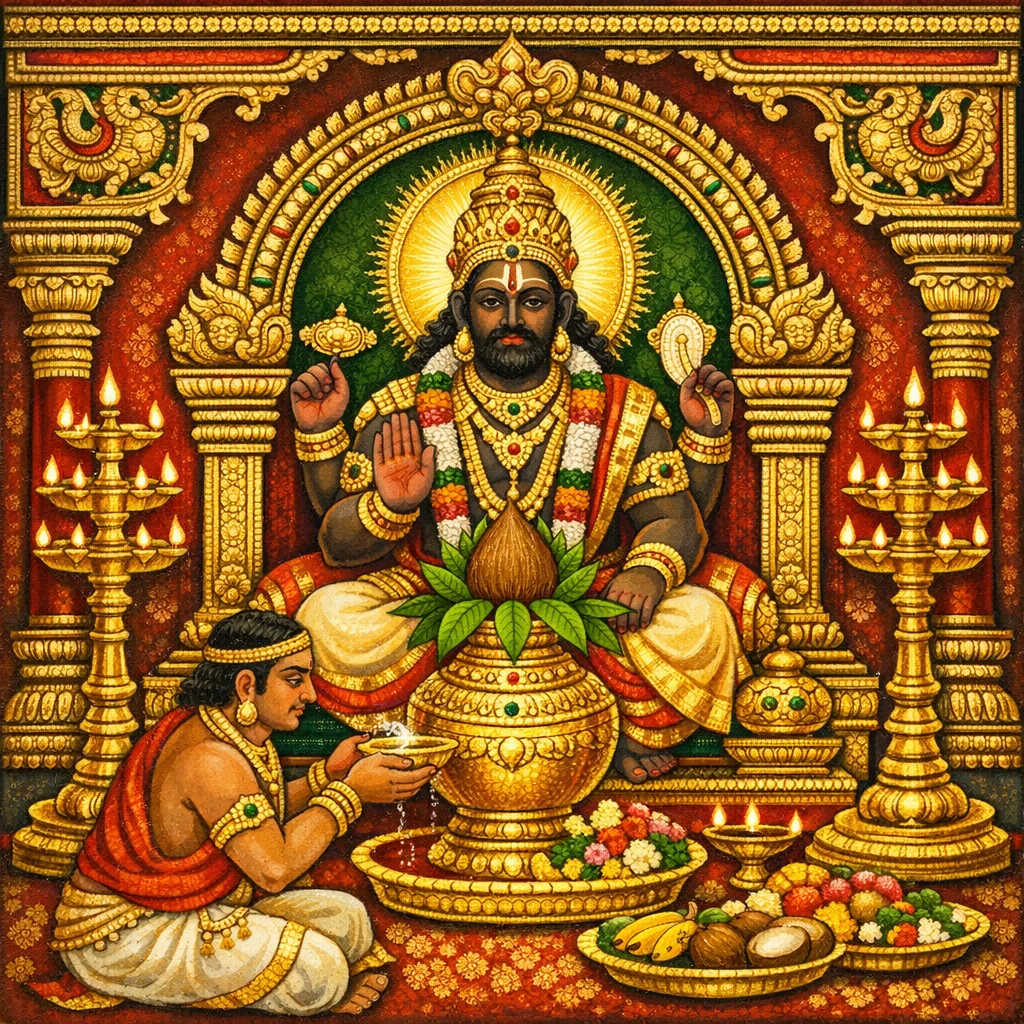
O Senhor Agni prescreve um culto em forma de vrata centrado em Agastya, explicitamente identificado com Viṣṇu, ligando assim a veneração do sábio à soteriologia vaiṣṇava (alcançar Hari). O rito é temporal e procedimental: por três dias, antes do nascer do sol, o praticante jejua, adora e oferece arghya a Agastya. No pradoṣa, instala-se uma imagem feita de flores de kāśa num vaso de água (ghaṭa/kumbha), seguida de vigília noturna (prajāgara). Pela manhã, oferece-se arghya junto a um reservatório de água, com hinos que recordam os feitos míticos de Agastya (secar o oceano; destruir Ātāpi–Vātāpi) e súplicas por dádivas e bom destino após a morte. O capítulo detalha substâncias rituais e a estrutura das doações: sândalo, guirlandas, incenso, tecido, arroz/grãos, frutos, ouro e a doação do vaso a um brāhmaṇa, além de alimentação e dakṣiṇā (vaca, vestes, ouro). Menciona variantes de recensão de mantras e uma regra de acessibilidade: para mulheres e Śūdras, o rito deve ser feito sem mantras védicos. A observância prolongada (sete anos de arghya) promete prosperidade completa—filhos aos sem filhos e um esposo régio a uma donzela.
Shlokas
No shlokas available for this adhyaya yet.
Frequently Asked Questions
Fasting and worship precede the arghya; at pradoṣa a kāśa-flower image is placed in a ghaṭa/kumbha, followed by night vigil; in the morning the arghya is offered near water, then tyāga (grain, fruit, libation) and charitable gifts/feeding of brāhmaṇas conclude the rite.
Sandalwood, garlands, incense, cloth, rice/grains, fruits, gold (and in an expanded description: five gems, gold and silver, seven grains, curd, sandalwood), plus a pot-gift to a brāhmaṇa and dakṣiṇā including cow, garments, and gold.
The rite explicitly aims at attaining Hari through Agastya-worship (mukti-oriented devotion) while also promising dharma-anchored prosperity—health, fortune, desired boons, lineage, and marital success—thus integrating dharma, artha, kāma, and mokṣa.
It states that for women and Śūdras the rite is ‘non-Vedic,’ i.e., performed without Vedic mantras, indicating an inclusive procedural adaptation while preserving the devotional and charitable structure.
By giving the arghya for seven years, ‘all obtain everything’: a childless woman gains sons and good fortune, and a maiden gains a husband of royal birth; the arghya is also described in some readings as imperishable and mind-fulfilling.