Adhyaya 216
Gāyatrī-nirvāṇa (The Liberative/Concluding Doctrine of Gāyatrī)
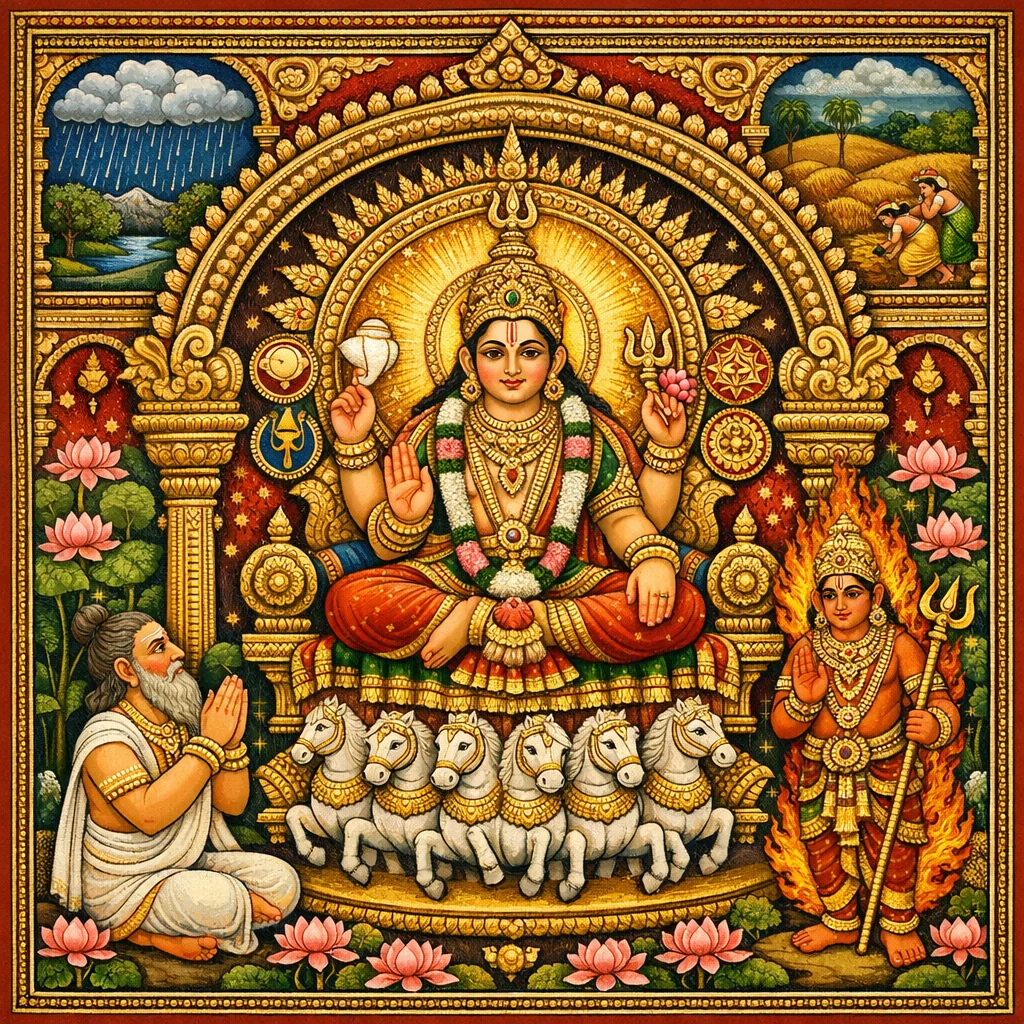
Após concluir o Sandhyā-vidhi, Agni instrui que o praticante finalize o rito com Gāyatrī-japa e smaraṇa, enfatizando o mantra como proteção (rakṣā) e disciplina interior. O capítulo desenvolve uma exegese filológico-teológica: Gāyatrī é Sāvitrī porque ilumina, e Sarasvatī porque é a forma da fala (vāc) de Savitṛ. O termo bharga é explicado por raízes que significam brilhar e purificar como “queimar/cozinhar”, ligando a radiância a um refinamento transformador. Vareṇyam é estabelecido como o estado supremo e escolhível, desejado por buscadores do céu e da libertação; dhīmahi é glosado como retenção mental sustentada e contemplação. O texto concilia leituras sectárias ao apresentar a luz do mantra como uma única realidade, recitada como Viṣṇu, Śiva, Śakti, Sūrya ou Agni, e afirma um Brahman unitário no início do Veda. Segue-se uma cosmologia ritual: a oblação a Agni sustenta o Sol, produzindo chuva, alimento e seres, mostrando como mantra e rito sustentam o mundo. O clímax é advaita: a luz suprema no orbe solar é a realidade turīya e o Viṣṇu-parama-pada; pela meditação, destrói-se nascimento e morte e o sofrimento tríplice, culminando na declaração de identidade: “Eu sou Brahman… eu sou esse Puruṣa solar, o Infinito (Oṃ)”.
Shlokas
No shlokas available for this adhyaya yet.
Frequently Asked Questions
Completion through Gāyatrī-japa and mental recollection (smaraṇa), framed as both spiritual discipline and protective power for disciples, spouse, and vital breaths (prāṇa).
Bharga is interpreted as tejas (radiance) and purifying brilliance, supported by etymological links to roots meaning ‘to shine’ and ‘to burn/cook’ (purificatory transformation).
It acknowledges multiple recitations (Śiva, Śakti, Sūrya, Agni) while asserting their unity in the one supreme light/Brahman, explicitly identifying that light with Viṣṇu as the world-cause.
It presents a causal chain: oblation to Agni supports Āditya; from the Sun comes rain; from rain food; from food living beings—linking ritual action to world-order.
By meditating on the supreme light as turīya within the solar orb, one destroys birth-death and threefold suffering, culminating in the non-dual recognition ‘I am Brahman’ and identity with the Āditya-Puruṣa.