Adhyaya 9
अर्जुनव्याससंवादः — Arjuna’s Lament and Vyāsa’s Counsel on Kāla (Mausala-parva, Adhyāya 9)
Upa-parva: Arjuna–Vyāsa Saṃvāda (Aftermath Counsel within Mausala-parva)
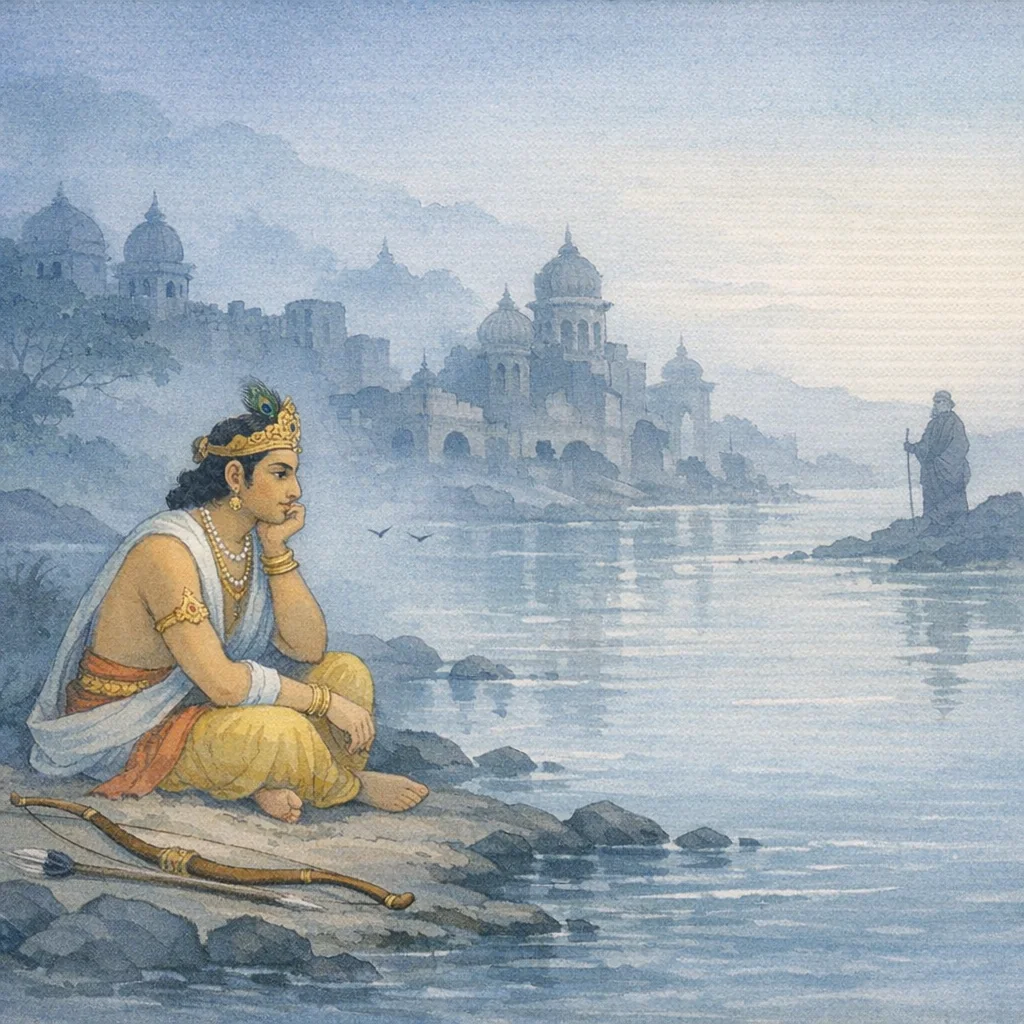
Vaiśaṃpāyana reports Arjuna’s arrival at the truth-speaking sage Vyāsa’s hermitage. Vyāsa observes Arjuna’s distress and questions whether he has committed an improper act or suffered defeat. Arjuna then discloses the departure of Kṛṣṇa (and Balarāma) and the curse-driven destruction of the Vṛṣṇi-Andhaka heroes at Prabhāsa, including mutual killing and the startling reversal whereby formidable warriors perish through reeds (erakā). He adds a personal crisis: while witnessing abductive violence against Vṛṣṇi women, he is unable to string his bow as before; his weapons and arrows fail, and the divine protective presence once seen before his chariot is no longer visible. Overwhelmed, he requests instruction for his welfare. Vyāsa responds that the destruction was ordained and not to be grieved; Kṛṣṇa, though capable, permitted it as part of the earth’s burden-relief. Vyāsa affirms the Pandavas’ completed task, teaches the variability of strength and intelligence across times, and grounds all reversals in kāla as the root-cause. He predicts that Arjuna’s powers and weapons will return when time turns again, and recommends timely movement toward the “chief path” appropriate for them. Arjuna, permitted to depart, returns to Hastināpura and reports events to Yudhiṣṭhira.
Chapter Arc: अष्टम अध्याय के अंत में व्यास–अर्जुन संवाद की प्रतिध्वनि अभी थमी भी नहीं कि कथा एक नए अध्याय में प्रवेश करती है—जहाँ शोक का धुआँ, स्मृति का बोझ और यदुवंश के विनाश के बाद बची हुई जिम्मेदारियाँ अर्जुन के कंधों पर उतर आती हैं। → अर्जुन के भीतर दो धाराएँ टकराती हैं—एक ओर कृष्ण-वियोग और यदुवंश-नाश का अवसाद, दूसरी ओर धर्म-पालन का कठोर आदेश: बचे हुए लोगों की रक्षा, स्त्रियों-बालकों का संरक्षण, और द्वारका के अवशेषों से प्रस्थान। परंतु वही अर्जुन, जिसने युद्ध में असंभव को संभव किया था, अब समय-धर्म के आगे अपनी सामर्थ्य को क्षीण अनुभव करता है; यह क्षय ही तनाव को बढ़ाता है। → अर्जुन को यह बोध तीक्ष्णता से काटता है कि ‘वीरता’ भी काल के सामने स्थिर नहीं—कृष्ण के बिना, युग के पलटते ही, वही धनुष-हाथ शिथिल हो सकता है। यह आत्म-स्वीकृति (और उसके साथ उठती लज्जा/विषाद) अध्याय का शिखर बनती है: धर्म का पालन अब बाहुबल नहीं, धैर्य और स्वीकार है। → कथा का स्वर निर्णय की ओर मुड़ता है—अर्जुन शोक को साधकर कर्तव्य की दिशा पकड़ता है: जो बचा है उसे सुरक्षित ले जाना, और जो चला गया है उसके प्रति शुद्ध स्मरण रखना। व्यास-वाणी की छाया में यह अध्याय ‘अवशेष-धर्म’ की स्थापना करता है—विनाश के बाद भी व्यवस्था और मर्यादा का धागा न टूटे। → अर्जुन के सामने अगला चरण स्पष्ट है, पर सहज नहीं—क्या वह वास्तव में उन बचे हुए जनों की रक्षा कर पाएगा, जब स्वयं उसकी शक्ति और युग-समर्थन डगमगा रहा है?
Shlokas
Verse 3
दक्षिण भारतीय पाठसे लिये गये. ३
ਦੱਖਣ ਭਾਰਤੀ ਪਾਠ ਤੋਂ ਲਿਆ ਗਿਆ। ੩
Verse 301
इस प्रकार श्रीमह्याभारत मौसलपर्वमें व्यास और अर्जुनका संवादविषयक आठवाँ अध्याय पूरा हुआ ॥/ ८ ॥ (दाक्षिणात्य अधिक पाठके ३६ श्लोक मिलाकर कुल ४१३ “लोक हैं) 2: अर: || मौसलपर्व सम्पूर्ण ।। भीस्जआा तल (2) आसन अनुष्टुप् ( अन्य बड़े छन्द ) बड़े छन्दोंको ३२ अक्षरोंके कुलयोग अनुष्टुपू घानकर गिननेपर उत्तर भारतीय पाठसे लिये गये २६० (३०) ४१
ਵੈਸ਼ੰਪਾਯਨ ਨੇ ਆਖਿਆ—ਇਸ ਤਰ੍ਹਾਂ ਸ਼੍ਰੀਮਹਾਭਾਰਤ ਦੇ ਮੌਸਲਪਰਵ ਵਿੱਚ ਵਿਆਸ ਅਤੇ ਅਰਜੁਨ ਦੇ ਸੰਵਾਦ-ਵਿਸ਼ੇ ਵਾਲਾ ਅੱਠਵਾਂ ਅਧਿਆਇ ਸਮਾਪਤ ਹੋਇਆ ॥ ੮ ॥ (ਦੱਖਣਾਤ੍ਯ ਪਾਠ ਵਿੱਚ ੩੬ ਸ਼ਲੋਕ ਵੱਧ ਹੋਣ ਕਰਕੇ ਕੁੱਲ ੪੧੩ ਸ਼ਲੋਕ ਬਣਦੇ ਹਨ।) ਇਸ ਤਰ੍ਹਾਂ ਮੌਸਲਪਰਵ ਸਮਾਪਤ ॥
Frequently Asked Questions
Arjuna confronts the ethical and existential crisis of diminished agency: despite prior excellence, he cannot protect dependents or rely on former capacities, raising the dilemma of how to act responsibly when competence appears withdrawn by time.
Vyāsa’s instruction locates reversals in kāla: capacities rise and fall with temporal conditions; therefore, grief should be moderated, inevitability recognized, and the next appropriate life-stage action adopted once one’s historical duty is fulfilled.
No explicit phalaśruti is stated; the meta-commentary functions through Vyāsa’s framing that understanding kāla/diṣṭa clarifies why powers depart and return, situating personal loss within a broader mokṣa-adjacent movement toward withdrawal.