Prapathaka 4
Darśa–Pūrṇamāsa (New- and Full-Moon sacrifices) within the Śrauta Agnihotra–Iṣṭi cycle; specifically the Iṣṭi-mantra and procedural layer around the principal oblations (ājyabhāgas, prayāja/anuyāja, and the main havis) and their deity-addressing formulae.
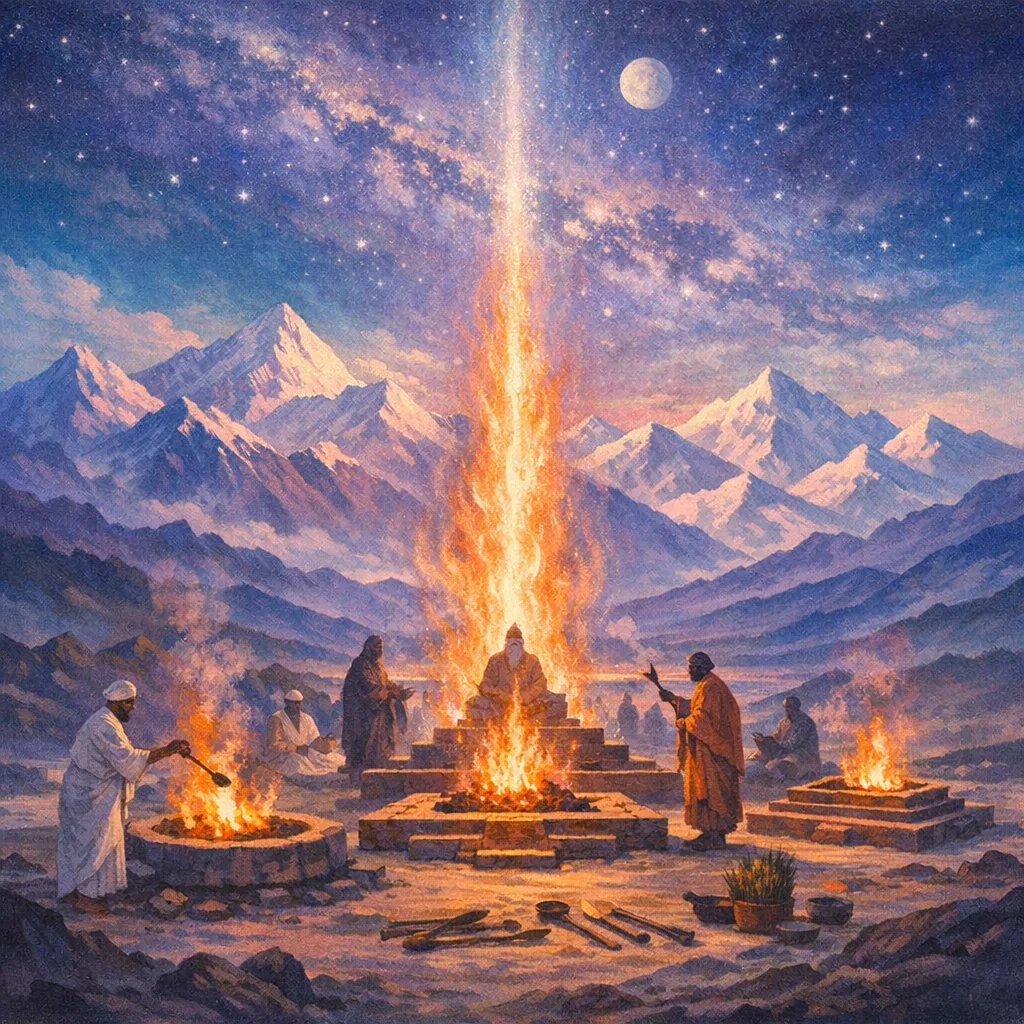
Prapāṭhaka 3.4 of the Kṛṣṇa Yajurveda (Taittirīya Saṃhitā) belongs to the Darśa–Pūrṇamāsa iṣṭi complex and articulates the liturgical grammar by which offerings are made efficacious: the sequencing of preliminary ghee-portions, the framing of the main havis with prayāja and anuyāja oblations, and the precise deity-addressing and svāhā-formulae that “bind” the rite to its cosmological referents. The chapter’s concern is not narrative but operational: it stabilizes the yajña as a reproducible procedure by specifying who is invoked, when, and with what verbal markers. In doing so it encodes a theology of mediation—Agni as carrier, Soma/Viṣṇu/Indra and allied deities as recipients, and the sacrificer as the ritual subject constituted through correct recitation. The prapāṭhaka thus exemplifies the Saṃhitā’s characteristic fusion of mantra, brāhmaṇa-style rationale, and ritual micro-technology.
Anuvakas
Anuvakas for this prapathaka are loading. Please check back soon.