
Bhagavad Gita — Sankhya Yoga, Shloka 70
Sankhya Yoga
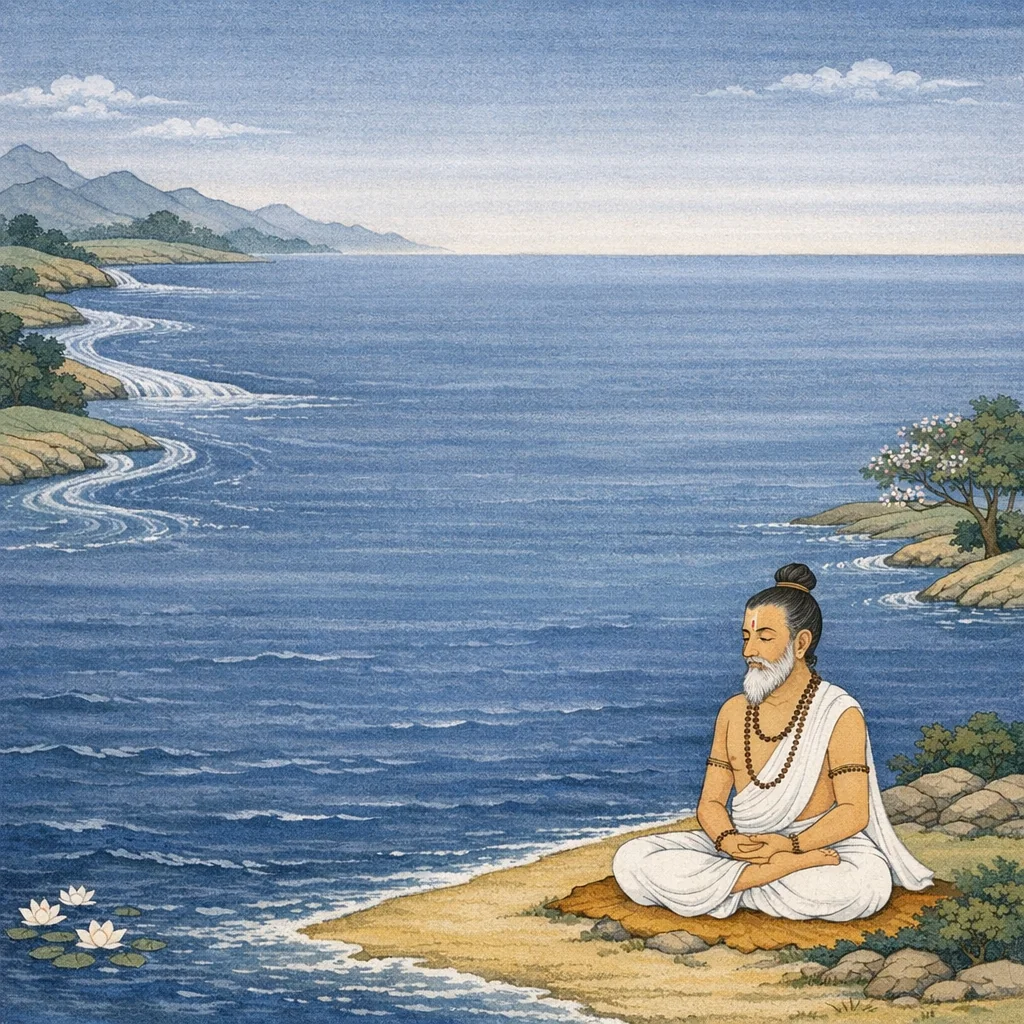
आपूर्यमाणमचलप्रतिष्ठं समुद्रमापः प्रविशन्ति यद्वत् । तद्वत्कामा यं प्रविशन्ति सर्वे स शान्तिमाप्नोति न कामकामी ॥ २.७० ॥
āpūryamāṇam acala-pratiṣṭhaṁ samudram āpaḥ praviśanti yadvat | tadvat kāmā yaṁ praviśanti sarve sa śāntim āpnoti na kāma-kāmī || 2.70 ||

ਜਿਵੇਂ ਸਦਾ ਭਰਦਾ ਰਹਿੰਦਾ ਪਰ ਅਚਲ ਪ੍ਰਤਿਸ਼ਠਾ ਵਾਲਾ ਸਮੁੰਦਰ ਪਾਣੀਆਂ ਦੇ ਪ੍ਰਵੇਸ਼ ਕਰਨ ਤੇ ਵੀ ਅਡੋਲ ਰਹਿੰਦਾ ਹੈ, ਤਿਵੇਂ ਸਾਰੀਆਂ ਕਾਮਨਾਵਾਂ ਜਿਸ ਵਿੱਚ ਪ੍ਰਵੇਸ਼ ਕਰਦੀਆਂ ਹਨ ਉਹ ਸ਼ਾਂਤੀ ਪ੍ਰਾਪਤ ਕਰਦਾ ਹੈ; ਕਾਮਨਾਵਾਂ ਦੀ ਲਾਲਸਾ ਕਰਨ ਵਾਲਾ ਕਾਮਕਾਮੀ ਸ਼ਾਂਤੀ ਨਹੀਂ ਪਾਂਦਾ।
As waters enter the ocean, which is ever being filled yet remains unmoved, so desires enter him; he attains peace, not the one who hankers after desires.
As waters enter the ocean—ever filling it, yet fixed and unmoving—so all desires enter the one (who remains steady); he attains calm, not the desire-seeker.
The point is not absence of stimuli/desires but non-agitation: experiences may ‘enter,’ yet the stable person is not displaced. The final phrase contrasts the steady person with kāma-kāmī (‘one who desires desire’/craves).
FAQs
It describes emotional resilience: impulses and experiences occur, but they do not necessarily produce destabilizing craving or compulsive pursuit.
The image supports the ideal of an inwardly grounded self: the person established in insight is not defined by the flow of desires and sensations.
It is a culminating metaphor for the sthitaprajña: steadiness is compatible with ongoing life-experience, provided there is non-clinging.
It can inform approaches to consumerism and habit formation: noticing wants without immediately converting them into purchases or identity-claims.