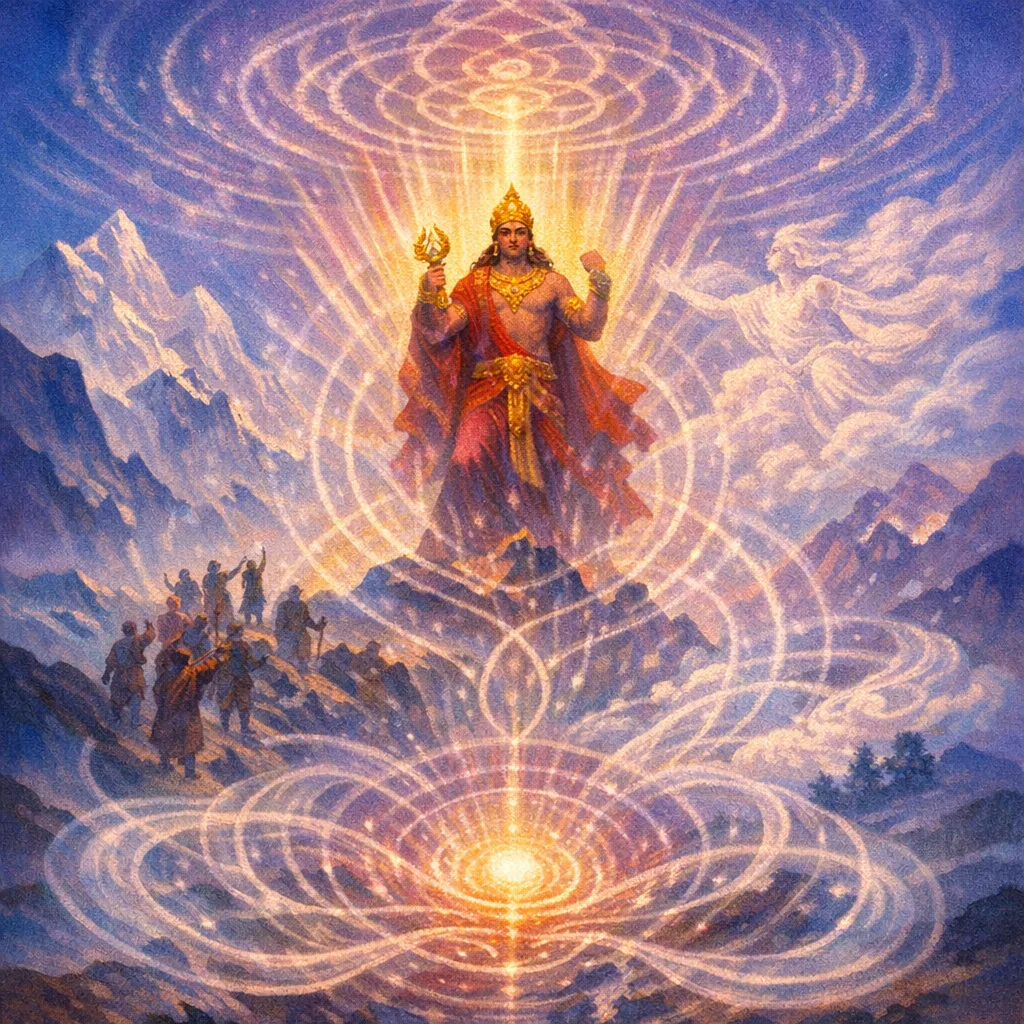
Dashati 11
Aindra praise seeking Indra’s favor and communal advance, with allied Vāta petitions for healing and life-breath
Indra
Uplifting and expansive—heroic Aindra praise tempered by a soothing restorative breath-motif in the Vāta verses
R̥ṣi attributions are not specified in the input; identification requires Ṛgveda concordance and the arcikā cross-index for this prapāṭhaka/daśati unit.
ଇନ୍ଦ୍ରଙ୍କୁ ମହା ବୃଦ୍ଧିକର୍ତ୍ତା ଓ ରକ୍ଷକ ଭାବେ ସ୍ତୁତି କରି ଯଜ୍ଞ-ନିବେଦନ ଗ୍ରହଣ କରିବାକୁ ଡାକାଯାଏ, ଯେଣୁ ସେ ଲୋକମାନଙ୍କୁ ସୁମତି (ଶୁଭ ମନୋଭାବ) ଓ ସାମୁଦାୟିକ ବଳ/ସାମର୍ଥ୍ୟ ଦିଅନ୍ତୁ ଏବଂ ବିପଦ ଅତିକ୍ରମ କରାନ୍ତୁ। ପରେ ବାତାଙ୍କୁ ଚିକିତ୍ସାକାରୀ, ପ୍ରାଣଧାରକ ଶକ୍ତି ଭାବେ ଆହ୍ୱାନ କରାଯାଏ—ହୃଦୟ-ଶ୍ୱାସର ଭାବରେ ପ୍ରାଣକୁ ରକ୍ଷା କରି, ଜୀବନ ଚାଲିରହିବା ପାଇଁ ଗୁପ୍ତ ‘ଅମୃତ’/ପୋଷକ ସାର ଦାନ କରନ୍ତୁ; ଏହା ଉପାସକ ଜନସମୁଦାୟ (ବିଶଃ)ର ସାମୁହିକ କଲ୍ୟାଣ ପାଇଁ ପ୍ରାର୍ଥନା।
Mantras
Mantra 1
वात आ वातु बेषजं शम्भु मयोभु नो हृदे प्र न अयूंषि तारिषत्
ହେ ବାତ, ଏଠାକୁ ବହିଆ—ଔଷଧ ସମ; ଶୁଭକର, ଆନନ୍ଦର ଉତ୍ସ। ଆମ ହୃଦୟରେ ସେ ଆମ ଆୟୁଷ୍ୟକୁ ପୂର୍ଣ୍ଣ ଭାବେ ଦୀର୍ଘ କରୁ।
Mantra 2
उत वात पितासि न उत भ्रातोत नः सखा स नो जीवातवे कृधि
ଏବଂ, ହେ ବାତ, ତୁମେ ଆମ ପିତା; ଆମ ଭ୍ରାତା; ଆମ ସଖା। ତେଣୁ ଆମକୁ ଜୀବିତ ରହିବାକୁ କୃପା କର।
Mantra 3
यददो वात ते गृहे3 ऽमृतं निहितं गुहा तस्यो नो देहि जीवसे
ହେ ବାତ, ଯଦି ତୁମ ଗୃହରେ ଗୁହାଭିତରେ ଗୁପ୍ତ ଭାବେ ଅମୃତ-ନିଧି ନିହିତ ଥାଏ, ତେବେ ସେଥିରୁ ଆମକୁ ଜୀବନ-ପୋଷଣ ପାଇଁ ଅଂଶ ଦିଅ।
Frequently Asked Questions
It links ritual praise and offering with divine help: Indra is asked to grant favorable support and strength for the communities, while Vāta is asked to heal, protect the life-breath, and prolong life.
Even in Indra-centered groupings, allied petitions occur for practical welfare. Vāta represents prāṇa and healing; invoking him complements Indra’s protective power by securing health and longevity for the sacrificer.
It points to a concealed life-sustaining essence—often understood as sacrificial potency/ojas (and by extension Soma-like vitality). The singer asks Vāta to bestow that sustaining power ‘for living’ (jīvase).