Dashati 3
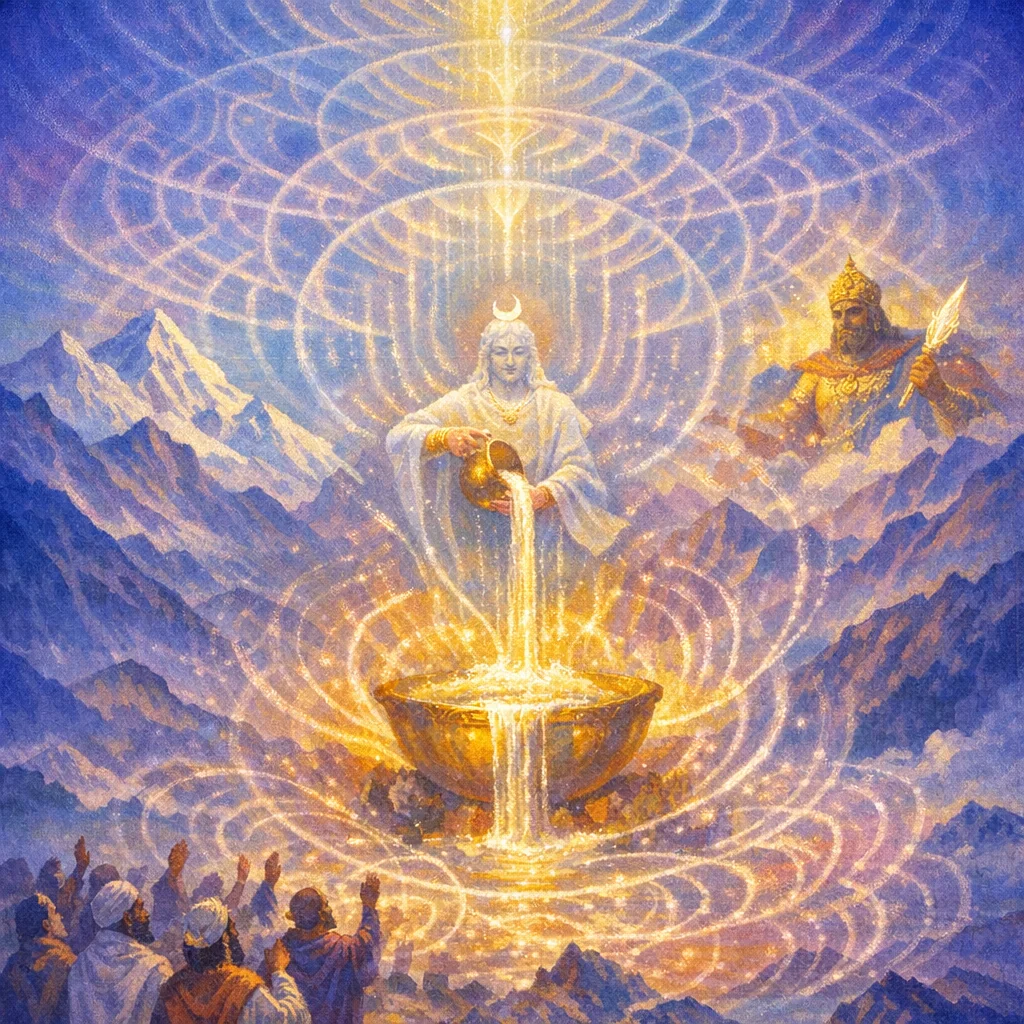
Pavamāna Soma’s ancient, heaven-derived flow—pressed, purified, and offered—bringing Indra’s epiphany and prosperity to the sacrificer
Soma Pavamāna
Bright expansive and triumphant—purification leading to a climactic communal acclamation
Ṛṣi attribution is not determinable from the provided excerpt alone; the verses reflect mixed deity-address (Pavamāna/Indra/Agni) typical of Sāmavedic selection from multiple Ṛgvedic sources.
ପବମାନ ସୋମ—ପ୍ରାଚୀନ, ସ୍ୱର୍ଗଜ ଅମୃତ—ଦ୍ରୋଣୀ/ପାତ୍ରକୁ ଅବତରି ଚାପାଯାଇ, ଶୋଧିତ ହୋଇ ଯଜ୍ଞରେ ଅର୍ପିତ ହୁଏ। ସମୁହଗାନ (ସମସ୍ୱରଣ) ଦ୍ୱାରା ଦେବତାଙ୍କ ଉପସ୍ଥିତି ପ୍ରକଟ ହୁଏ; ଏହି ସୋମ-ଉତ୍ପାଦନରେ ଇନ୍ଦ୍ର ପ୍ରଧାନ ଭୋକ୍ତା ଓ ବରଦାତା ଭାବେ ପ୍ରକଟିତ ହୋଇ ଅକ୍ଷୟ ଦାନ—ଅଶ୍ୱ, ଗୋ, ସମୃଦ୍ଧି (‘ସୁବର୍ଣ୍ଣ ଝରଣା’)—ଦିଅନ୍ତି। ଅଗ୍ନି ଘୃତାହୁତି গ্ৰହଣ କରି ଦେବମାନଙ୍କୁ ବହନ କରି ହୋମ→ଦେବ ଶୃଙ୍ଖଳାକୁ ସ୍ଥିର କରନ୍ତି; ଏଭଳି ଶୁଦ୍ଧ ସୋମ, ସଠିକ୍ ଚାପ ଓ ଗାନ ଦ୍ୱାରା ଯଜ୍ଞର ପ୍ରତିଦାନ ରୂପେ ବର ପ୍ରାପ୍ତି ହୁଏ।
Mantras
Mantra 1
शग्ध्यू3 षु शचीपत इन्द्र विश्वाभिरूतिभिः भगं न हि त्वा यशसं वसुविदमनु शूर चरामसि
ହେ ଶଚୀପତି ଇନ୍ଦ୍ର! ସମସ୍ତ ରକ୍ଷାସହିତ ପ୍ରସନ୍ନ ହେଅ; କାରଣ ଆମେ ତୁମ ବ୍ୟତୀତ ଅନ୍ୟ କାହାକୁ ଅନୁସରଣ କରୁନାହିଁ—ହେ ଯଶସ୍ବୀ ଶୂର, ବସୁବିଦ୍ (ଧନ-ଖୋଜିବାଳା), ଆମ ଭାଗ୍ୟ ପାଇଁ ଆମେ ତୁମକୁ ହିଁ ଅନୁସରଣ କରୁ।
Mantra 2
पौरो अश्वस्य पुरुकृद्गवामस्युत्सो देव हिरण्ययः न किर्हि दानं परि मर्धिषत्वे यद्यद्यामि तदा भर
ହେ ଦେବ! ତୁମେ ପୂରୁଙ୍କ ଅଶ୍ୱମାନଙ୍କର ଉପକାରୀ ଦାତା; ତୁମେ ଗୋମାତାଙ୍କର ଉତ୍ସ, ସୁବର୍ଣ୍ଣ ଝରଣା। ତୁମ ଦାନ କେବେ ହ୍ରାସ ନ ହେଉ; ଯାହା ଯାହା ମୁଁ ଯାଚେ, ସେ ସେ ତୁମେ ଆଣି ଦାନ କର।
Mantra 3
अध यदिमे पवमान रोदसी इमा च विश्वा भुवनाभि मज्मना यूथे न निष्ठा वृषभो वि राजसि
ଅଥ ଯେତେବେଳେ, ହେ ପବମାନ ସୋମ! ଏହି (ଧାରାମାନେ) ନିଜ ମହିମାରେ ଏହି ଦୁଇ ଲୋକ ଓ ସମସ୍ତ ଭୂତକୁ ଆବୃତ କରନ୍ତି, ସେତେବେଳେ ତୁମେ—ଗୋଠ ମଧ୍ୟରେ ଅଡ଼ିଗ ଦଣ୍ଡାୟମାନ ବୃଷଭ ପରି—ପ୍ରକଟ ତେଜରେ ବିରାଜିତ ହୁଅ।
Frequently Asked Questions
It centers on Soma as an ancient, ambrosial power that is pressed and purified in the rite; through the chant, Indra is made present and is asked to grant and protect prosperity.
In Soma ritual practice, Soma is prepared and offered, Indra is a chief recipient and boon-giver, and Agni is the sacrificial ‘carrier’ who accepts offerings (like ghee) and conveys them—so all three naturally converge.
They are musical extensions that help shape the melody, coordinate the singers, and emphasize key ritual moments—turning the verse into a sustained, flowing sāman suitable for liturgical performance.