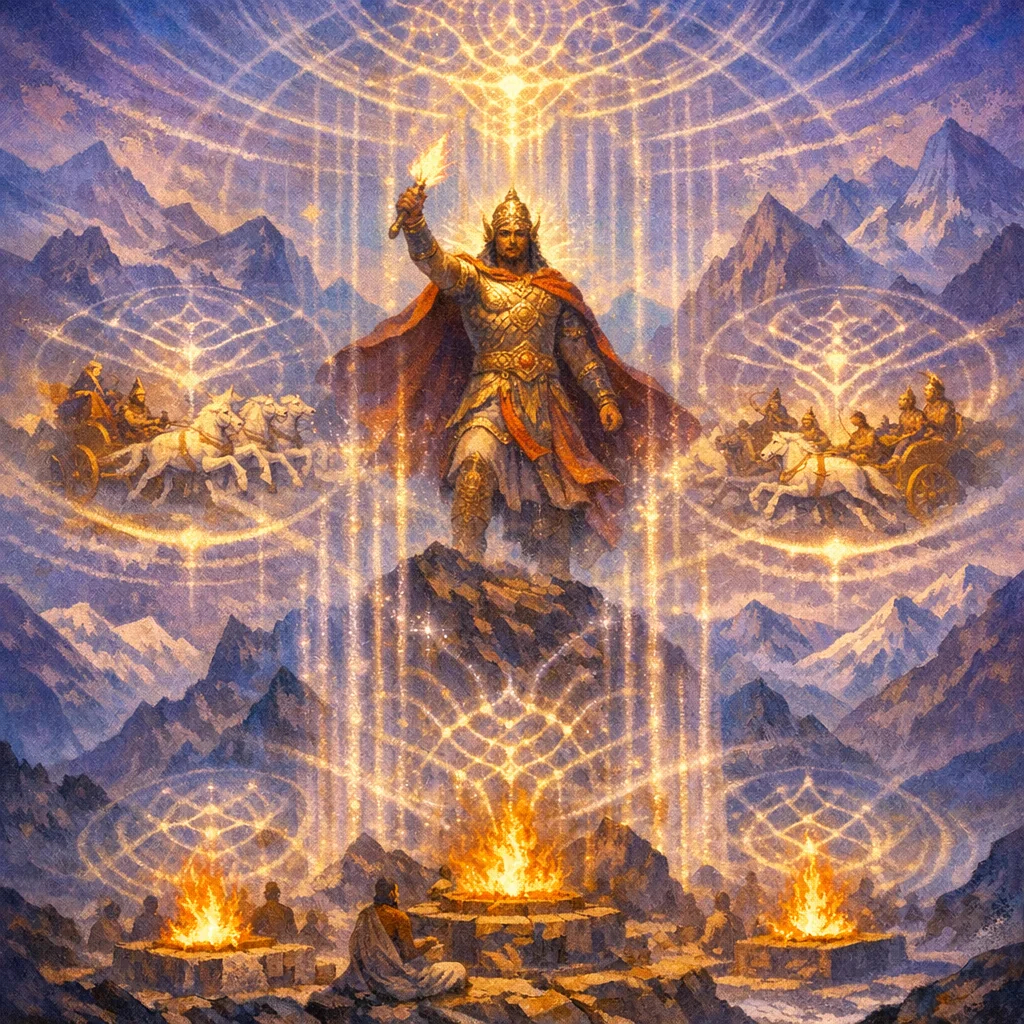
Dashati 10
Aindra victory-hymns framed as auspiciousness and ritual correctness—Indra’s unfailing power awakened by praise and ordered sacrifice
Indra
Uplifting martial-auspicious (jayatrī tone) with a strong ‘victory’ drive tempered by benedictory openings
R̥ṣi attribution is not supplied in the input; these mantras are Rigvedic in origin but require external mapping to assign a specific seer family for this dashati.
ଏହି ଦଶତିରେ ଇନ୍ଦ୍ରଙ୍କ ଜୟଗୀତକୁ ମଙ୍ଗଳ ଓ ଯଜ୍ଞ-ଶୁଦ୍ଧିର ଆଧାରରେ ଗଢ଼ାଯାଇଛି—ଅଗ୍ନି, ଦାନ, ଯଜ୍ଞ ଓ ସ୍ତୁତି ‘ଭଦ୍ର’ (ଶୁଭ) ହେଉ; ସଠିକ୍ ଋତ ଅନୁସାରେ ସ୍ତୋତ୍ର/ଉକ୍ଥ ଇନ୍ଦ୍ରଙ୍କ ଅଚ୍ୟୁତ ଶକ୍ତିକୁ ଜାଗ୍ରତ କରେ। ଇନ୍ଦ୍ରଙ୍କ ରଥ, ରଶ୍ମି ଓ ପୂର୍ବଦିଗ-ରକ୍ଷା ଯଜ୍ଞର ଦିଗ୍ନିର୍ଦ୍ଦେଶ ଓ ଯୁଦ୍ଧ-ଜୟର ଚିତ୍ର ହୋଇ ଉଠେ। ପାଣି-ମୋଟିଫ୍ ଅନୁସାରେ ଅଟକାଇଥିବା ଧନକୁ ଋତ ଓ ‘ମାତୃ’ ଦେବଶକ୍ତିମାନଙ୍କ ଦ୍ୱାରା ପୁନରୁଦ୍ଧାର/ଶୋଧନ କରି ଦେବଭୋଗ୍ୟ କରାଯାଏ। ଶେଷରେ ଅନପଚ୍ୟୁତା—ବଜ୍ରର ଅବିଫଳତା ଓ ପ୍ରତିଯୋଗିତାରେ ଅଟୁଟତା—ସହ ତ୍ରିଧାତୁ/ତିନିଗୁଣ ନିୟମ ଦ୍ୱାରା ବଳ (ବୟଃ) ସ୍ଥାପନର ଧ୍ୱନି ମିଳେ।
Mantras
Mantra 1
भद्रो नो अग्निराहुतो भद्रा रातिः सुभग भद्रो अध्वरः भद्रा उत प्रशस्तयः
ଆମ ପାଇଁ ଅଗ୍ନି, ଆହୂତ ହେଲେ, ଭଦ୍ର (ମଙ୍ଗଳମୟ) ହେଉନ୍ତୁ; ହେ ସୁଭଗ, ଭଦ୍ର ହେଉ ରାତି (ଦାନ/ବକ୍ଷିସ); ଭଦ୍ର ହେଉ ଅଧ୍ୱର (ଯଜ୍ଞ); ଏବଂ ଭଦ୍ର ହେଉ ପ୍ରଶସ୍ତୟଃ (ସ୍ତୁତିମାନେ) ମଧ୍ୟ।
Mantra 2
भद्रं मनः कृणुष्व वृत्रतूर्ये येना समत्सु सासहिः अव स्थिरा तनुहि भूरि शर्धतां वनेमा ते अभिष्टये
ବୃତ୍ର-ବିଜୟ ପାଇଁ ଆମ ପାଇଁ ଭଦ୍ର ମନ ଗଢ଼; ଯାହାଦ୍ୱାରା ସଂଘର୍ଷମାନେ ତୁମେ ଆମକୁ ଜିତାଇବ। ଅନେକ ସେନାଙ୍କ ବିରୋଧରେ ଦୃଢ଼ ରକ୍ଷାକୁ ତଳକୁ ପର୍ଯ୍ୟନ୍ତ ପ୍ରସାର କର, ଯେପରି ଇଷ୍ଟସିଦ୍ଧି ପାଇଁ ଆମେ ତୁମ ଅନୁଗ୍ରହ ଲାଭ କରିବୁ।
Mantra 3
त्वं ह त्यत्पणीनां विदो वसु सं मातृभिर्मर्जयसि स्व आ दम ऋतस्य परावतो न साम तद्यत्रा रणन्ति धीतयः त्रिधातुभिररुषीभिर्वयो दधे रोचमानो वयो दधे . 1592
ହେ ଇନ୍ଦ୍ର! ତୁମେ ନିଶ୍ଚୟ ପଣୀମାନଙ୍କ ଧନକୁ ଜାଣି, ମାତୃମାନଙ୍କ ସହ, ଋତର ନିଜ ଧାମରେ ତାହାକୁ ଶୁଦ୍ଧ କର। ଆମ ପାଇଁ ସେଇ ସାମନ—ଯେଉଁଠାରେ ଭକ୍ତିମୟ ଧୀତିମାନେ ଧ୍ୱନିତ ହୁଅନ୍ତି। ତ୍ରିଧାତୁଭିଃ, ଅରୁଷୀଭିଃ—ତ୍ରିବିଧ ବ୍ୟବସ୍ଥା ଓ ଅରୁଣ-ବର୍ଣ୍ଣ ଶକ୍ତି ସହ—ସେ ଦୀପ୍ତିମାନ ହୋଇ ବୟଃ (ବୀର୍ୟ/ବଳ) ସ୍ଥାପନ କଲେ; ବୟଃ ସ୍ଥାପନ କଲେ।
Frequently Asked Questions
Agni is invoked to make the sacrifice, gifts, and recitation ‘bhadra’ (auspicious and faultless). That ritual purity is the foundation for successfully energizing Indra through the subsequent stotra.
The Paṇis symbolize withheld or hidden wealth. The verse portrays Indra, together with the ‘Mothers’ (divine sustaining powers), as purifying and restoring that wealth within the order of ṛta, making it fit for divine and ritual use.
To align praise (uktha/stotra) with ṛta so that Indra is exhilarated for victory and remains ‘anapacyutā’ (unfailing) in contests, while the rite stays auspicious and effective.