Prapathaka 4
Aśvamedha (Horse Sacrifice) — ancillary and mid-cycle liturgies within the Śrauta Aśvamedha complex (including animal/oblatory sequences, royal consecratory framing, and Soma-linked recitations as transmitted in the Kṛṣṇa Yajurveda tradition).
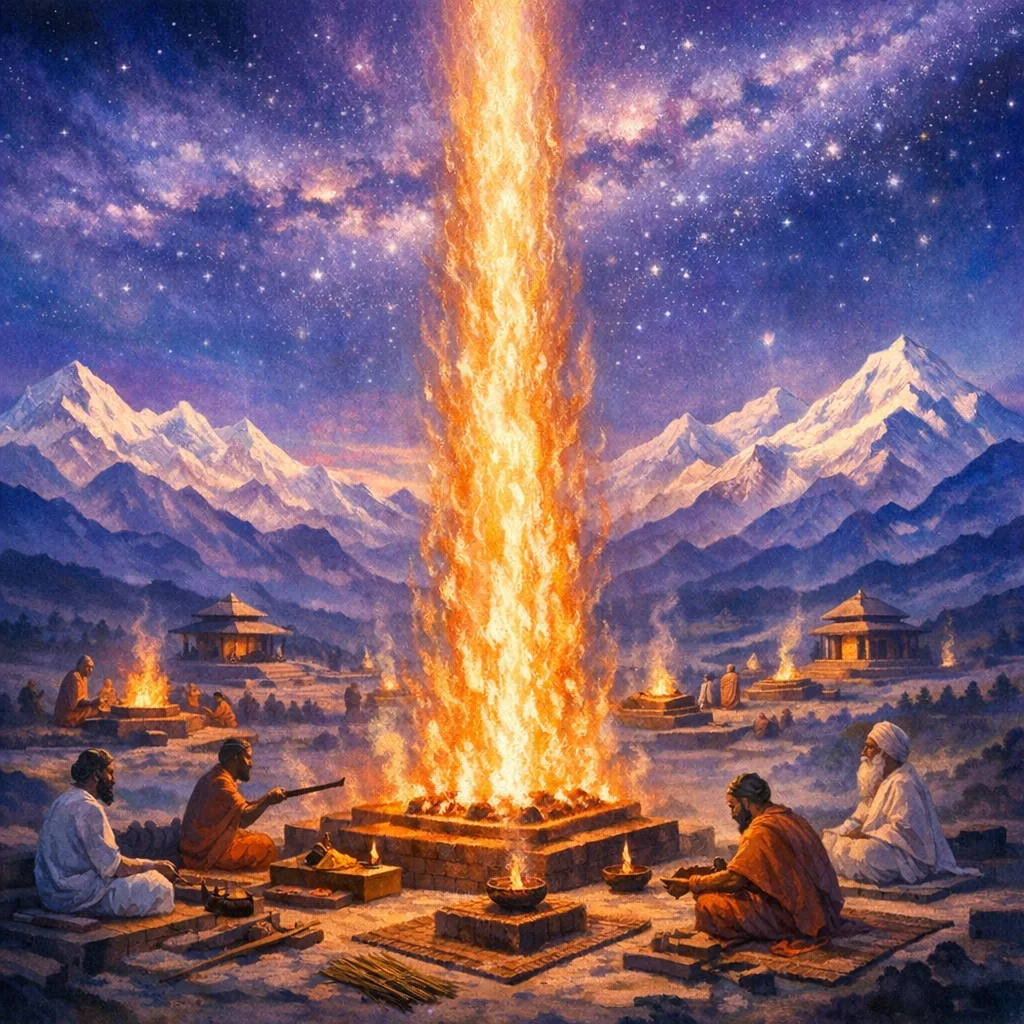
Kāṇḍa 7 of the Kṛṣṇa Yajurveda (Taittirīya Saṃhitā) is classically associated with the Aśvamedha corpus, embedding royal ideology within a dense web of Śrauta procedure. Prapāṭhaka 7.4 continues this register by coordinating mantra-text with the pragmatic choreography of offerings, animal-handling, and priestly recitation. The chapter’s texture is characteristic of the Black Yajurvedic style: prose injunctions and mantra-citations interleave, producing a performative script rather than a purely hymnic anthology. The theological horizon is sovereignty secured through cosmic correspondence—Agni as installer of order, Indra as paradigmatic king, Prajāpati as totality, and the horse as mobile embodiment of rāṣṭra. Recurrent formulae of “establishing,” “binding/releasing,” and “winning” articulate a ritual semiotics in which political dominion is transposed into sacrificial success. The prapāṭhaka thus functions as a liturgical hinge: it stabilizes the rite’s internal transitions while reiterating the Aśvamedha’s claim to universal integration.
Anuvakas
Anuvakas for this prapathaka are loading. Please check back soon.