
Bhagavad Gita — Shraddhatraya Vibhaga Yoga, Shloka 6
Shraddhatraya Vibhaga Yoga
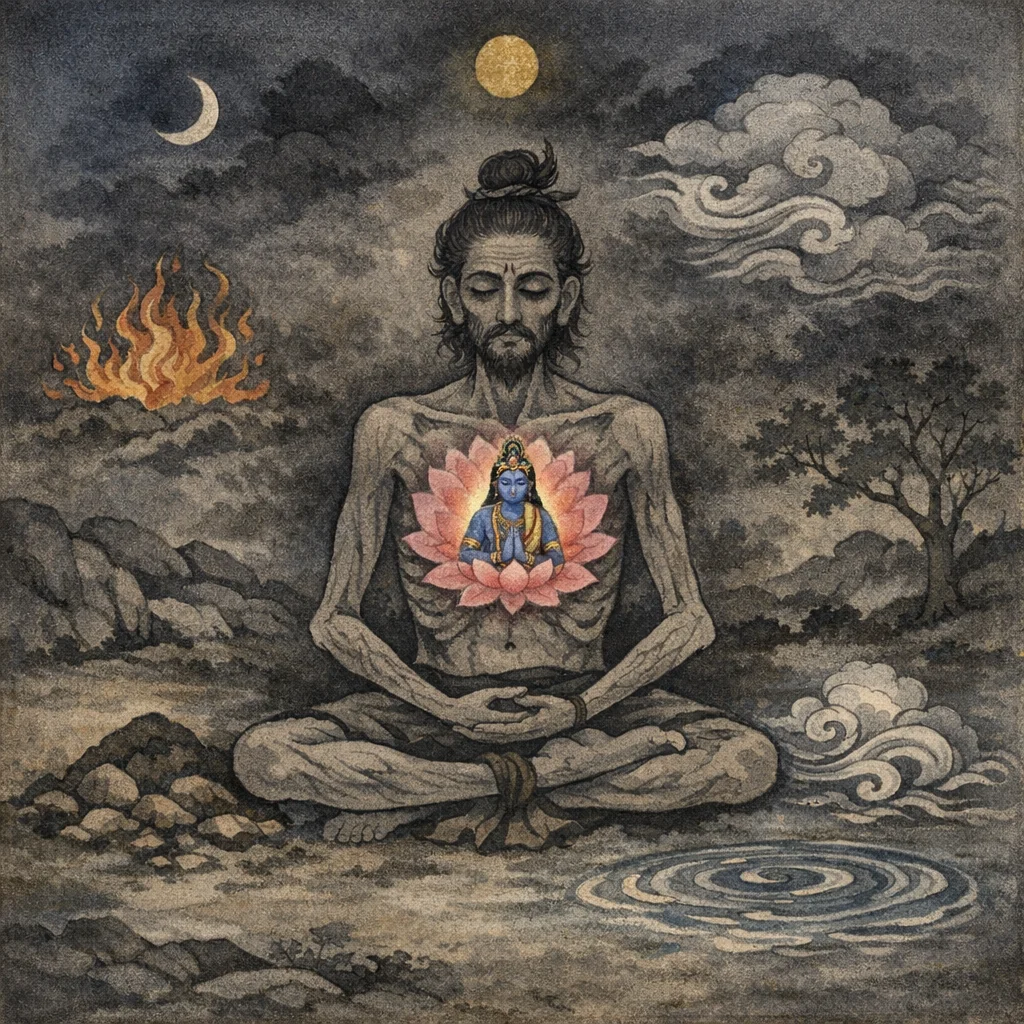
कर्षयन्तः शरीरस्थं भूतग्राममचेतसः । मां चैवान्तःशरीरस्थं तान्विद्ध्यासुरनिश्चयान् ॥ १७.६ ॥
karṣayantaḥ śarīrasthaṃ bhūtagrāmam acetasāḥ | māṃ caivāntaḥśarīrasthaṃ tān viddhy āsuranisciyān || 17.6 ||

ଅବିବେକୀ ସେମାନେ ଶରୀରସ୍ଥ ଭୂତଗ୍ରାମକୁ କଷ୍ଟ ଦିଅନ୍ତି ଏବଂ ଶରୀରର ଭିତରେ ସ୍ଥିତ ମୋତେ—ପରମାତ୍ମାକୁ ମଧ୍ୟ—କଷ୍ଟ ଦିଅନ୍ତି; ସେମାନଙ୍କୁ ତୁମେ ଆସୁର ନିଶ୍ଚୟଯୁକ୍ତ ବୋଲି ଜାଣ।
जो मूढ़ बुद्धिवाले लोग शरीर में स्थित भूतसमुदाय को कष्ट देते हैं और शरीर के भीतर स्थित मुझ परमात्मा को भी (कष्ट पहुँचाते हैं), उन्हें आसुरी निश्चयवाले जानो।
Those lacking discernment afflict the aggregate of beings (the psycho-physical constituents) situated in the body, and also (afflict) Me who abides within the body; know them to be of ‘āsuric’ resolve.
Traditional renderings often paraphrase the result as ‘tormenting the indwelling Lord’; academic readings clarify that ‘bhūtagrāma’ can denote the body’s constituents (elements/senses/living functions). ‘Āsura-niścaya’ is treated as a typology of intention rather than a claim about literal demonic identity.
FAQs
The verse critiques practices driven by poor judgment that suppress natural functions and mental balance; it frames such self-directed harshness as a distorted form of discipline rather than constructive self-regulation.
By stating that the divine abides within the body, the text links treatment of the embodied person to reverence for the indwelling reality; harming the embodied system is implicitly a failure to recognize that inner presence.
It concludes a section describing misguided austerities (tapas) and categorizes them via the guṇas; this verse identifies extreme, injurious austerity as ‘āsuric’ in orientation.
It can be read as advising that spiritual or self-improvement practices should be sustainable and health-aware, avoiding punitive regimes that damage well-being or foster ego-driven extremism.