
Bhagavad Gita — Shraddhatraya Vibhaga Yoga, Shloka 13
Shraddhatraya Vibhaga Yoga
विधिहीनमसृष्टान्नं मन्त्रहीनमदक्षिणम् । श्रद्धाविरहितं यज्ञं तामसं परिचक्षते ॥ १७.१३ ॥
vidhi-hīnam asṛṣṭānnaṃ mantra-hīnam adakṣiṇam | śraddhā-virahitaṃ yajñaṃ tāmasaṃ paricakṣate || 17.13 ||

ଯେ ଯଜ୍ଞ ଶାସ୍ତ୍ରବିଧିହୀନ, ଅନ୍ନଦାନହୀନ, ମନ୍ତ୍ରହୀନ, ଦକ୍ଷିଣାହୀନ ଏବଂ ଶ୍ରଦ୍ଧାହୀନ, ସେହି ଯଜ୍ଞକୁ ତାମସ ବୋଲି କୁହାଯାଏ।
जो यज्ञ शास्त्रविधि से रहित, अन्नदान से रहित, मन्त्र से रहित, दक्षिणा से रहित और श्रद्धा से रहित होता है, उसे तामस कहते हैं।
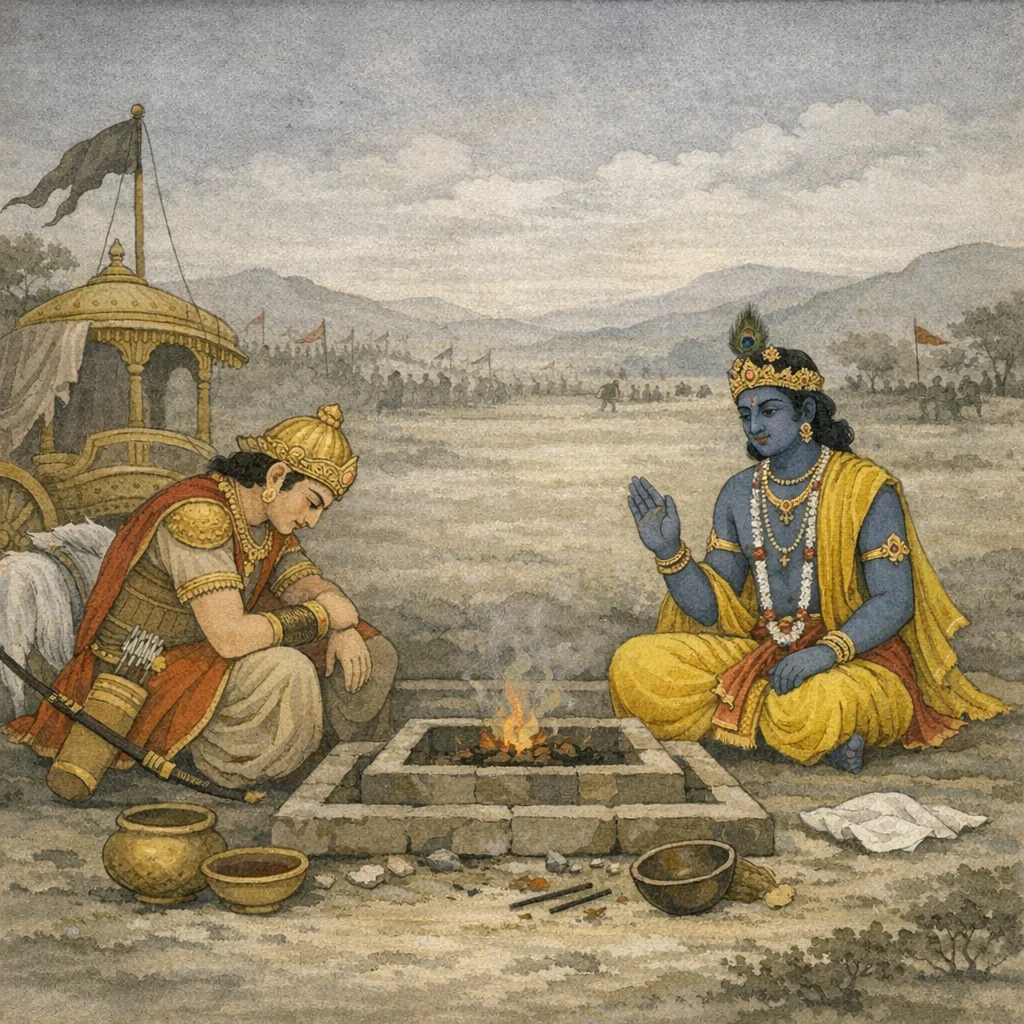
A sacrifice lacking prescribed procedure, lacking proper distribution of food, lacking mantra, lacking honorarium/gift, and lacking faith—this is called tamasic.
‘Asṛṣṭānna’ is variously glossed as ‘without food-offering’ or ‘without distribution of food (to participants/recipients).’ ‘Dakṣiṇā’ may be a priestly fee in ritual context, or more broadly a due gift; academic translations often keep it neutral as ‘gift/fee.’
FAQs
The verse treats ‘faith’ as committed attention and seriousness; when absent, actions become mechanical or careless, reflecting tamasic disengagement.
Tamas obscures understanding and order; the listed deficiencies portray a practice detached from both normative structure and inner orientation.
It completes the threefold classification of sacrifice (sattvic/rajasic/tamasic) following the earlier dietary triad.
It can be read as a critique of performative or poorly grounded practices—religious or secular—done without care, competence, or sincere commitment.