
Bhagavad Gita — Raja Vidya Raja Guhya Yoga, Shloka 22
Raja Vidya Raja Guhya Yoga
अनन्याश्चिन्तयन्तो मां ये जनाः पर्युपासते । तेषां नित्याभियुक्तानां योगक्षेमं वहाम्यहम् ॥ ९.२२ ॥
ananyāś cintayanto māṃ ye janāḥ paryupāsate | teṣāṃ nityābhiyuktānāṃ yoga-kṣemaṃ vahāmy aham || 9.22 ||

ଯେମାନେ ଅନନ୍ୟଭାବରେ କେବଳ ମୋତେ ଚିନ୍ତନ କରି ସର୍ବତୋଭାବେ ମୋର ଉପାସନା କରନ୍ତି—ସେହି ନିତ୍ୟନିଷ୍ଠମାନଙ୍କର ଯୋଗକ୍ଷେମ ମୁଁ ହିଁ ବହନ କରେ।
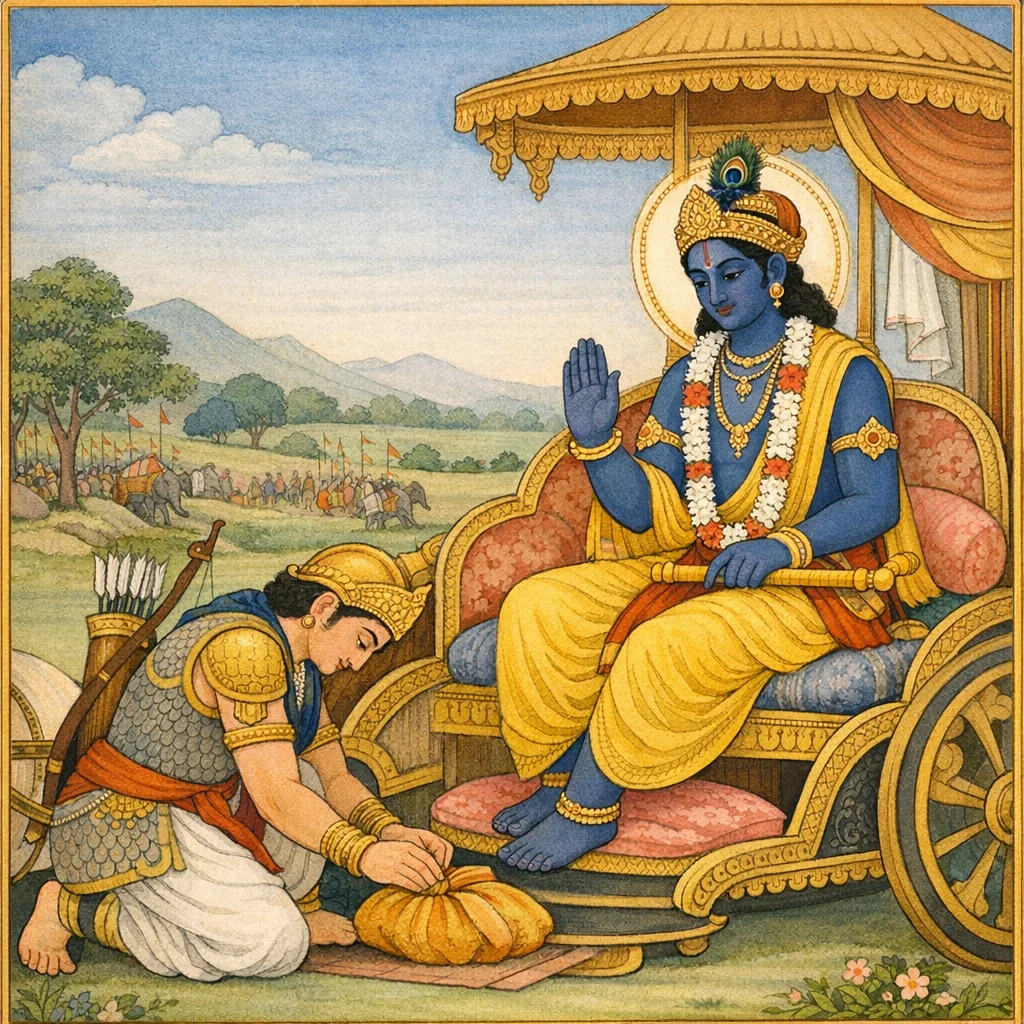
Those who, thinking of Me alone, worship Me on every side—of them, ever steadfast, I carry (secure) their yoga and kṣema (acquisition and protection).
Those persons who, without another (exclusive), contemplate Me and worship Me attentively—of those always engaged, I bear their ‘yoga-and-kṣema’ (attainment and safeguarding).
“yoga-kṣema” is often glossed as ‘getting what is not yet obtained and preserving what is obtained.’ Some interpret it inwardly as spiritual integration and stability; others as providential support in life. The verse is central for bhakti traditions emphasizing divine care.
FAQs
Exclusive contemplation reduces rumination and divided priorities; the promise of ‘support’ can function as a trust-based antidote to anxiety.
The verse expresses a relational metaphysics: the ultimate is not only the ground of being but also responsive within devotion, ensuring continuity of the devotee’s path.
After describing the limits of merit-based heaven (9.20–21), it offers an alternative: steady devotion that is not dependent on finite karmic results.
It can be applied as a principle of focused commitment: when one organizes life around a central ethical-spiritual aim, necessary supports (skills, habits, community) are more likely to be sustained.