
Shloka 37
Karma Yoga — Karma Yoga
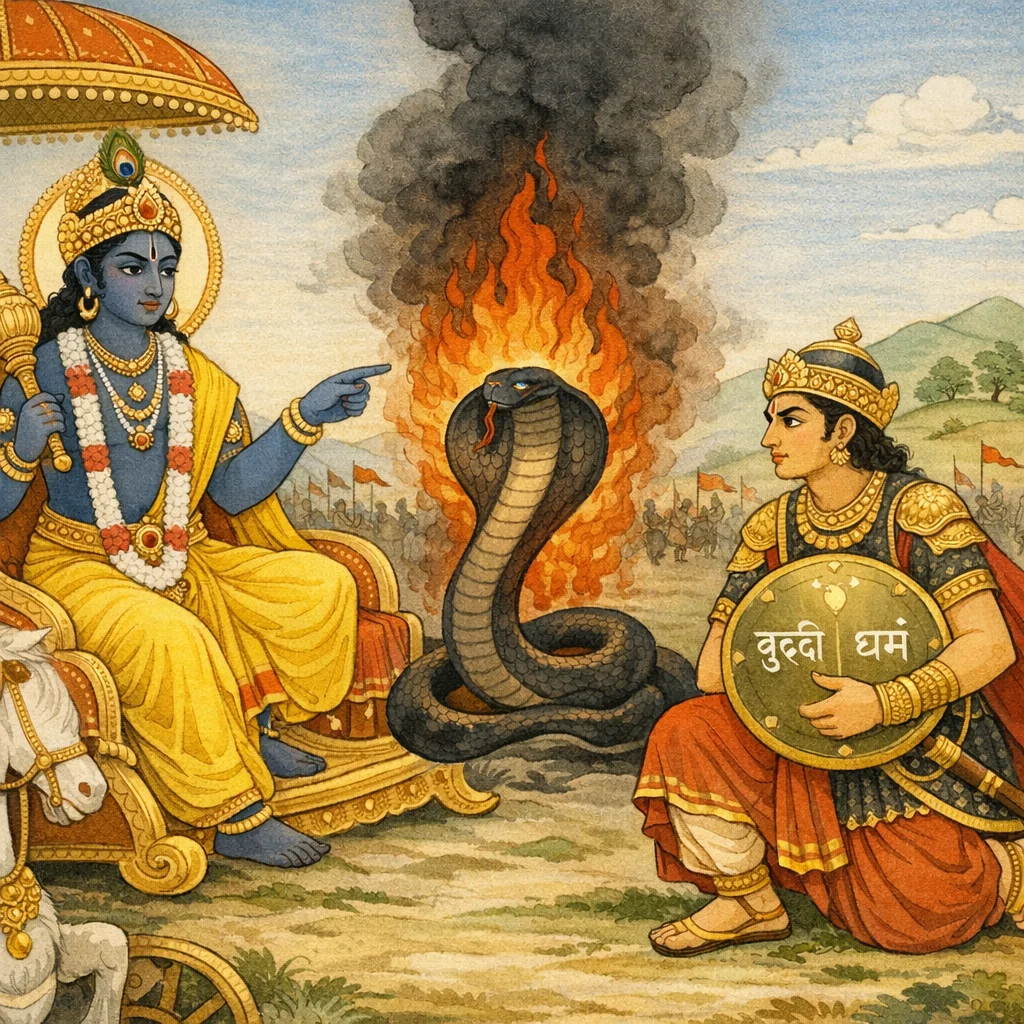
श्रीभगवानुवाच । काम एष क्रोध एष रजोगुणसमुद्भवः महाशनो महापाप्मा विद्ध्येनमिह वैरिणम् ॥ ३.३७ ॥
śrībhagavān uvāca | kāma eṣa krodha eṣa rajoguṇa-samudbhavaḥ mahāśano mahāpāpmā viddhy enam iha vairiṇam || 3.37 ||

ଶ୍ରୀଭଗବାନ କହିଲେ: ଏହା କାମ; ଏହା ହିଁ କ୍ରୋଧ—ରଜୋଗୁଣରୁ ଉତ୍ପନ୍ନ; ଅତୃପ୍ତ, ସର୍ବଗ୍ରାସୀ ଓ ମହାପାପୀ। ଏହାକୁ ଏଠାରେ ବୈରୀ ବୋଲି ଜାଣ।
The Blessed Lord said: It is desire; it is anger—born of the guṇa of rajas; all-consuming and greatly harmful. Know this here as the enemy.
The Lord said: This is desire; this is anger, arising from rajas; insatiable, deeply harmful—know it in this context as the adversary.
‘Enemy’ is commonly read metaphorically as the chief inner obstacle. Some traditions emphasize moral culpability; academic readings foreground rajas as an explanatory category in a theory of motivation.
FAQs
Desire and anger are presented as linked states: frustrated desire can shift into anger, producing compulsive and shortsighted choices.
Rajas is treated as a constituent quality of prakṛti that energizes craving and agitation, obscuring discriminative knowledge.
It directly answers Arjuna’s question about what compels wrongdoing, identifying a primary causal factor in the chapter’s moral psychology.
Track the chain from craving to irritation; interventions like delaying gratification and reframing expectations reduce the escalation.