
Bhagavad Gita — Karma Yoga, Shloka 21
Karma Yoga
यद्यदाचरति श्रेष्ठस्तत्तदेवेतरो जनः । स यत्प्रमाणं कुरुते लोकस्तदनुवर्तते ॥ ३.२१ ॥
yad yad ācarati śreṣṭhas tat tad evetaro janaḥ | sa yat pramāṇaṁ kurute lokas tad anuvartate || 3.21 ||

ଶ୍ରେଷ୍ଠ ପୁରୁଷ ଯାହା ଯାହା ଆଚରଣ କରେ, ଅନ୍ୟ ଲୋକମାନେ ମଧ୍ୟ ସେହିଟି ଆଚରଣ କରନ୍ତି। ସେ ଯେ ପ୍ରମାଣ (ମାନଦଣ୍ଡ) ସ୍ଥାପନ କରେ, ଲୋକ ତାହାକୁ ଅନୁସରଣ କରେ।
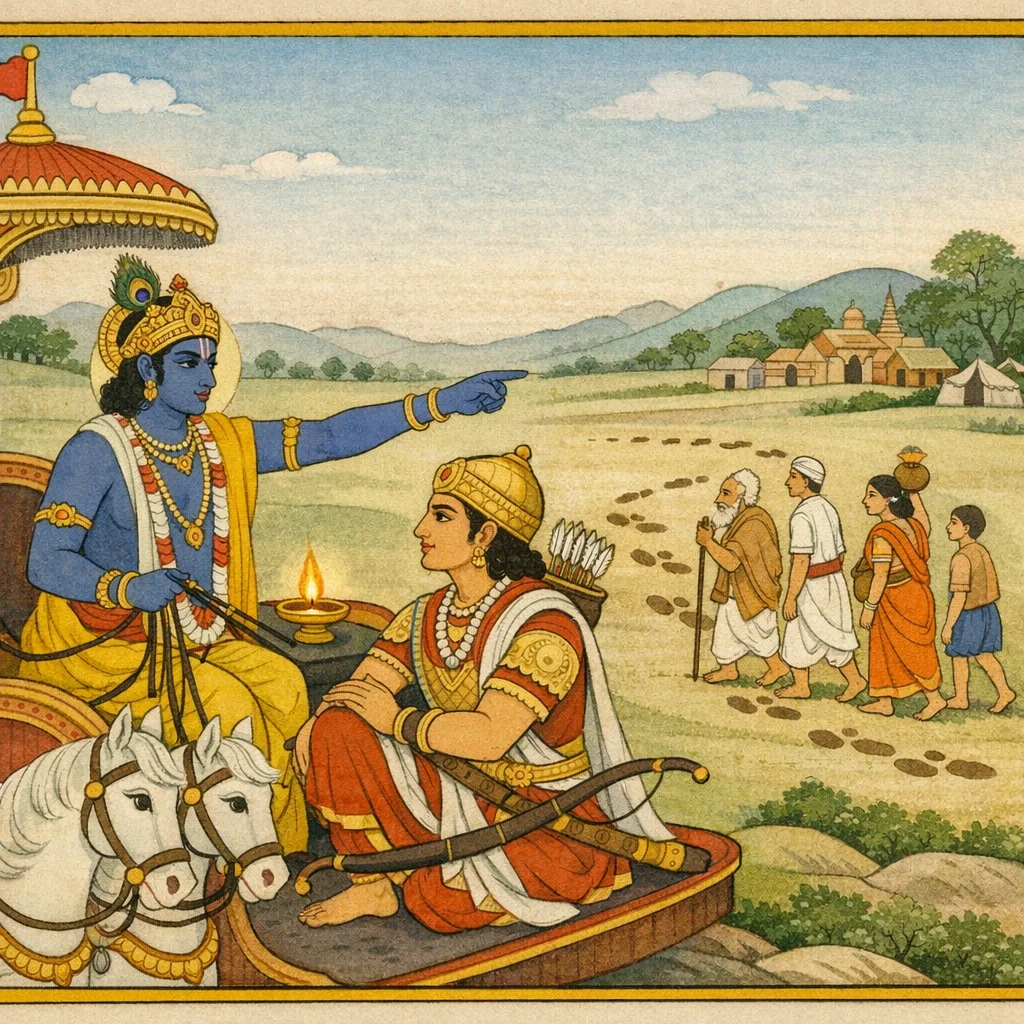
Whatever the श्रेष्ठ (leading person) does, that alone others do; whatever standard he sets, the world follows.
Whatever a leading person practices, that the other people practice; whatever standard he establishes, the world follows that.
Interpretations are largely stable. ‘Śreṣṭha’ can mean socially eminent, ethically exemplary, or spiritually advanced; ‘pramāṇa’ is ‘authoritative standard’—often read as the normative power of exemplars in shaping collective conduct.
FAQs
It recognizes social imitation: people adopt behaviors modeled by admired figures, so personal discipline in leaders has broad psychological impact.
Rather than a metaphysical claim, it is primarily an ethical-sociological principle within the Gītā’s framework of sustaining order.
It strengthens the argument for Arjuna’s engagement: his conduct sets precedents, so withdrawal would communicate a norm of avoidance.
Applies to public figures, managers, teachers, and parents: institutional culture often mirrors the behavior that leaders normalize.