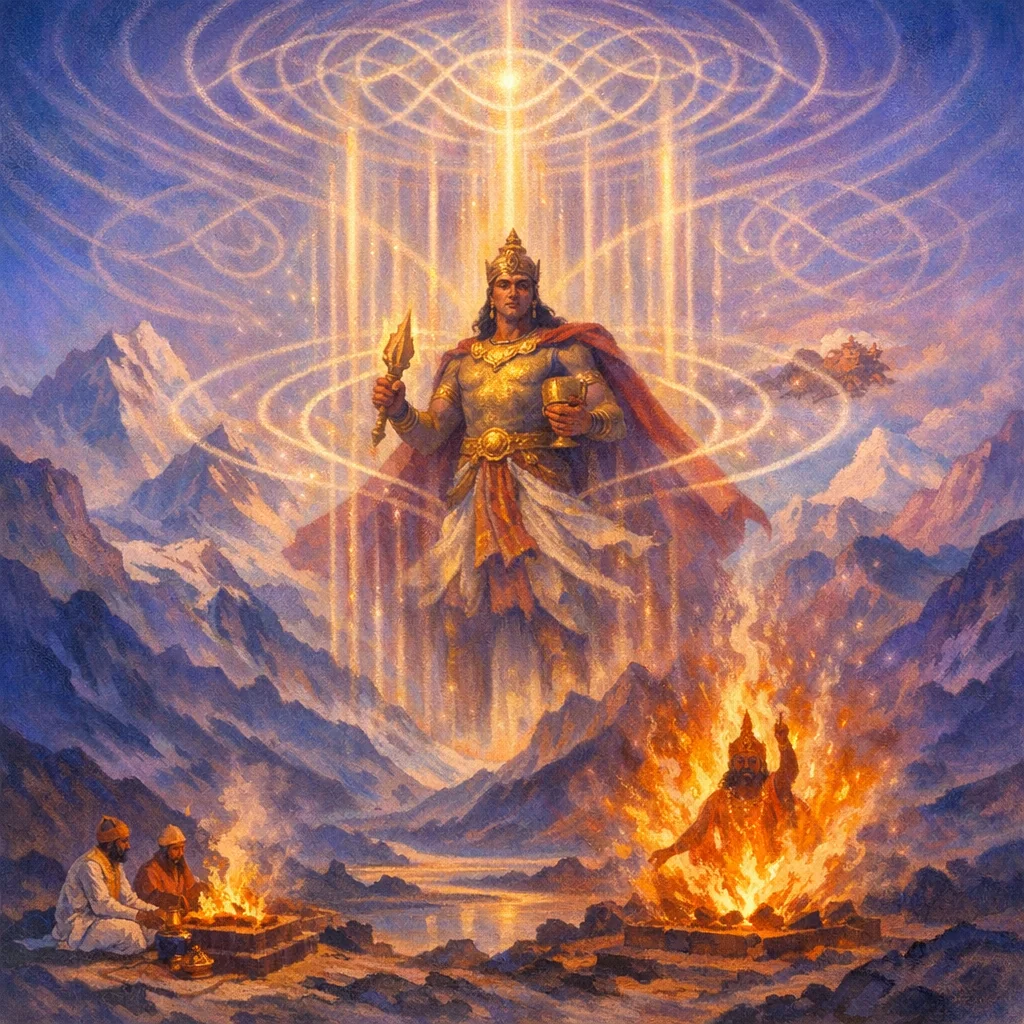
Dashati 4
Aindra protection and yajña-success through divine guidance, Soma-inspired resolve, and Agni as the rite’s wealth-center
Indra (Aindra orientation Soma-exhilaration setting)
Upbeat resolute and protective—moving from benediction to exhilarated striving
The dashati draws on underlying Ṛgvedic sources; r̥ṣi attribution is not provided in the input and cannot be fixed here without the exact RV hymn mapping for each verse.
Applicable to Soma-yajña recitation where protection from doṣa and successful pressing/joy (andaḥ) are sought; also fits ancillary praise linking Soma exhilaration to victory and prosperity.
Mantras
Mantra 1
आ ते अग्न इधीमहि द्युमन्तं देवाजरम् युद्ध स्या ते पनीयसी समिद्दीदयति द्यवीषं स्तोतृभ्य आ भर
We kindle thee, O Agni, the radiant, the unaging god: may thy lovely (flame) be for battle; the kindling, when enkindled, shines forth with celestial might; bring (thy gifts) hither to the praisers.
Mantra 2
आग्निं न स्ववृक्तिभिर्होतारं त्वा वृणीमहे शीरं पावकशोचिषं वि वो मदे यज्ञेषु स्तीर्णबर्हिषं विवक्षसे
As (men choose) Agni, so with well-turned praises we choose thee for Hotṛ, the strong, of purifying flame; in the exhilaration (of Soma) among the sacrifices, where the sacred grass is strewn, thou art fain to utter (the rite) and to accept (our worship).
Mantra 3
महे नो अद्य बोधयोषो राये दिवित्मती यथा चिन्नो अबोधयः सत्यश्रवसि वाय्ये सुजाते अश्वसूनृते
Awaken us this day, O Uṣas, for great wealth, thou who art radiant; as thou hast awakened us aforetime, (so now), O true-famed, well-born, gracious of speech, bestowing steeds (and benediction).
Mantra 4
भद्रं नो अपि वातय मनो दक्षमुत क्रतुम् अथा ते सख्ये अन्धसो वि वो मदे रणा गावो न यवसे विवक्षसे
Waft unto us auspicious good—(right) mind, ability, and holy purpose; then, in thy friendship, (through) the Soma-draught, in exhilaration, thou art eager to contend, as kine (hasten) to pasture.
Mantra 5
क्रत्वा महां अनुष्वधं भीम आ वावृते शवः श्रिय ऋष्व उपाकयोर्नि शिप्री हरिवां दधे हस्तयोर्वज्रमायसम्
Great by sacred energy, terrible, he has encompassed strength with splendour; the lofty, bearded, tawny-steeded (Indra) has grasped in his hands the iron thunderbolt.
Mantra 6
स घा तं वृषणं रथमधि तिष्ठाति गोविदम् यः पात्रं हारियोजनं पूर्णमिन्द्रा चिकेतति योजा न्विन्द्र ते हरी
He, verily, mounts that vigorous chariot, the finder of kine—he who takes note, O Indra, of the vessel, harnessed for the tawny steeds, filled (with Soma): yoke, O Indra, thy two tawny horses.
Mantra 7
अग्निं तं मन्ये यो वसुरस्तं यं यन्ति धेनवः अस्तमर्वन्त आशवो ऽस्तं नित्यासो वाजिन इषं स्तोतृभ्य आ भर
Him I deem to be Agni who is wealth; to him the kine resort; to him the swift steeds resort; to him the ever-yoked racers resort: bring nourishment hither to the praisers.
Mantra 8
न तमंहो न दुरितं देवासो अष्ट मर्त्यम् सजोषसो यमर्यमा मित्रो नयति वरुणो अति द्विषः
Neither sin nor calamity (shall reach) the mortal whom the eight gods, of one mind, conduct; whom Aryaman and Mitra lead, and whom Varuṇa bears beyond the haters.
Frequently Asked Questions
It teaches that the sacrifice succeeds when the gods protect the sacrificer from fault and hostility, while Soma strengthens resolve and Agni gathers nourishment and wealth at the ritual center.
They represent orderly, covenant-keeping divine powers that “lead” the mortal beyond enemies; the ‘eight’ are understood as the Vasus who assist and stabilize the sacrificer’s rite.
It portrays Agni as the central hearth of the yajña: offerings, gains, and strength ‘converge’ there, so the praisers ask Agni to bring iṣ (nourishment) to them through the rite.