Dashati 2
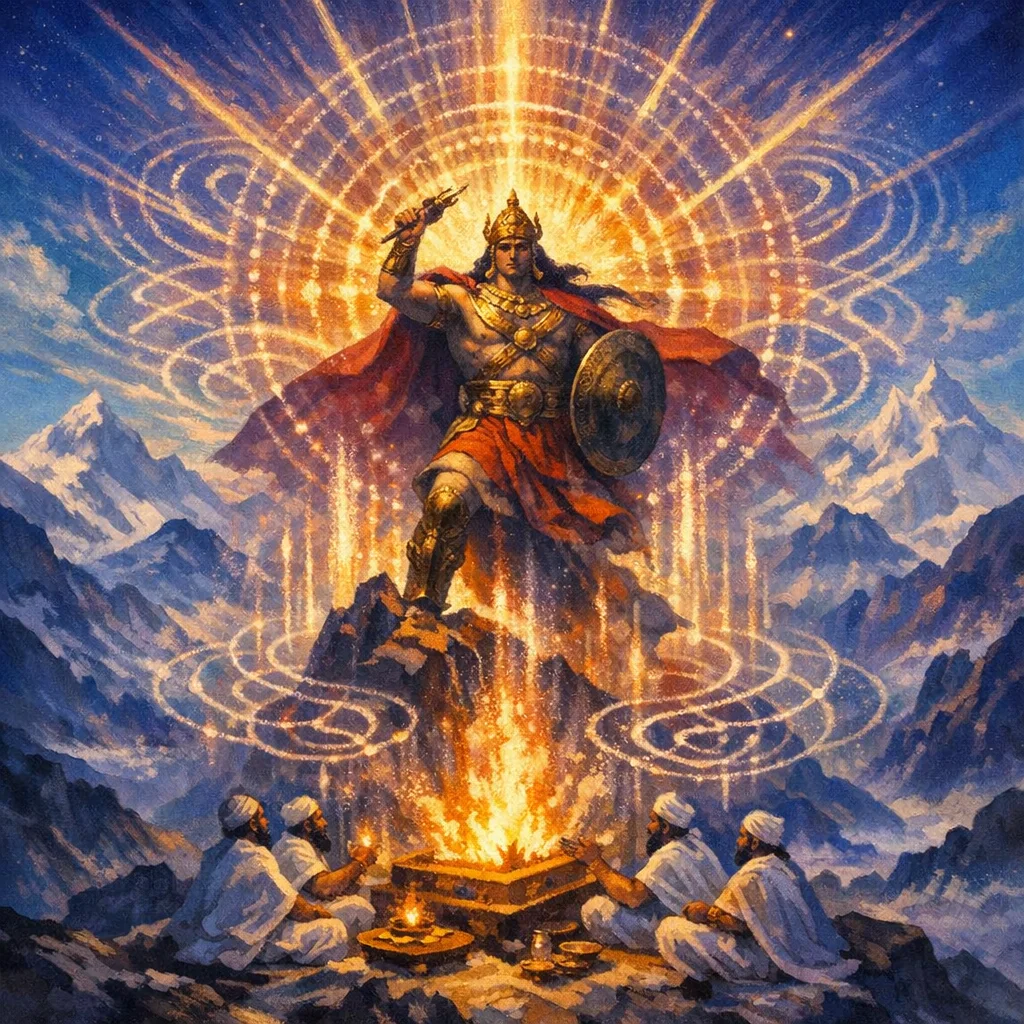
Āindra stotra: summoning Indra to the Soma-rite for protection, strength, and victory
Indra
Rousing martial and invitatory—confident praise that presses for Indra’s arrival and aid
Vāmadeva Gautama (probable for the cluster; requires RV concordance for each ṛc)
Soma-yajña context: Indra is invited to partake of Soma mixed/attended by waters (udabhiḥ) and to accept the stotra as the effective summons.
Mantras
Mantra 1
अभ्रातृव्यो अना त्वमनापिरिन्द्र जनुषा सनादसि युधेदापित्वमिच्छसे
Thou art, O Indra, from birth and from of old, without rival, unharmed, and unimpeded; even now thou seekest battle.
Mantra 2
यो न इदमिदं पुरा प्र वस्य आनिनाय तमु व स्तुषे सखाय इन्द्रमूतये
Him who of old hath brought to us manifold good and abundant wealth, him do I praise, Indra, the friend, for succour.
Mantra 3
आ गन्ता मा रिषण्यत प्रस्थावानो माप स्थात समन्यवः दृढा चिद्यमयिष्णवः
Come hither; do not injure (us), O leaders of the prastāva; stand not apart: even the strong who would restrain, being of one intent, (let them not prevail).
Mantra 4
आ याह्ययमिन्दवे ऽश्वपते गोपत उर्वरापते सोमं सोमपते पिब
Come hither; this (Soma) is (ready) for thee, O Indra, lord of horses, lord of kine, lord of the fruitful field; drink the Soma, O lord of Soma.
Mantra 5
त्वया ह स्विद्युजा वयं प्रति श्वसन्तं वृषभ ब्रुवीमहि संस्थे जनस्य गोमतः
With thee, indeed, as our yoked ally, we would address, O bull, the snorting (foe); in the assembly of the cattle-rich people (we utter our prayer).
Mantra 6
गावश्चिद्धा समन्यवः सजात्येन मरुतः सबन्धवः रिहते ककुभो मिथः
Even the kine, being of one temper, of one kind, and of one kin, mutually lick one another’s flanks; (so) the Maruts (cleave together).
Mantra 7
त्वं न इन्द्रा भर ओजो नृम्णं शतक्रतो विचर्षणे आ वीरं पृतनासहम्
Do thou, O Indra, bring unto us vigour and heroic might; O Śatakratu, ruler of men, bring (to us) a champion, a conqueror of battles.
Mantra 8
अधा हीन्द्र गिर्वण उप त्वा काम ईमहे ससृग्महे उदेव ग्मन्त उदभिः
Now, verily, O Indra, thou who rejoicest in praise, we desire thee; we supplicate thee; we have sent forth (our hymn): come indeed upward (to the sacrifice), with the waters (that accompany the Soma).
Mantra 9
सीदन्तस्ते वयो यथा गोश्रीते मधौ मदिरे विवक्षणे अभि त्वामिन्द्र नोनुमः
As birds sit down (upon their resort), so do thy (worshippers) settle upon the Soma, resting on the cow’s (produce), in the sweet, the exhilarating draught, eager to enjoy it; therefore, O Indra, we repeatedly praise thee.
Mantra 10
वयमु त्वामपूर्व्य स्थूरं न कच्चिद्भरन्तो ऽवस्यवः वज्रिञ्चित्रं हवामहे
We, bearing (our oblations and praises), seeking protection, invoke thee, O unprecedented, mighty one; (we invoke) thee, O Vajrin, the wonderful (in exploits), as one invokes no other.
Frequently Asked Questions
It calls Indra to the Soma offering and asks him to grant protection, strength (ojas), heroic power (nṛmṇa), and victory-supporting aid to the sacrificer.
The ‘waters’ point to Soma’s preparation and accompaniment; the imagery urges Indra to arrive at the rite where Soma is offered and mixed/attended by waters.
They are sung by the Sāmavedic chanters: the Prastotṛ begins (prastāva), the Udgātṛ leads the main chant (udgītha), and the Pratihartṛ completes the responses (pratihāra).