Dashati 7
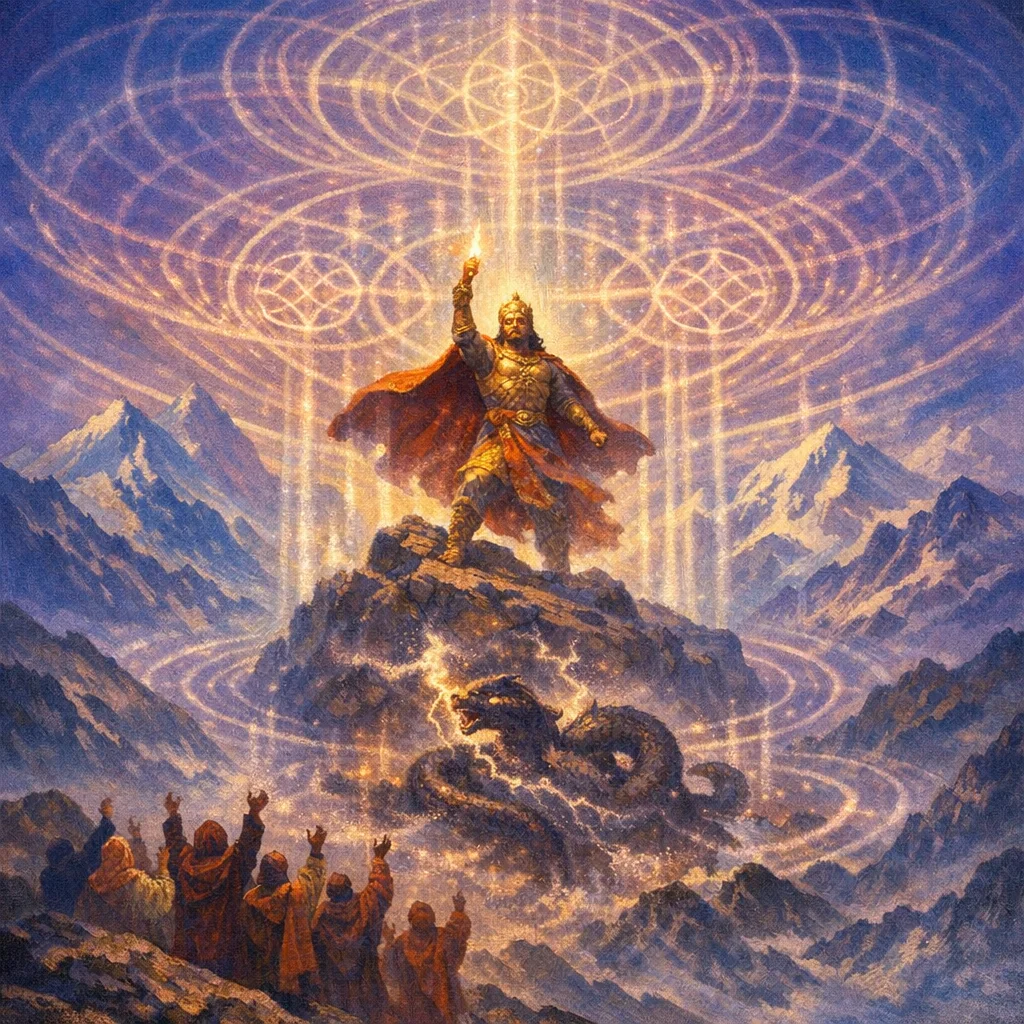
Aindra praise and petition: Indra as protector, wealth-giver, and Vṛtra-slayer invoked for bhaga, dyumna, and pauṃsya
Indra
Heroic and expansive (bṛhat) with urgent supplication turning into triumphant praise
R̥ṣi not provided in the input; the verses reflect common Aindra diction (ūti vṛtrahan dyumna pauṃsya) typical of Indra-hymn traditions rather than a single clearly indicated family here.
Soma-yajña Indra-stotra usage (Aindra): employed to invite and strengthen Indra for receiving Soma and granting boons.
Mantras
Mantra 1
शग्ध्यू3षु शचीपत इन्द्र विश्वाभिरूतिभिः भगं न हि त्वा यशसं वसुविदमनु शूर चरामसि
Be gracious now, O lord of Śacī, Indra, with all thy succours; for we follow thee, O hero, the glorious, the finder of riches, as (men seek) fortune.
Mantra 2
या इन्द्र भुज आभरः स्वर्वां असुरेभ्यः स्तोतारमिन्मघवन्नस्य वर्धय ये च त्वे वृक्तबर्हिषः
Those succours, Indra, which thou didst bring, endowed with heavenly (splendour), from the Asuras—prosper this praiser, O bountiful one, and those also who have strewn the sacred grass for thee.
Mantra 3
प्र मित्राय प्रार्यम्णे सचथ्यमृतावसो वरूथ्ये3 वरुणे छन्द्यं वचः स्तोत्रं राजसु गायत
Sing forth a stotra—an acceptable, metrical utterance—to Mitra, to Aryaman, (to them) of immortal protection; (sing) to Varuṇa, the giver of shelter; sing (this) praise in the presence of kings.
Mantra 4
अभि त्वा पूर्वपीतय इन्द्र स्तोमेभिरायवः समीचीनास ऋभवः समस्वरन्रुद्रा गृणन्त पूर्व्यम्
Indra, the former drinkers of the Soma, approaching thee with praises, the well-ordered Ribhus have chanted in concert; the Rudras hymn thine ancient (glory).
Mantra 5
प्र व इन्द्राय बृहते मरुतो ब्रह्मार्चत वृत्रं हनति वृत्रहा शतक्रतुर्वज्रेण शतपर्वणा
Utter forth, Maruts, your sacred hymn to the great Indra; the slayer of Vṛtra, of manifold energies, smites Vṛtra with the hundred-jointed thunderbolt.
Mantra 6
बृहदिन्द्राय गायत मरुतो वृत्रहन्तमम् येन ज्योतिरजनयन्नृतावृधो देवं देवाय जागृवि
Sing, Maruts, to the great Indra, the most potent slayer of Vṛtra; by whom, thriving through sacred order, light was generated—wakeful, (he comes) as the god for the god (to the sacrifice).
Mantra 7
इन्द्र क्रतुं न आ भर पिता पुत्रेभ्यो यथा शिक्षा णो अस्मिन्पुरुहूत यामनि जीवा ज्योतिरशीमहि
Indra, bring unto us (right) purpose and power, as a father instructs his sons; much-invoked, in this rite may we, living, attain unto light (prosperity).
Mantra 8
मा न इन्द्र परा वृणग्भवा नः सधमाद्ये त्वं न ऊती त्वमिन्न आप्यम् मा न इन्द्र परा वृणक्
Reject us not, Indra; be ours in the common Soma-exhilaration: thou art our aid; thou, verily, art accessible (to our worship): reject us not, Indra.
Mantra 9
वयं घ त्वा सुतावन्त आपो न वृक्तबर्हिषः पवित्रस्य प्रस्रवणेषु वृत्रहन्परि स्तोतार आसते
We, indeed, having the Soma pressed, with the sacred grass strewn, like waters (ready to flow), O slayer of Vṛtra, the praisers sit around at the outflowings of the filter.
Mantra 10
यदिन्द्र नाहुषीष्वा ओजो नृम्णं च कृष्टिषु यद्वा पञ्च क्षितीनां द्युम्नमा भर सत्रा विश्वानि पौंस्या
Whatever vigour and manly power (exist), Indra, among the race of Nahusha, and among the tribes; or whatever splendour belongs to the five peoples—bring thou (all) hither, continually, all manly energies.
Frequently Asked Questions
It praises Indra and asks him to come “now” with all protections, bringing prosperity, splendour, and heroic strength to the sacrificer.
The Maruts function as Indra’s praising companions; their call to “sing to great Indra” frames the chant as a strong communal summons that empowers the stotra.
They generalize the request: Indra is asked to gather and transfer all vigour and splendour found among human lineages and across the “five peoples,” meaning the whole social world addressed by the sacrifice.