Dashati 6
Indra’s swift invitation to the Soma-rite through potent stotra and unhindered approach
Indra
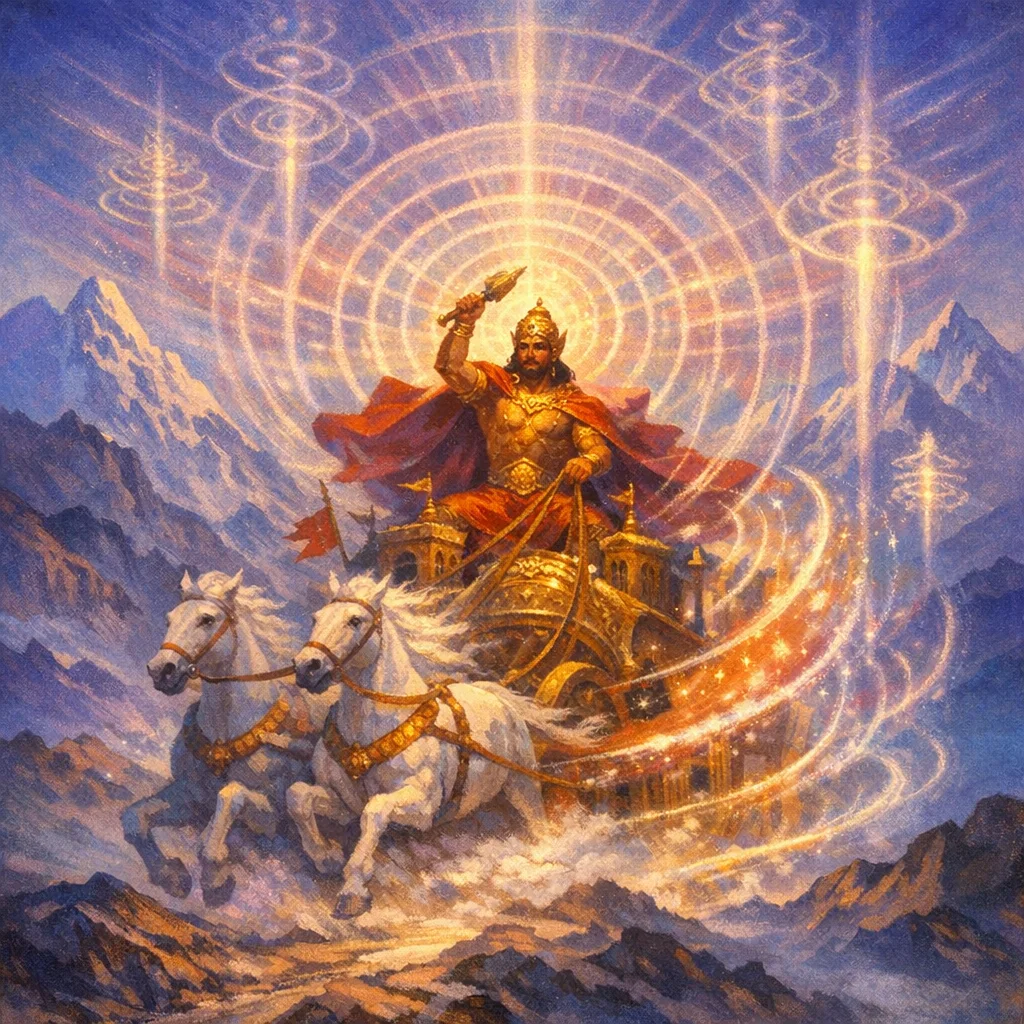
Bright forceful and triumphant—an urgent ‘come hither’ atmosphere with victorious uplift
R̥ṣi cannot be fixed from the provided excerpt alone; the verses belong to the Aindra praise-stream used for Sāman performance rather than a single clearly identified family in the input.
Aindra stotra addressed to Indra in the Soma sacrifice inviting him to drink and to empower the rite with victory and protection.
Mantras
Mantra 1
न किष्टं कर्मणा नशद्यश्चकार सदावृधम् इन्द्रं न यज्ञैर्विश्वगूर्तमृभ्वसमधृष्टं धृष्णुमोजसा
No one attains (to him) by deed, who has achieved Indra, the ever-increasing, whom no sacrifices (can equal as a theme of praise), the universally celebrated, the skilful, the unassailed, the bold, by his might.
Mantra 2
य ऋते चिदभिश्रिषः पुरा जत्रुभ्य आतृदः सन्धाता सन्धिं मघवा पुरूवसुर्निष्कर्ता विह्रुतं पुनः
He who, even without (external aid), of old tore away the constraining bonds from the joints; the bountiful, the rich in wealth, the restorer of the joint, the deliverer, (who sets) again that which has been dislocated.
Mantra 3
आ त्वा सहस्रमा शतं युक्ता रथे हिरण्यये ब्रह्मयुजो हरय इन्द्र केशिनो वहन्तु सोमपीतये
May the tawny, flowing-maned steeds, yoked by sacred prayer, bear thee hither, O Indra, in thy golden chariot, a thousand and a hundred, for the drinking of the Soma.
Mantra 4
आ मन्द्रैरिन्द्र हरिभिर्याहि मयूररोमभिः मा त्वा के चिन्नि येमुरिन्न पाशिनो ऽति धन्वेव तां इहि
Come, Indra, with thy tawny steeds, drawn by gladdening strains, with splendid, peacock-hued adornments; let no binders restrain thee: pass beyond them, as an arrow over the bow; come hither to this (rite).
Mantra 5
त्वमङ्ग प्र शंसिषो देवः शविष्ठ मर्त्यम् न त्वदन्यो मघवन्नस्ति मर्डितेन्द्र ब्रवीमि ते वचः
Thou, verily, art to be celebrated, the god most mighty, for the sake of the mortal; none other than thee, bountiful Indra, is a bestower of delight: to thee I utter the appointed word.
Mantra 6
त्वमिन्द्र यशा अस्यृजीषी शवसस्पतिः त्वं वृत्राणि हंस्यप्रतीन्येक इत्पुर्वनुत्तश्चर्षणीधृतिः
Thou, Indra, art glorious, of direct career, the lord of strength; thou slayest the Vṛtras, irresistible; alone, the ancient impeller, the sustainer of men.
Mantra 7
इन्द्रमिद्देवतातय इन्द्रं प्रयत्यध्वरे इन्द्रं समीके वनिनो हवामह इन्द्रं धनस्य सातये
Indra alone (we invoke) for the attainment of the deity; Indra in the advancing sacrifice; Indra in the encounter: we, seekers of gain, invoke Indra for the acquisition of wealth.
Mantra 8
इमा उ त्वा पुरूवसो गिरो वर्धन्तु या मम पावकवर्णाः शुचयो विपश्चितो ऽभि स्तोमैरनूषत
May these praises augment thee, opulent (Indra), even those of mine, of purifying splendour, pure, (uttered) by the wise, who have lauded thee with stomas.
Mantra 9
उदु त्ये मधुमत्तमा गिर स्तोमास ईरते सत्राजितो धनसा अक्षितोतयो वाजयन्तो रथा इव
Up rise those most honeyed praises; the stomas are set in motion, ever-victorious, wealthy, of unfailing succours, bearing the prize, like chariots.
Mantra 10
यथा गौरो अपा कृतं तृष्यन्नेत्यवेरिणम् आपित्वे नः प्रपित्वे तूयमा गहि कण्वेषु सु सचा पिब
As a thirsty bull goes to the prepared waters, to the friendly (place), so come quickly to our intimacy, to our ancestral fellowship; among the Kaṇvas, in good companionship, drink (the Soma).
Frequently Asked Questions
It is a forceful invitation for Indra to come swiftly to the Soma-rite on his tawny steeds, unhindered by obstacles, so he may drink Soma and grant victory and prosperity.
They present the chant itself as an effective sacred power: the stomas ‘rise’ and ‘move’ like chariots, overcoming impediments and carrying the sacrificer toward the prize (vāja).
As an Indra-focused Sāman in the Soma service, sung by the Sāmavedic singers to draw Indra near, stabilize the rite against obstructions, and secure his sustaining help.