Dashati 5
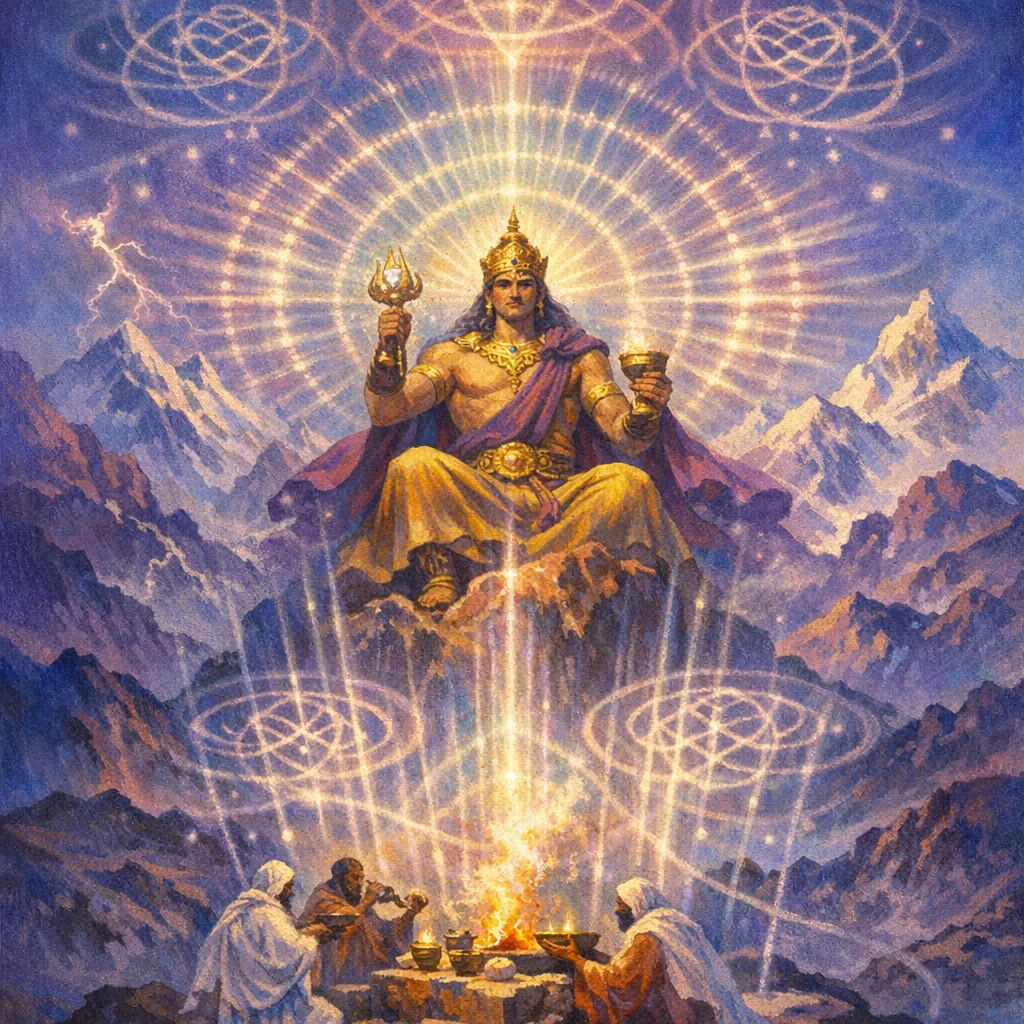
Indra’s sovereignty and exclusive praise at the Soma-pressing
Indra
Heroic and exalting (vīra-rasa) with an admonitory closing tone that enforces exclusive devotion and precision
R̥ṣi not determinable from the provided dashati excerpt; the diction and themes align with mainstream Indra-stuti traditions used for Sāman adaptation in the Aindra kanda.
Soma-pressing context implied by “sute” (when Soma is expressed) and repeated uktha/stotra instruction
Mantras
Mantra 1
अभि त्वा शूर नोनुमो ऽदुग्धा इव धेनवः ईशानमस्य जगतः स्वर्दृशमीशानमिन्द्र तस्थुषः
Unto thee, O hero, we offer praise, as unmilked kine (abounding with milk): (we praise) Indra, the lord of this moving world, heaven-beholding, the lord of that which stands fast.
Mantra 2
त्वामिद्धि हवामहे सातौ वाजस्य कार्वः त्वां वृत्रेष्विन्द्र सत्पतिं नरस्त्वां काष्ठास्वर्वतः
Thee indeed do we invoke, the chanters, for the winning of the sacrificial prize; thee do men (invoke), O Indra, the true lord, amid obstructive (foes); thee (they invoke) as a steed at the goals (of enterprise).
Mantra 3
अभि प्र वः सुराधसमिन्द्रमर्च यथा विदे यो जरितृभ्यो मघवा पुरूवसुः सहस्रेणेव शिक्षति
Therefore, sing forth unto you (all) the praise of Indra, of excellent bounty, that we may duly obtain (his favour); for he, the bounteous, possessed of many riches, bestows upon the praisers as it were with a thousand (fold abundance).
Mantra 4
तं वो दस्ममृतीषहं वसोर्मन्दानमन्धसः अभि वत्सं न स्वसरेषु धेनव इन्द्रं गीर्भिर्नवामहे
Him, for you, the wondrous Indra, the subduer of assailants, exulting in the Soma-juice, the giver of wealth, do we magnify with praises; as milch-kine, at their own lowings, hasten unto the calf, so do our hymns press towards Indra.
Mantra 5
तरोभिर्वो विदद्वसुमिन्द्रं सबाध ऊतये बृहद्गायन्तः सुतसोमे अध्वरे हुवे भरं न कारिणम्
Singing aloud, at the sacrifice where the Soma is expressed, I invoke Indra, the bestower of wealth, for your succour, repelling assailants; (I invoke him) as a bearer, as an efficient agent, with aids that enable us to pass beyond (peril).
Mantra 6
तरणिरित्सिषासति वाजं पुरन्ध्या युजा आ व इन्द्रं पुरुहूतं नमे गिरा नेमिं तष्टेव सुद्रुवम्
Indra, the deliverer, indeed is desirous to bestow strength with bounty; him, the much-invoked, I adore with my hymn for you, as (one reverences) a well-fixed felly fashioned by the wheel-wright—firm and unshaken.
Mantra 7
पिबा सुतस्य रसिनो मत्स्वा न इन्द्र गोमतः आपिर्नो बोधि सधमाद्ये वृधे3 ऽस्मां अवन्तु ते धियः
Drink of the savoury Soma that has been expressed; be exhilarated for us, O Indra, abounding in cattle: be our friend in the common banquet for our increase; may thy benign intentions protect us.
Mantra 8
त्वं ह्येहि चेरवे विदा भगं वसुत्तये उद्वावृषस्व मघवन्गविष्टय उदिन्द्राश्वमिष्टये
Do thou, verily, come unto the worshipper, bringing the portion of good fortune for the gaining of wealth; shower forth, O bountiful Indra, for the winning of kine; and pour forth a horse for the desired attainment.
Mantra 9
न हि वश्चरमं च न वसिष्ठः परिमंस्ते अस्माकमद्य मरुतः सुते सचा विश्वे पिबन्तु कामिनः
Verily, neither is your portion the last, nor does Vasiṣṭha apportion it as scanty: therefore, today, O Maruts, when the Soma is expressed, let all the eager (gods) drink together with us.
Mantra 10
मा चिदन्यद्वि शंसत सखायो मा रिषण्यत इन्द्रमित्स्तोता वृषणं सचा सुते मुहुरुक्था च शंसत
Proclaim not, even in the least, any other (than him), O friends; commit no error: let the praiser, when the Soma is expressed, praise Indra alone, the vigorous; and repeatedly recite the solemn hymns.
Frequently Asked Questions
It proclaims Indra as the sovereign of the moving and unmoving worlds and urges the singers to praise him alone—especially when Soma is pressed—so the rite remains effective and error-free.
The image suggests abundance and readiness: the offerings and praises are full, undiminished, and waiting to be ‘drawn forth’ toward Indra, who can grant both earthly and heavenly benefits.
It is an instruction to maintain single-devatā focus at that moment of the Soma rite—no switching deities or careless wording—so the chant (stotra/uktha) stays correct and potent.