Prapathaka 3
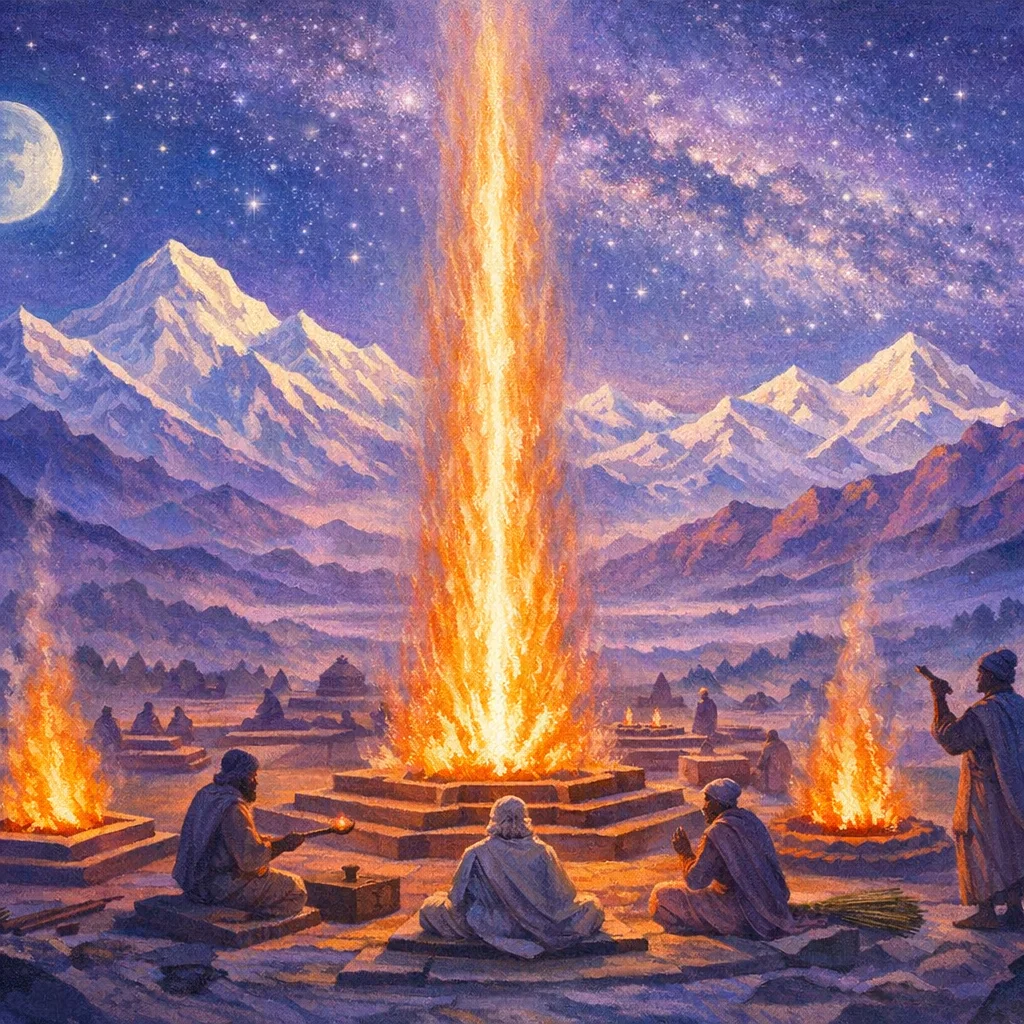
Agnicayana / Soma-sacrifice interface: construction and consecration of the fire-altar (citi) and its ritual-theological identifications, with ancillary offerings and recitations that integrate the altar into the broader Śrauta cycle (notably the Soma-yajña’s cosmological mapping).
Kṛṣṇa Yajurveda, Kāṇḍa 7 Prapāṭhaka 3 belongs to the Agnicayana complex, where liturgy and manual procedure converge to transform built space into a cosmogram. The chapter’s mantric texture characteristically yokes brick, layer, and measurement to divine bodies—Agni as the altar, Prajāpati as the sacrificed totality, and the meters as structural regulators. The ritual logic is cumulative: each placement is simultaneously a physical act and a reconstitution of the sacrificer’s person within the ordered universe. Recurrent identifications (earth–atmosphere–sky; seasons; directions; breaths) stabilize the altar as a microcosm, while protective and expiatory formulas manage the inherent danger of “re-making” Agni. The prapāṭhaka thus exemplifies Yajurvedic pragmatics: precise injunctions embedded in mantra, producing efficacy through correct sequence, correct correspondences, and the controlled circulation of heat, speech, and offering.
Anuvakas
Anuvakas for this prapathaka are loading. Please check back soon.