Prapathaka 3
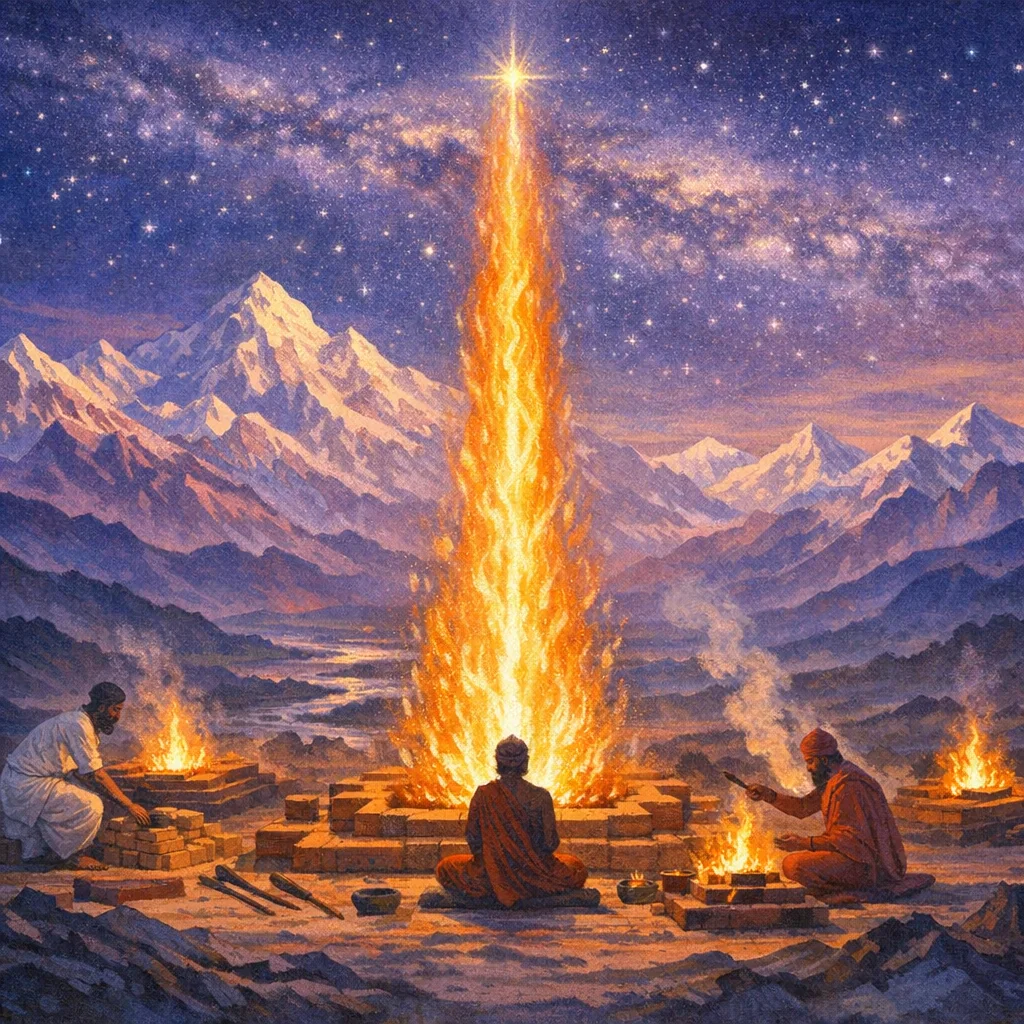
Agnicayana / Soma-sacrifice continuum (Śrauta): preparatory and constructive rites around the fire-altar (citi) and its consecratory offerings, integrated with Soma-yajña liturgy typical of Taittirīya-Kṛṣṇa Yajurveda Kanda 5.
Kṛṣṇa Yajurveda (Taittirīya Saṃhitā) 5.3 belongs to the mid-Kāṇḍa-5 complex that systematizes Śrauta performance around Agnicayana and its Soma-sacrificial embedding. The chapter’s mantric prose articulates the ritual logic by which the sacrificer (yajamāna) is reconstituted through the altar and fires: the citi is not merely a structure but a cosmogram in which earth, atmosphere, and heaven are ritually “reassembled” via measured placements, consecrations, and oblations. The text’s characteristic Yajurvedic style—injunctive formulae tied to precise acts—links material operations (laying, anointing, enclosing, offering) to metaphysical correspondences (Prajāpati/Agni as totality; breaths, seasons, meters, and directions as limbs). The prapāṭhaka thus functions as a liturgical bridge: it authorizes concrete altar-work while simultaneously providing the theological grammar that makes those acts efficacious within Vedic sacrificial theory.
Anuvakas
Anuvakas for this prapathaka are loading. Please check back soon.