Prapathaka 5
Kṛṣṇa Yajurveda (Taittirīya Saṃhitā) Kanda 2: Darśa–Paurṇamāsa iṣṭi cycle (new- and full-moon offerings), focusing on core iṣṭi-mantra deployment around the havis-offerings (ājya/puroḍāśa) and their standard yājyā–anuvākyā framework, with ancillary expiatory/confirmatory formulas used to secure correctness of the rite.
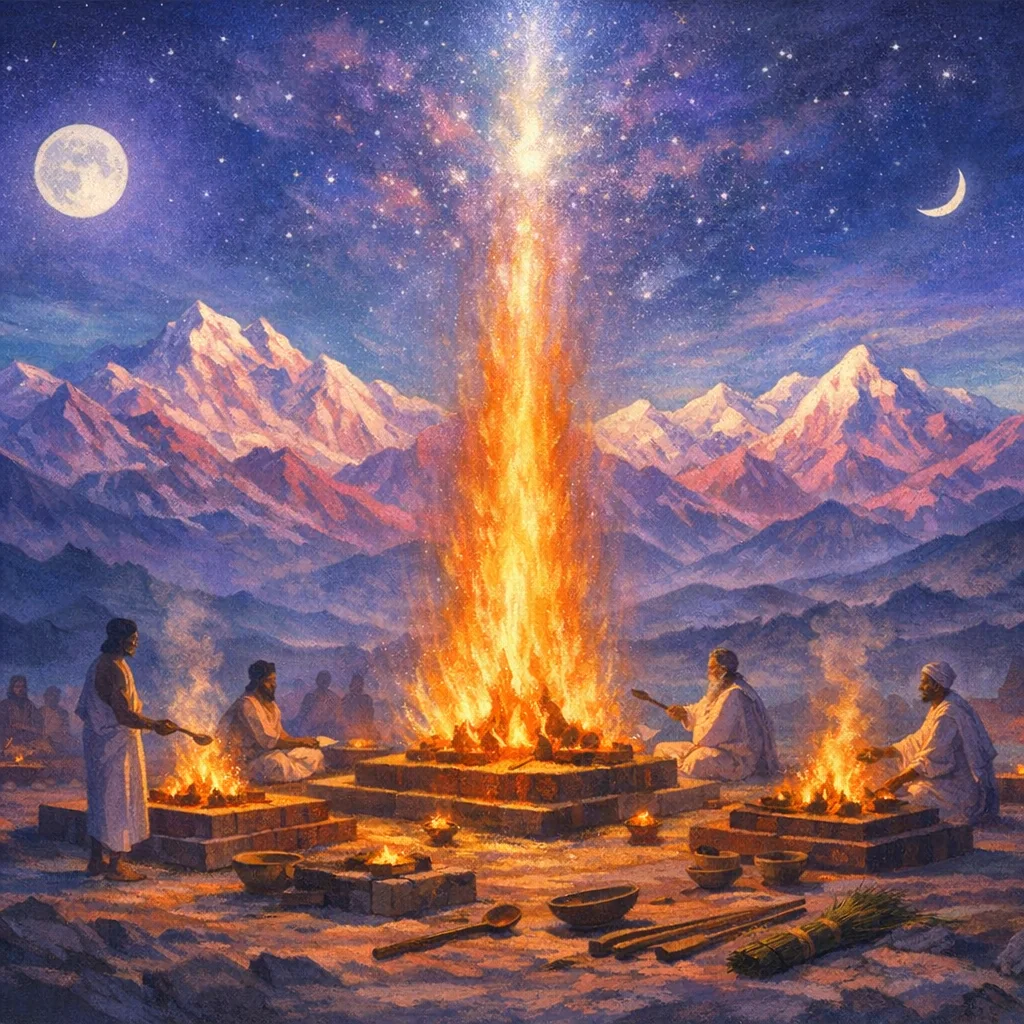
Kāṇḍa 2, Prapāṭhaka 5 of the Kṛṣṇa Yajurveda (Taittirīya Saṃhitā) belongs to the Darśa–Paurṇamāsa complex and consolidates the liturgical grammar of the monthly iṣṭi: the controlled movement from invitation and praise (anuvākyā) to offering-impulse (yājyā), and the ritual sealing of acts through assent, expiation, and re-integration of the sacrificer into cosmic order. The chapter’s mantras articulate the reciprocal economy between yajamāna and deities—Agni as mouth and carrier, Soma/Viṣṇu as stabilizers of sacrifice, and the lunar rhythm as temporal scaffold. Philologically, the section exemplifies the Taittirīya style: compact injunctive prose interleaved with ṛc-fragments, where ritual pragmatics determine syntax and deixis (“here/this/now”). Theologically, it frames offering as reconstitution of ṛta: correct sequence, correct address, and correct remainder-management (śeṣa) prevent ritual “leakage” and ensure prosperity, offspring, and social continuity.
Anuvakas
Anuvakas for this prapathaka are loading. Please check back soon.