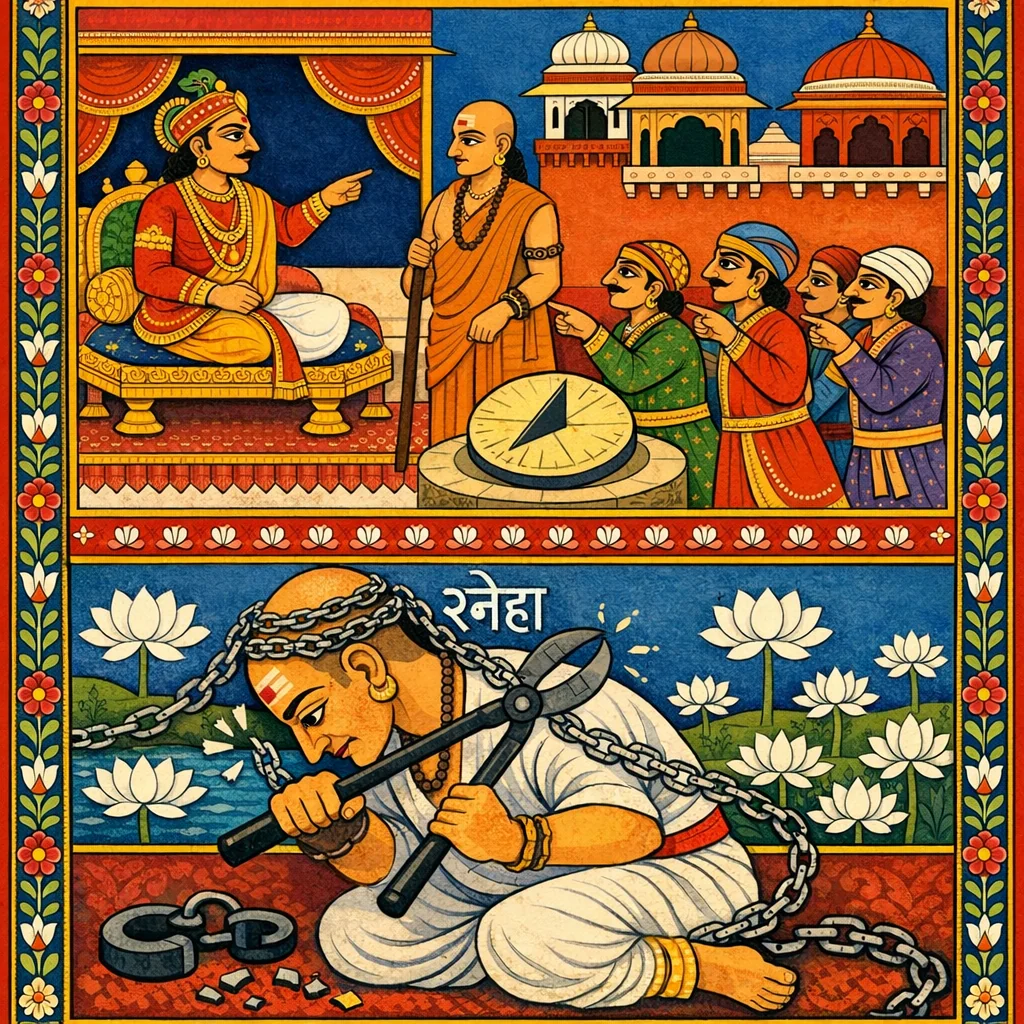
Chapter 13: On Time, Conduct, and the Causes of Bondage and Liberation
Adhyaya 13
Observations on the Strengths and Weaknesses of People
အဓ್ಯಾಯ ၁၃ သည် Subhāṣita ပုံစံ နီတိစာပေ၏ သင်ခန်းစာဆန်သော အဖော်ရစ်ဇမ်များကို စုပေါင်းတင်ပြပြီး ကိုယ်ကျင့်တရား၊ နိုင်ငံရေး-လူမှုဗေဒနှင့် မေတဖီဇစ်ဆိုင်ရာ အယူအဆများအကြား လှည့်လည်ရွေ့လျားသည်။ အခန်းသည် အချိန်တိုတောင်းသော်လည်း စီလသန့်ရှင်းသော လုပ်ရပ်ကို ဦးစားပေးရန်၊ လက်ရှိအပေါ် သတိပညာဖြင့် အာရုံစိုက်ခြင်းကို အတိတ်အပေါ် မအကျိုးရှိသော ဝမ်းနည်းပူဆွေးမှု သို့မဟုတ် အနာဂတ်အပေါ် ခန့်မှန်းစိတ်ကူးယဉ်မှုနှင့် နှိုင်းယှဉ်ပြသည်။ လူ့ဘဝကို မိခင်ဝမ်းထဲကတည်းက သတ်မှတ်ထားသည်ဟု ယူဆသော ကြိုတင်အခြေအနေများ (အသက်တာကာလ၊ ဥစ္စာဓန၊ ဗဟုသုတ၊ သေခြင်း) ဖြင့် ပုံဖော်ထားသည်ဟု ဖော်ပြသည်။ ကမ္မဟေတုနှင့် ပြန်လည်တုံ့ပြန်မှုကို အလေးပေးသော ပုဒ်များတွင် လုပ်ရပ်သည် လုပ်သူနောက်သို့ “လိုက်ပါ” သည်ဟု ဆိုပြီး၊ ပညာရရှိမှုကို ဆရာထံ ဝန်ဆောင်မှုဖြင့် ရနိုင်သည်ဟု ပုံဖော်ထားသည်။ နိုင်ငံရေးအကြောင်းအရာအဖြစ် ပြည်သူသည် အုပ်ချုပ်သူ၏ သဘောသဘာဝကို ထင်ဟပ်ကြောင်း ဆိုသဖြင့် ကိုယ်ကျင့်တရားကို အုပ်ချုပ်ရေးနှင့် လူမှုစည်းကမ်းအတွင်း တည်နေရာချထားသည်။ ထို့ပြင် တွယ်တာမှု (sneha, viṣayāsaṅga) ကို ကြောက်ရွံ့မှုနှင့် ဒုက္ခ၏ အရင်းအမြစ်ဟု သတ်မှတ်ကာ ချုပ်နှောင်မှုနှင့် လွတ်မြောက်မှုကို စိတ်အခြေအနေများအဖြစ် ဆန့်ကျင်ဖော်ပြသည်။ နိဂုံးတွင် တည်ကြည်ခိုင်မာမှု၏ အယူအဆများနှင့် guru ကို ဂုဏ်ပြုရမည့် ပွဲတော်-စီလဆိုင်ရာ အရေးပါမှုကို ထည့်သွင်းကာ သမိုင်းဝင် ပညာရေးစံနှုန်းများနှင့် လူမှုအဆင့်အတန်းကို ထင်ဟပ်စေသည်။
Key Concepts
Key Principles
Strategic Themes
Shlokas in Chapter 13
Verse 1
मुहूर्तमपि जीवेच्च नरः शुक्लेन कर्मणा । न कल्पमपि कष्टेन लोकद्वयविरोधिना ॥
လူသည် သန့်ရှင်းသော ကုသိုလ်ကမ္မဖြင့် မိနစ်တစ်ခဏပင် အသက်ရှင်ရသော်ကောင်း၏။ လောကနှစ်ပါးနှင့် ဆန့်ကျင်သော ဆင်းရဲခက်ခဲမှုဖြင့် ကာလရှည်အသက်ရှင်ခြင်းကို မတန်ဖိုးထား။
Verse 2
गते शोको न कर्तव्यो भविष्यं नैव चिन्तयेत् । वर्तमानेन कालेन वर्तयन्ति विचक्षणाः ॥
ကွယ်လွန်သွားသောအရာအတွက် ဝမ်းနည်းမနေသင့်၊ အနာဂတ်ကိုလည်း အလွန်မစိုးရိမ်သင့်။ ပညာရှိတို့သည် လက်ရှိအချိန်နှင့်အညီ နေထိုင်ကြသည်။
Verse 3
स्वभावेन हि तुष्यन्ति देवाः सत्पुरुषाः पिता । ज्ञातयः स्नानपानाभ्यां वाक्यदानेन पण्डिताः ॥
နတ်တို့၊ သဒ္ဓါရှိသူကောင်းများနှင့် ဖခင်တို့သည် သဘာဝစိတ်ထားဖြင့်ပင် ကျေနပ်ကြသည်။ ဆွေမျိုးများသည် ရေချိုးခြင်းနှင့် သောက်သုံးခြင်းဖြင့် ကျေနပ်ကြပြီး၊ ပညာရှိများသည် စကားပေးခြင်း—ဆွေးနွေးဝေမျှခြင်းဖြင့် ကျေနပ်ကြသည်။
Verse 4
आयुः कर्म च वित्तं च विद्या निधनमेव च । पञ्चैतानि हि सृज्यन्ते गर्भस्थस्यैव देहिनः ॥
အသက်တာ၊ ကမ္မ၊ ဥစ္စာ၊ ပညာနှင့် သေခြင်း—ဤငါးပါးသည် သက်ရှိသည် မိခင်ဝမ်းအတွင်းရှိစဉ်ကတည်းက သတ်မှတ်ဖန်တီးထားသည်ဟု ဆိုသည်။
Verse 5
अहो बत विचित्राणि चरितानि महात्मनाम् । लक्ष्मीं तृणाय मन्यन्ते तद्भारेण नमन्ति च ॥
အို—မဟာသူတော်ကောင်းတို့၏ အကျင့်အကြံသည် အံ့ဩဖွယ်ပင်။ သူတို့သည် လက္ခမီ—ဥစ္စာကံကောင်းခြင်းကို မြက်တစ်ပင်ကဲ့သို့ သဘောထားသော်လည်း၊ ထိုဥစ္စာ၏ အလေးပင်ကြောင့် ကိုယ်ကိုလည်း ငုံ့ချကြသည်။
Verse 6
यस्य स्नेहो भयं तस्य स्नेहो दुःखस्य भाजनम् । स्नेहमूलानि दुःखानि तानि त्यक्त्वा वसेत् सुखम् ॥
ချစ်ခင်မှုက ကြောက်ရွံ့မှုဖြစ်လာသူအတွက် ထိုချစ်ခင်မှုသည် ဝမ်းနည်းဒုက္ခ၏ အိုးအိမ်ဖြစ်သည်။ ဒုက္ခသည် တွယ်တာမှုမှ ပေါက်ဖွားသဖြင့် ထိုအမြစ်ကို စွန့်လွှတ်ကာ သက်သာစွာ နေထိုင်လော့။
Verse 7
अनागतविधाता च प्रत्युत्पन्नमतिस्तथा । द्वावेतौ सुखमेधेते यद्भविष्यो विनश्यति ॥
မလာသေးသောအရာကို ကြိုတင်စီမံသူနှင့် လက်ရှိအခိုက်အတန့်တွင် ဉာဏ်ကောင်းစွာ ဆုံးဖြတ်နိုင်သူ—ဤနှစ်မျိုးသည် လွယ်ကူစွာ တိုးတက်သည်။ ‘နောက်မှပဲ’ ဟု မျှော်လင့်သူကတော့ ပျက်စီးတတ်သည်။
Verse 8
राज्ञि धर्मिणि धर्मिष्ठाः पापे पापाः समे समाः । राजानमनुवर्तन्ते यथा राजा तथा प्रजाः ॥
ဘုရင်သည် တရားရှိလျှင် ပြည်သူတို့လည်း တရားကို လိုက်နာကြသည်။ ဘုရင်သည် အပြစ်ရှိလျှင် ပြည်သူတို့လည်း အပြစ်သို့ လိုက်ကြသည်။ ဘုရင်သည် မျှတလျှင် ပြည်သူတို့လည်း မျှတလာသည်။ ဘုရင်ကဲ့သို့ ပြည်သူကဲ့သို့။
Verse 9
जीवन्तं मृतवन्मन्ये देहिनं धर्मवर्जितम् । मृतो धर्मेण संयुक्तो दीर्घजीवी न संशयः ॥
တရားမရှိသော အသက်ရှင်သူကို သေသူကဲ့သို့ပင် ငါထင်သည်။ တရားနှင့်ပေါင်းစည်းကာ သေသွားသူမူကား နာမည်ကောင်းဖြင့် ရှည်လျားစွာ အသက်ရှင်သည်—သံသယမရှိ။
Verse 10
धर्मार्थकाममोक्षाणां यस्यैकोऽपि न विद्यते । अजागलस्तनस्येव तस्य जन्म निरर्थकम् ॥
ဓမ္မ၊ အတ္ထ၊ ကာမ၊ မောက္ခ—ဤလေးပါးထဲမှ တစ်ပါးတောင် မရှိသူ၏ မွေးဖွားခြင်းသည် အဓိပ္ပါယ်မဲ့သည်။ ဆိတ်လည်ပင်းပေါ် နို့တံကဲ့သို့ အသုံးမဝင်။
Verse 11
दह्यमानाः सुतीव्रेण नीचाः परयशोऽग्निना अशक्तास्तत्पदं गन्तुं ततो निन्दां प्रकुर्वते ॥
နိမ့်ကျသူတို့သည် အခြားသူ၏ဂုဏ်သတင်း၏ “မီး” ကြောင့် ပြင်းထန်စွာလောင်ကျွမ်းနေကြသည်။ ထိုအဆင့်သို့ မရောက်နိုင်သဖြင့် အပြစ်တင်ကဲ့ရဲ့၍ အမုန်းစကားပြောကြသည်။
Verse 12
बन्धाय विषयासङ्गो मुक्त्यै निर्विषयं मनः । मन एव मनुष्याणां कारणं बन्धमोक्षयोः ॥
အာရုံဝတ္ထုများကို တွယ်ကပ်ခြင်းသည် ချုပ်နှောင်မှု၏အကြောင်း၊ အာရုံကင်းသောစိတ်သည် လွတ်မြောက်မှု၏အကြောင်း။ လူတို့အတွက် ချုပ်နှောင်ခြင်းနှင့် လွတ်မြောက်ခြင်း၏ အဓိကအကြောင်းမှာ စိတ်ပင်ဖြစ်သည်။
Verse 13
देहाभिमाने गलितं ज्ञानेन परमात्मनि । यत्र यत्र मनो याति तत्र तत्र समाधयः ॥
ပရမအတ္တမန်ကို သိမြင်သော ဉာဏ်ကြောင့် ကိုယ်ခန္ဓာအပေါ် အတ္တခံယူမှု ပျော်လျော့သွားလျှင် စိတ်သွားရာရာတွင် ထိုနေရာတိုင်းမှာပင် သမာဓိ ဖြစ်ပေါ်သည်။
Verse 14
ईप्सितं मनसः सर्वं कस्य सम्पद्यते सुखम् । दैवायत्तं यतः सर्वं तस्मात्सन्तोषमाश्रयेत् ॥
စိတ်လိုချင်သမျှ အားလုံးသည် မည်သူ့အတွက်မှ တည်မြဲသောပျော်ရွှင်မှု မဖြစ်နိုင်။ အရာအားလုံးသည် ကံကြမ္မာပေါ် မူတည်သဖြင့် စိတ်ကျေနပ်မှုကို အားကိုးသင့်သည်။
Verse 15
यथा धेनुसहस्रेषु वत्सो गच्छति मातरम् । तथा यच्च कृतं कर्म कर्तारमनुगच्छति ॥
နွားထောင်ပေါင်းများစွာအကြားတွင် နွားကလေးက မိခင်ကို ရှာတွေ့သကဲ့သို့၊ ပြုလုပ်ပြီးသော ကံကလည်း ပြုသူကို မလွဲမသွေ လိုက်လာသည်။
Verse 16
अनवस्थितकार्यस्य न जने न वने सुखम् । जनो दहति संसर्गाद्वनं संगविवर्जनात् ॥
အလုပ်အကိုင် မတည်ငြိမ်သူအတွက် လူထဲမှာလည်း မပျော်၊ တောထဲမှာလည်း မပျော်။ လူစုက ပေါင်းသင်းမှုကြောင့် လောင်တတ်ပြီး၊ တောက ပေါင်းသင်းမှုမရှိခြင်းကြောင့် လောင်တတ်သည်။
Verse 17
यथा खात्वा खनित्रेण भूतले वारि विन्दति । तथा गुरुगतां विद्यां शुश्रूषुरधिगच्छति ॥
တူးဖော်ကိရိယာဖြင့် မြေကိုတူးလျှင် ရေကိုတွေ့သကဲ့သို့၊ ဆရာထံရှိသော ပညာကိုလည်း နာခံ၍ ဝန်ဆောင်သည့် တပည့်က ရရှိတတ်သည်။
Verse 18
कर्मायत्तं फलं पुंसां बुद्धिः कर्मानुसारिणी । तथापि सुधियश्चार्या सुविचार्यैव कुर्वते ॥
လူ၏ အကျိုးရလဒ်သည် ကံ(လုပ်ရပ်)ပေါ်မူတည်ပြီး၊ ဉာဏ်လည်း ကံ၏လမ်းကြောင်းကိုလိုက်တတ်သည်။ သို့ရာတွင် ပညာရှိသည် ကောင်းကောင်းစဉ်းစားပြီးမှသာ လုပ်ဆောင်သည်။
Verse 19
सन्तोषस्त्रिषुकर्तव्य: स्वदारेभोजनेधने || त्रिषुचैवन कर्तव्योऽध्ययनेजपदानयोः ॥
ကျေနပ်တတ်ရမည့် သုံးပါးမှာ—ကိုယ့်ဇနီး၊ အစားအစာ၊ ဥစ္စာ။ သို့သော် ကျေနပ်မနေသင့်သည့် သုံးပါးမှာ—ပညာသင်ယူခြင်း၊ မန္တန်ရွတ်ဆိုခြင်း၊ အလှူပေးခြင်း။
Verse 20
एकाक्षरप्रदातारं यो गुरुं नाभिवन्दते । श्वानयोनिशतं गत्वा चाण्डालेष्वभिजायते ॥
အက္ခရာတစ်လုံးပင် သင်ပေးသော ဆရာကို မကန်တော့မ敬မရိုသေသူသည်၊ ခွေးဘဝအဖြစ် အကြိမ်ရာတိုင်တိုင် မွေးဖွားရပြီး နောက်ဆုံးတွင် ချန်ဍာလအမျိုးအစားတွင် မွေးဖွားသည်ဟု ဆိုသည်။
Verse 21
युगान्ते प्रचलेन्मेरुः कल्पान्ते सप्त सागराः । साधवः प्रतिपन्नार्थान्न चलन्ति कदाचन ॥
ယုဂအဆုံးတွင် မေရုတောင်တောင် လှုပ်ရှားနိုင်၍၊ ကလ္ပအဆုံးတွင် သမုဒ္ဒရာ ခုနစ်စင်းလည်း လှိုင်းထနိုင်သည်။ သို့သော် သာဓုသူတော်ကောင်းတို့သည် ချမှတ်ထားသော ရည်ရွယ်ချက်မှ မည်သည့်အခါမျှ မလွဲမသွား။
Frequently Asked Questions
The text repeatedly frames human outcomes through a dual vocabulary of causality: karmic consequence (actions returning to the agent) and fate-like determination (key life parameters described as fixed from conception). Alongside this, it presents a mind-centered account of bondage and liberation, describing attachment and sense-object fixation as causes of suffering and mental restraint/knowledge as linked with composure and meditative stability.
Interpersonal ties are treated through functional and affective categories rather than formal typologies: attachment (sneha) is described as generating fear and sorrow; social interaction is contrasted with solitude as producing different forms of discomfort; and teacher–student relations are presented through norms of reverence and service as the means of acquiring knowledge. The ruler–subject relationship is described as imitative, with public conduct modeled on royal conduct.
The chapter’s strategic relevance lies less in tactical counsel and more in governance psychology and institutional ethics: it links political order to the ruler’s moral profile (a theme compatible with broader Rajadharma discourse) and emphasizes disciplined decision-making in the present. Its karmic and pedagogical motifs parallel common instructional strategies in texts like the Panchatantra’s didactic framing, while the ruler–people mirroring and pragmatic temporality resonate with the Arthashastra-adjacent concern for state stability via leadership conduct and social modeling.
Read Chanakya Niti in the Vedapath app
Scan the QR code to open this directly in the app, with audio, word-by-word meanings, and more.