Adhyaya 14
Manvantara Administration: Appointment of Manus, Indras, and the Restoration of Dharma
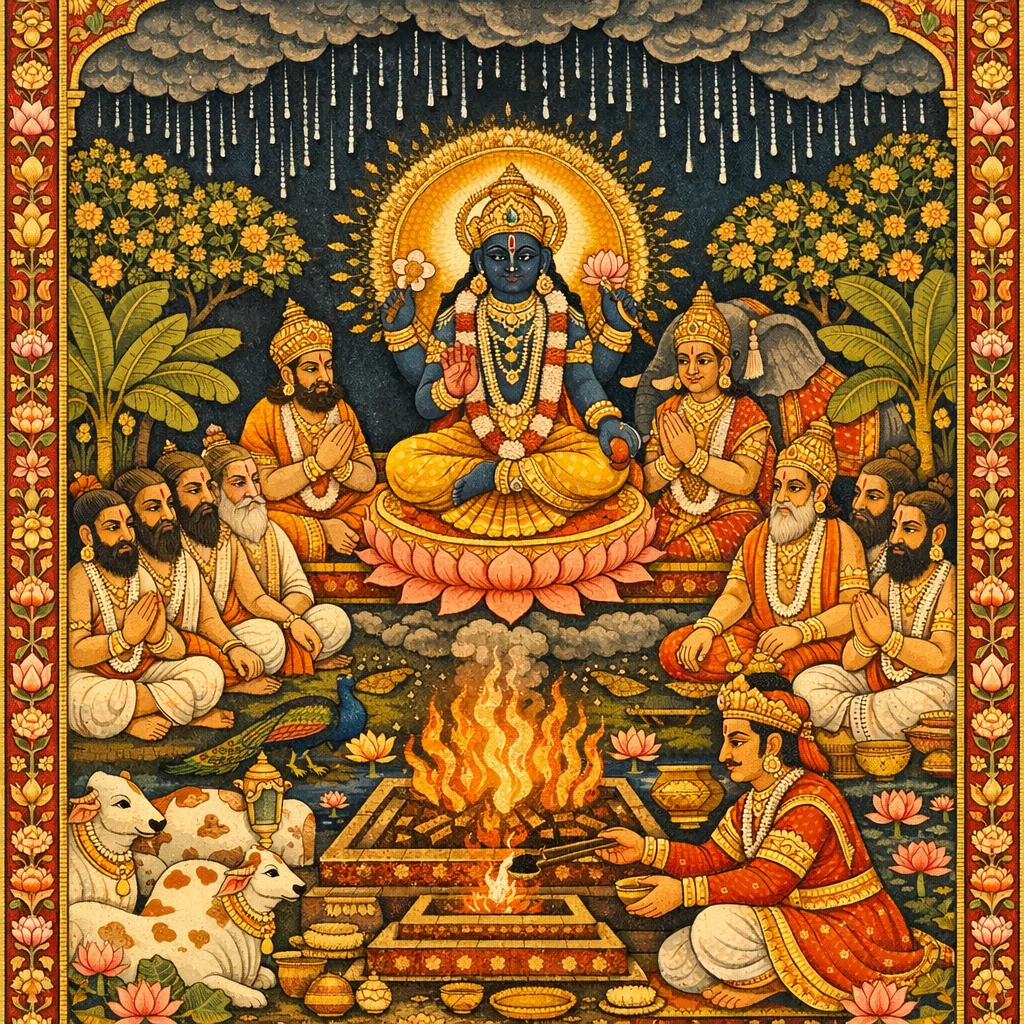
အဝတားများနှင့် မန်ဝန္တရ စီမံခန့်ခွဲမှုကို ရှေ့ကဖော်ပြပြီးနောက် ပရိက္ခစ်မင်းက မနုနှင့် ကမ္ဘာလောက အုပ်ချုပ်ရေးမှူးများသည် မည်သူ၏ အမိန့်ဖြင့် တာဝန်ထမ်းဆောင်သနည်းဟု မေးသည်။ ရှုကဒေဝက အမြင့်ဆုံး ဘုရားသခင် ဟရီ/ကృష్ణ သည် ယဇ్ఞကဲ့သို့ အထူးအဝတားများမှတဆင့် မနုများ၊ သူတို့၏ သားများ၊ မဟာရိရှီများ၊ အိန္ဒြာနှင့် ဒေဝများကို စကြဝဠာရေးရာ စီမံရန် ခန့်အပ်ကြောင်း ရှင်းပြသည်။ ယုဂဆုံရာတွင် ဓမ္မ ပျက်ယွင်းလာသော် သန့်ရှင်းသူများက ဓမ္မကို ပြန်တည်ဆောက်ပြီး မနုများသည် ဘုရား၏ ညွှန်ကြားချက်အောက်တွင် ဝර්ဏာශ්ရမ တာဝန်လေးမျိုးကို ပြည့်စုံစွာ ပြန်လည်တည်ထောင်သည်။ မနုမျိုးဆက် ဘုရင်များက ယဇ్ఞများ ပြုလုပ်၍ အကျိုးကို ဒေဝများနှင့် မျှဝေကာ ဘုရား၏ အမိန့်ဖြင့် စည်းကမ်းတည်စေသည်။ အိန္ဒြာသည် ကောင်းချီးအာနုဘော်ဖြင့် မိုးရွာချိန်မှန်စေကာ လောကသုံးပါးကို ထိန်းသိမ်းသည်။ ထို့ပြင် သိဒ္ဓများ၏ ဉာဏ်သင်ကြားမှု၊ ကမ္မသင်ကြားသူများ၊ ယောဂသင်ကြားသူများ၊ ပရာဇာပတိများ၊ မင်းအုပ်ချုပ်မှုနှင့် အချိန်တိုင်တိုင်သည် ဟရီ၏ ပေါ်ထွန်းမှုများဟု သဘောတရားကို ချဲ့ထွင်ဖော်ပြသည်။ နောက်ဆုံးတွင် မာယာကြောင့် မျှော်မှန်းသဘောဖြင့် ရှာဖွေသူများသည် ဘုရားကို မမြင်နိုင်ကြောင်းနှင့် ဗြဟ္မာ၏ တစ်နေ့အတွင်း မနု ၁၄ ပါး ရှိကြောင်းကို အချိန်ကာလအခြေခံဖြင့် သတ်မှတ်ကာ နောက်မန်ဝန္တရ ဇာတ်ကြောင်းများအတွက် အခြေတည်ပေးသည်။
Shlokas
Verse 1
श्रीराजोवाच मन्वन्तरेषु भगवन्यथा मन्वादयस्त्विमे । यस्मिन्कर्मणि ये येन नियुक्तास्तद्वदस्व मे ॥ १ ॥
မဟာရာဇာ ပရိက္ခစ် မေးလျှောက်သည်—အို သုကဒေဝ ဂိုစွာမီ မြတ်တန်ခိုးရှင်၊ မန်ဝန္တရ တစ်ခုချင်းစီတွင် မနုတို့နှင့် အခြားသူတို့သည် မိမိမိမိ တာဝန်များကို မည်သို့ ဆောင်ရွက်ကြသနည်း၊ မည်သူ၏ အမိန့်ဖြင့် ထိုသို့ ခန့်အပ်ထားသနည်း၊ ကျွန်ုပ်အား ရှင်းပြပါ။
Verse 2
श्रीऋषिरुवाच मनवो मनुपुत्राश्च मुनयश्च महीपते । इन्द्रा: सुरगणाश्चैव सर्वे पुरुषशासना: ॥ २ ॥
သုကဒေဝ ဂိုစွာမီ မိန့်သည်—အို မင်းကြီး၊ မနုများ၊ မနု၏ သားများ၊ မဟာမုနိများ၊ အိန္ဒြများနှင့် ဒေဝတားအစုအဝေးအားလုံးသည် ယဇ్ఞ အစရှိသည့် အဝတားများမှတစ်ဆင့် အမြင့်မြတ်ဆုံး ပုရုရှ (ဘဂဝန်) ၏ အမိန့်အောက်တွင် ခန့်အပ်ထားကြသည်။
Verse 3
यज्ञादयो या: कथिता: पौरुष्यस्तनवो नृप । मन्वादयो जगद्यात्रां नयन्त्याभि: प्रचोदिता: ॥ ३ ॥
အို မင်းကြီး၊ ယဇ్ఞ အစရှိသည့် ဘုရား၏ အဝတားများကို ကျွန်ုပ် မိန့်ကြားပြီးဖြစ်သည်။ ထိုအဝတားများ၏ လှုံ့ဆော်မှုအောက်တွင် မနုတို့နှင့် အခြားသူတို့ကို ရွေးချယ်ခန့်အပ်ပြီး၊ သူတို့၏ ညွှန်ကြားမှုဖြင့် စကြဝဠာရေးရာများကို ဆောင်ရွက်ကြသည်။
Verse 4
चतुर्युगान्ते कालेन ग्रस्ताञ्छ्रुतिगणान्यथा । तपसा ऋषयोऽपश्यन्यतो धर्म: सनातन: ॥ ४ ॥
ယုဂလေးခု ပြီးဆုံးချိန်တိုင်းတွင် ကာလ၏ သက်ရောက်မှုကြောင့် ရှရုတိသင်ကြားချက်များနှင့် စနာတနဓမ္မ၏ လမ်းစဉ်ကို မှားယွင်းအသုံးချနေသည်ကို မြတ်စွာသော ရှိများက မြင်ကြပြီး၊ တပသဖြင့် ဓမ္မ၏ သဘောတရားကို ပြန်လည်တည်ထောင်ကြသည်။
Verse 5
ततो धर्मं चतुष्पादं मनवो हरिणोदिता: । युक्ता: सञ्चारयन्त्यद्धा स्वे स्वे काले महीं नृप ॥ ५ ॥
ထို့နောက် အို မင်းကြီး၊ သရီဟရီ၏ ညွှန်ကြားချက်ဖြင့် လှုံ့ဆော်ခံရသော မနုများသည် မိမိမိမိ ကာလအလိုက် အပြည့်အဝ တာဝန်ယူကာ၊ ဓမ္မကို လေးပါးပြည့်စုံသည့် အနေအထားဖြင့် တိုက်ရိုက် ပြန်လည်တည်ထောင်ကြသည်။
Verse 6
पालयन्ति प्रजापाला यावदन्तं विभागश: । यज्ञभागभुजो देवा ये च तत्रान्विताश्च तै: ॥ ६ ॥
ယဇ်ပူဇော်မှု၏ အကျိုးကို ခံစားရန် မနု၏ သားမြေးတို့ဖြစ်သော ပြည်သူထိန်းသိမ်းသူများသည် မနုကာလအဆုံးတိုင်အောင် ဘဂဝန်၏ အမိန့်ကို အပိုင်းအခြားအလိုက် လိုက်နာကြသည်။ ယဇ်၏ အပိုင်းကို ခံစားသော ဒေဝတားများလည်း ထိုအကျိုးကို အတူတကွ ရရှိကြသည်။
Verse 7
इन्द्रो भगवता दत्तां त्रैलोक्यश्रियमूर्जिताम् । भुञ्जान: पाति लोकांस्त्रीन् कामं लोके प्रवर्षति ॥ ७ ॥
ကောင်းကင်ဘုရင် အင်ဒြာသည် ဘဂဝန်ထံမှ ပေးအပ်သော သုံးလောက၏ ကြီးမြတ်သည့် စည်းစိမ်ကို ခံစားကာ သုံးလောကရှိ သတ္တဝါတို့ကို ထိန်းသိမ်းပြီး ကမ္ဘာများအနှံ့ လုံလောက်သော မိုးကို ရွာသွန်းစေသည်။
Verse 8
ज्ञानं चानुयुगं ब्रूते हरि: सिद्धस्वरूपधृक् । ऋषिरूपधर: कर्म योगं योगेशरूपधृक् ॥ ८ ॥
ယုဂတိုင်းတွင် ဘဂဝန် ဟရိသည် စိဒ္ဓများ (စနကာတို့ကဲ့သို့) ၏ ရုပ်ကိုယူ၍ အလွန်မြင့်သော ဉာဏ်ကို ဟောကြားသည်။ မဟာရိရှီများ (ယာဇ္ဉဝလ్కျ) ၏ ရုပ်ဖြင့် ကర్మမാർဂကို သင်ကြားသည်။ မဟာယောဂီများ (ဒတ္တಾತ್ರေယ) ၏ ရုပ်ဖြင့် မိစ္ဆာယောဂ စနစ်ကို ဖော်ပြသည်။
Verse 9
सर्गं प्रजेशरूपेण दस्यून्हन्यात् स्वराड्वपु: । कालरूपेण सर्वेषामभावाय पृथग्गुण: ॥ ९ ॥
ပရဇာပတိ မရီချိ၏ ရုပ်ဖြင့် ဘဂဝန်သည် မျိုးဆက်ကို ဖန်တီးသည်။ ဘုရင်ဖြစ်လာ၍ ခိုးသူ၊ လုယက်သူတို့ကို သတ်ဖြတ်သည်။ ကာလ၏ ရုပ်ဖြင့် အရာအားလုံးကို လယပျက်စီးစေသည်။ ပစ္စည်းလောက၏ အမျိုးမျိုးသော ဂုဏ်သတ္တိများသည်လည်း ဘဂဝန်၏ ဂုဏ်များဟု သိရမည်။
Verse 10
स्तूयमानो जनैरेभिर्मायया नामरूपया । विमोहितात्मभिर्नानादर्शनैर्न च दृश्यते ॥ १० ॥
နာမနှင့် ရုပ်ပုံဖြစ်သော မာယာကြောင့် မောဟဖြစ်နေသော လူများသည် အမျိုးမျိုးသော အမြင်များနှင့် ဒဿနဆိုင်ရာ ခန့်မှန်းချက်များဖြင့် ချီးမွမ်းရှာဖွေသော်လည်း ဘဂဝန်ကို မမြင်နိုင်ကြ။
Verse 11
एतत् कल्पविकल्पस्य प्रमाणं परिकीर्तितम् । यत्र मन्वन्तराण्याहुश्चतुर्दश पुराविद: ॥ ११ ॥
အရှင်ဘုရင်၊ ကလ္ပတစ်ခု၊ အတိအကျဆိုလျှင် ဘြဟ္မာ၏ တစ်နေ့အတွင်း ‘ဝိကလ္ပ’ ဟုခေါ်သော ပြောင်းလဲမှုများ များစွာ ဖြစ်ပေါ်သည်ကို ငါသည် ယခင်ကပင် အထောက်အထားနှင့် ရှင်းပြခဲ့ပြီးဖြစ်သည်။ ပုရာဏသိပ္ပံပညာရှင်တို့က ဘြဟ္မာ၏ တစ်နေ့တွင် မနွန္တရ ၁၄ ခု ရှိသည်ဟု သတ်မှတ်ကြသည်။
Frequently Asked Questions
Śukadeva states that the Supreme Personality of Godhead appoints them through His incarnations (such as Yajña). Under the Lord’s direction, Manus, Indras, sages, and devas administer universal affairs, making cosmic governance ultimately a delegated function of Hari.
At yuga transitions, saintly authorities reestablish religious principles; then the Manus, acting fully under the Lord’s instructions, restore occupational duty in its complete fourfold form. This presents dharma not as a merely social convention but as a divinely supervised system meant to guide human life toward purification and devotion.
Indra’s rains represent a key administrative service: empowered by the Lord’s benedictions, Indra maintains living beings across the three worlds by providing sufficient rainfall. The text links ecological stability and prosperity to divine order mediated through appointed devas.
It attributes their institutional teaching to the Lord’s functional manifestations: Hari appears as siddhas (e.g., Sanaka) to teach transcendental knowledge, as sages (e.g., Yājñavalkya) to teach karma, and as great yogīs (e.g., Dattātreya) to teach mystic yoga—integrating diverse disciplines under one supreme source.
The chapter states that the Lord, as time, annihilates everything; similarly, as king He punishes rogues, and as prajāpati He generates progeny. This frames creation, governance, and destruction as coordinated divine functions rather than independent material forces.
Because people are bewildered by māyā (illusory energy). The verse implies that purely speculative or empirical approaches, lacking divine grace and proper devotional orientation, fail to reveal the personal Absolute Truth who stands behind cosmic functions and administrators.
There are fourteen Manus in one kalpa (one day of Brahmā). This anchors manvantara history within Purāṇic cosmology, explaining how repeated administrative cycles occur within a larger temporal framework and preparing the reader for subsequent manvantara-specific accounts.