Dashati 1
Agni as the ritual nexus and Indra’s arrival/empowerment through Soma and praise
Agni
Invocatory and energizing—questioning/solemn at the start then increasingly triumphant and expansive
Ṛṣi attribution is not supplied here; identification normally follows the underlying Ṛgvedic sources for each mantra which are not fully provided in the input.
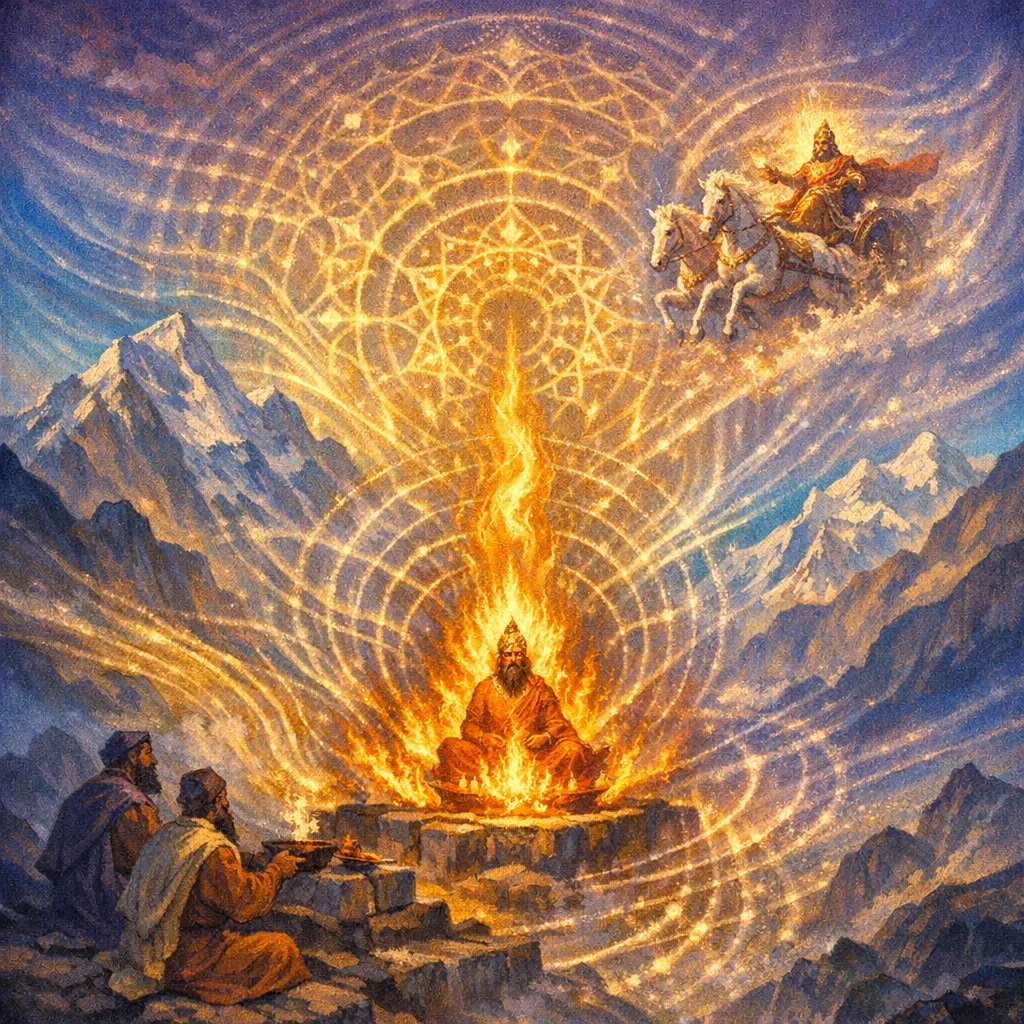
Tema dekad ini menempatkan Agni sebagai pusat upacara—mulut dan tempat bersemayamnya yajña—yang ‘beristirahat’ pada pemeliharaan si pelaksana korban. Dengan barhis yang disiapkan, Indra bersama Viṣṇu dipanggil agar datang mendekat, meneguk Soma, dan menampakkan kekuatan gagahnya sebagai jawapan kepada stotra. Dari pembukaan yang bersifat teka-teki dan khidmat tentang pertalian ilahi, nyanyian beralih kepada seruan ‘datanglah ke mari’ dengan citra kuda yang bergegas, lalu memuncak dalam pembesaran kemenangan Indra ‘seperti pada zaman dahulu’. Ajarannya: para dewa dihadirkan melalui api yang terpelihara, ruang ritual yang tertata, serta pujian-Soma yang tepat; kuasa ilahi terungkap sebagai respons kepada yajña, bukan terpisah daripadanya.
Mantras
Mantra 1
अभि प्र गोपतिं गिरेन्द्रमर्च यथा विदे मूनुं सत्यस्य सत्पतिम्
Pujilah, maju ke hadapan, gopati—tuan lembu—girindra, tuan nyanyian suci; agar kami mencapai yang bijaksana, satpati, tuan sejati bagi ritus yang sejati.
Mantra 2
त्वं जामिर्जनानामग्ने मित्रो असि प्रियः सखा सखिभ्य ईड्यः
Engkau, wahai Agni, ialah kerabat manusia; Engkau ialah mitra, yang dikasihi, sahabat; bagi para sahabat-Mu Engkau layak dipuja (īḍya).
Mantra 3
इन्द्राय गाव आशिरं दुदुह्रे वज्रिणे मधु यत्सीमुपह्वरे विदत्
Untuk Indra, lembu-lembu telah memerah campuran yang menyegarkan—tegukan manis—bagi pemegang vajra; tatkala baginda menemuinya pada seruan upacara (yajña).
Frequently Asked Questions
It frames a ritual teaching: Agni ‘belongs’ to the one who tends him with fuel and offerings, so the sacrificer becomes Agni’s closest human relation in the rite.
They are a standard image for Indra’s swift approach; the verse functions as an invitation for Indra to come to the prepared barhis and accept the offering.
Indra–Viṣṇu appear as cooperative powers in Vedic praise; here their joint mention reinforces Indra’s greatness and the traditional support they give to the sacrifice.