Prapathaka 5
Agniṣṭoma/Soma-yāga (Śrauta Soma-sacrifice) — continuation of the Dīkṣā–Upasad–Soma preparation complex, focusing on consecratory and preparatory acts (pravargya/gharma-related and upasad-style offerings) that secure the sacrificer’s fitness and the rite’s ritual “heat” (tapas) before pressing.
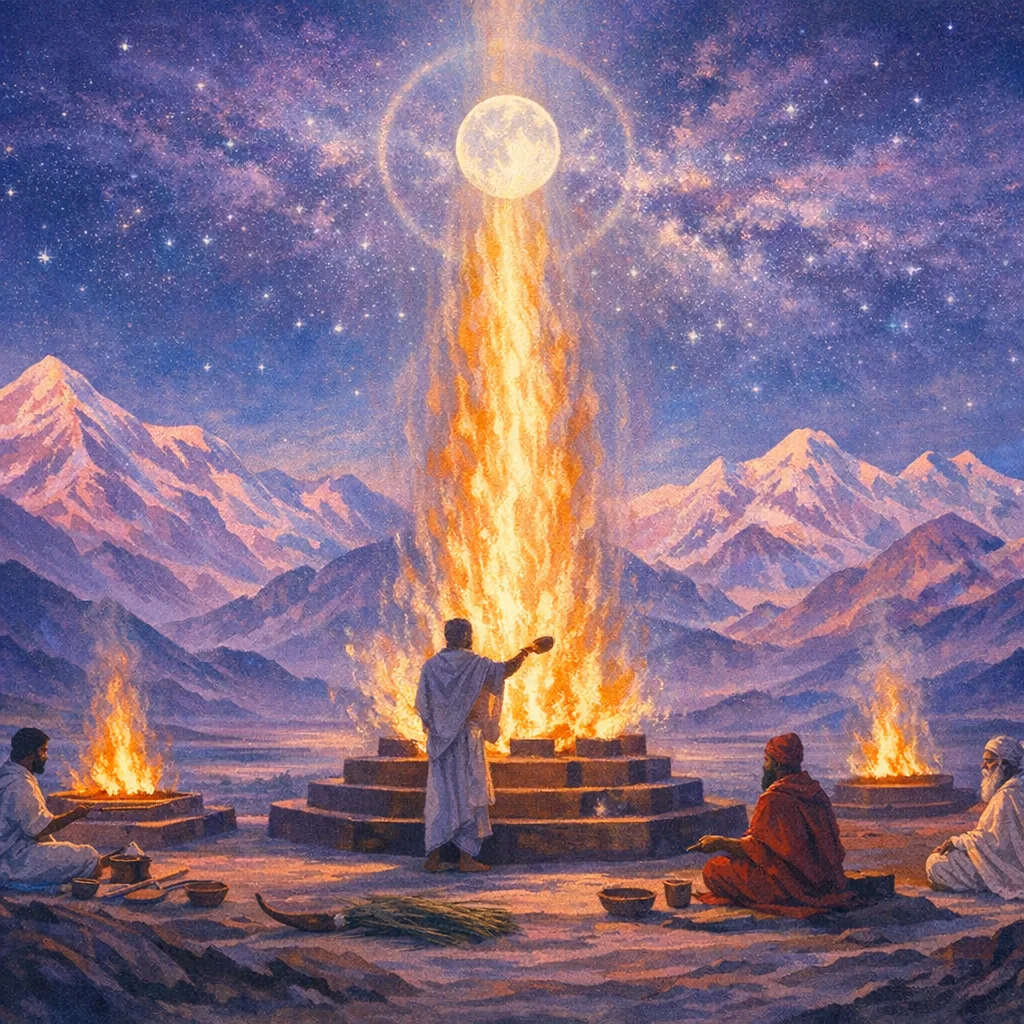
Kṛṣṇa Yajurveda 3.5 belongs to the Soma-sacrifice liturgy and functions as a preparatory prapāṭhaka that consolidates the sacrificer’s consecration and the rite’s internal economy of heat, purity, and entitlement. The chapter’s mantric texture repeatedly aligns the yajamāna with Agni and Sūrya, and frames the forthcoming Soma-pressing as a controlled transformation: raw potency is ritually “cooked” into an offering fit for the gods. The sequence emphasizes boundary-making (inside/outside the vedi), the stabilization of speech and breath (vāc–prāṇa), and the ritual management of danger inherent in generating tapas (notably in pravargya/gharma idioms). The prapāṭhaka also exhibits the characteristic Kṛṣṇa Yajurveda interleaving of mantra with procedural cues, where short formulae serve as performative switches between acts. Theologically, it advances a reciprocity model: by establishing Agni’s seat and the sacrificer’s disciplined state, the gods are compelled to accept Soma and return prosperity, cattle, and longevity.
Anuvakas
Anuvakas for this prapathaka are loading. Please check back soon.