
Shloka 28
Shraddhatraya Vibhaga Yoga — Shraddhatraya Vibhaga Yoga
अश्रद्धया हुतं दत्तं तपस्तप्तं कृतं च यत् । असदित्युच्यते पार्थ न च तत्प्रेत्य नो इह ॥ १७.२८ ॥
aśraddhayā hutaṃ dattaṃ tapas taptaṃ kṛtaṃ ca yat | asad ity ucyate pārtha na ca tat pretya no iha || 17.28 ||

Wahai Pārtha! Homa yang dilakukan tanpa śraddhā, dāna yang diberikan tanpa śraddhā, tapa yang diamalkan tanpa śraddhā, dan apa jua karma yang dilakukan demikian—semuanya disebut ‘asat’; ia tidak berbuah di dunia ini, dan tidak juga di alam selepas mati.
हे पार्थ! श्रद्धा के बिना जो हवन किया गया, दान दिया गया, तप किया गया और अन्य जो भी कर्म किया गया, वह ‘असत्’ कहा जाता है; वह न इस लोक में फलदायक होता है, न परलोक में।
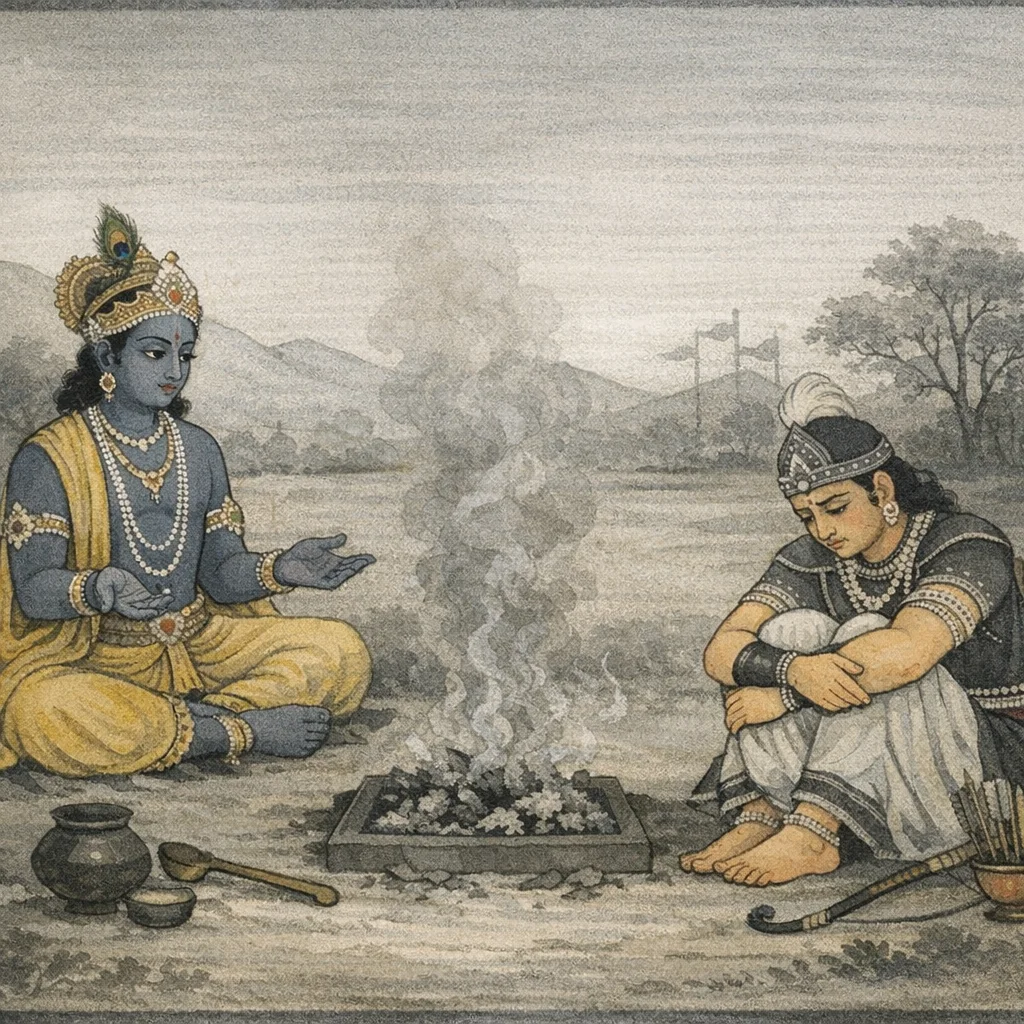
Whatever is offered, given, or practiced as austerity, or otherwise done without faith—O Pārtha—is called ‘asat’; it is of no benefit either after death or here.
Traditional readings often interpret ‘no benefit’ in terms of spiritual merit; academically, the line can be read as a critique of performative religiosity: actions lacking śraddhā fail to achieve their stated ends (social, ethical, or soteriological).
FAQs
The verse treats conviction and meaningful engagement (śraddhā) as necessary for actions to shape character and outcomes; without it, practices can become hollow routines with little transformative effect.
‘Asat’ here functions less as absolute non-being and more as ‘invalid/inefficacious’ with respect to dharmic and soteriological aims—what does not connect to the real purpose of practice.
It concludes Chapter 17 by summarizing the criterion for evaluating sacrifice, austerity, and giving: faith is the decisive factor that makes practices ‘sat’ rather than ‘asat.’
It suggests evaluating commitments (charity, discipline, service) by sincerity and clarity of purpose, not merely by outward compliance or public display.