
Bhagavad Gita — Shraddhatraya Vibhaga Yoga, Shloka 12
Shraddhatraya Vibhaga Yoga
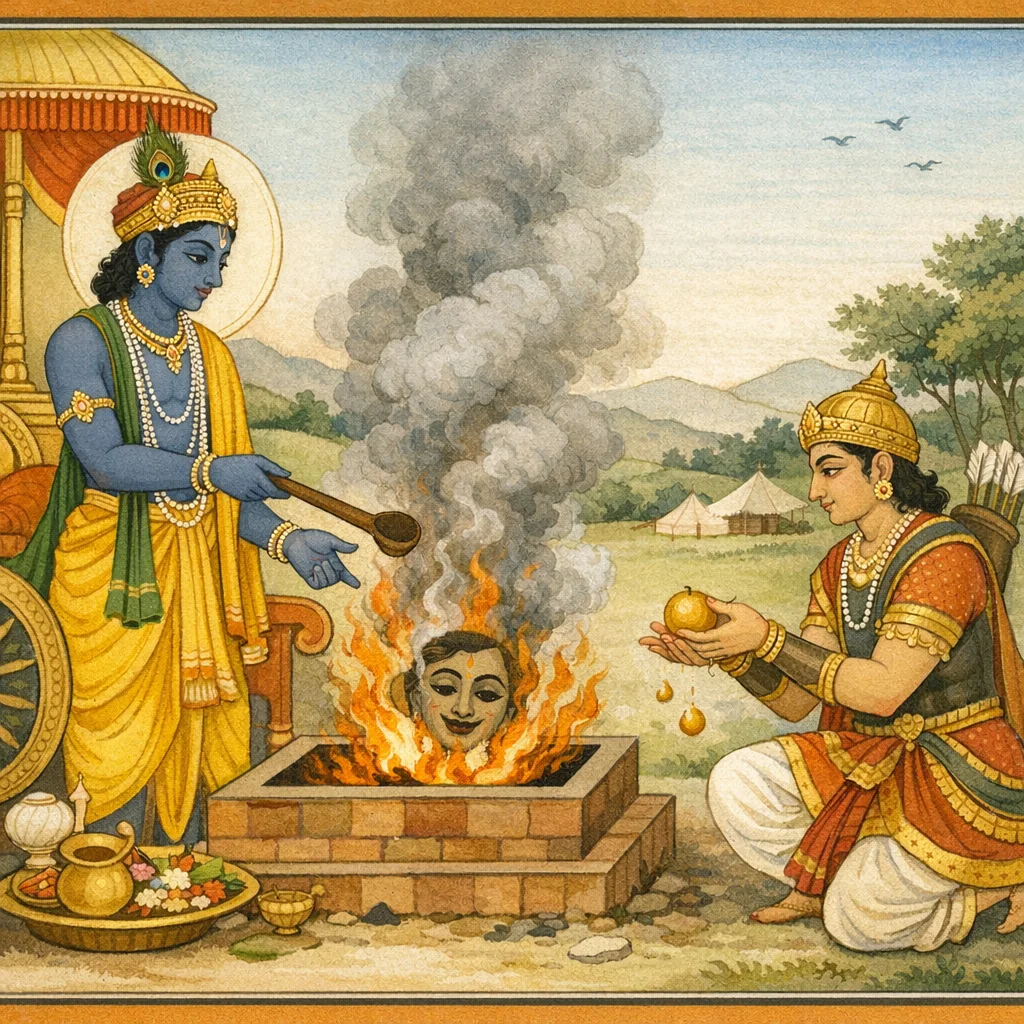
अभिसंधाय तु फलं दम्भार्थमपि चैव यत् । इज्यते भरतश्रेष्ठ तं यज्ञं विद्धि राजसम् ॥ १७.१२ ॥
abhisandhāya tu phalaṃ dambhārtham api caiva yat | ijyate bharataśreṣṭha taṃ yajñaṃ viddhi rājasam || 17.12 ||

Wahai yang terbaik dalam kalangan Bharata! Yajna yang dilakukan dengan niat mengharapkan hasil serta demi menunjuk-nunjuk (dambha), ketahuilah itu sebagai yajna yang bersifat rajas.
परन्तु हे भरतश्रेष्ठ! जो यज्ञ फल को चाहकर तथा दिखावे के लिए किया जाता है, उस यज्ञ को राजस जानो।
But the sacrifice that is performed with an eye to reward, and also for display, know that to be rajasic, O best of the Bharatas.
Interpretations converge: ‘dambha’ is commonly ‘ostentation/hypocrisy.’ Academic notes often stress mixed motivation—instrumental (phala) and social (display)—as characteristic of rajas.
FAQs
The verse points to how reward-seeking and image-management can make practices psychologically unstable, as they depend on external validation and uncertain outcomes.
Rajas binds through attachment to results and identity; sacrifice becomes a means of self-assertion rather than a clarifying discipline.
It contrasts with the sattvic sacrifice (17.11) by shifting from duty to outcome and reputation, continuing the guṇa-based taxonomy.
It can be applied to philanthropy, activism, or professional work done primarily for prestige or metrics rather than intrinsic responsibility.