
Shloka 11
Purushottama Yoga — Purushottama Yoga
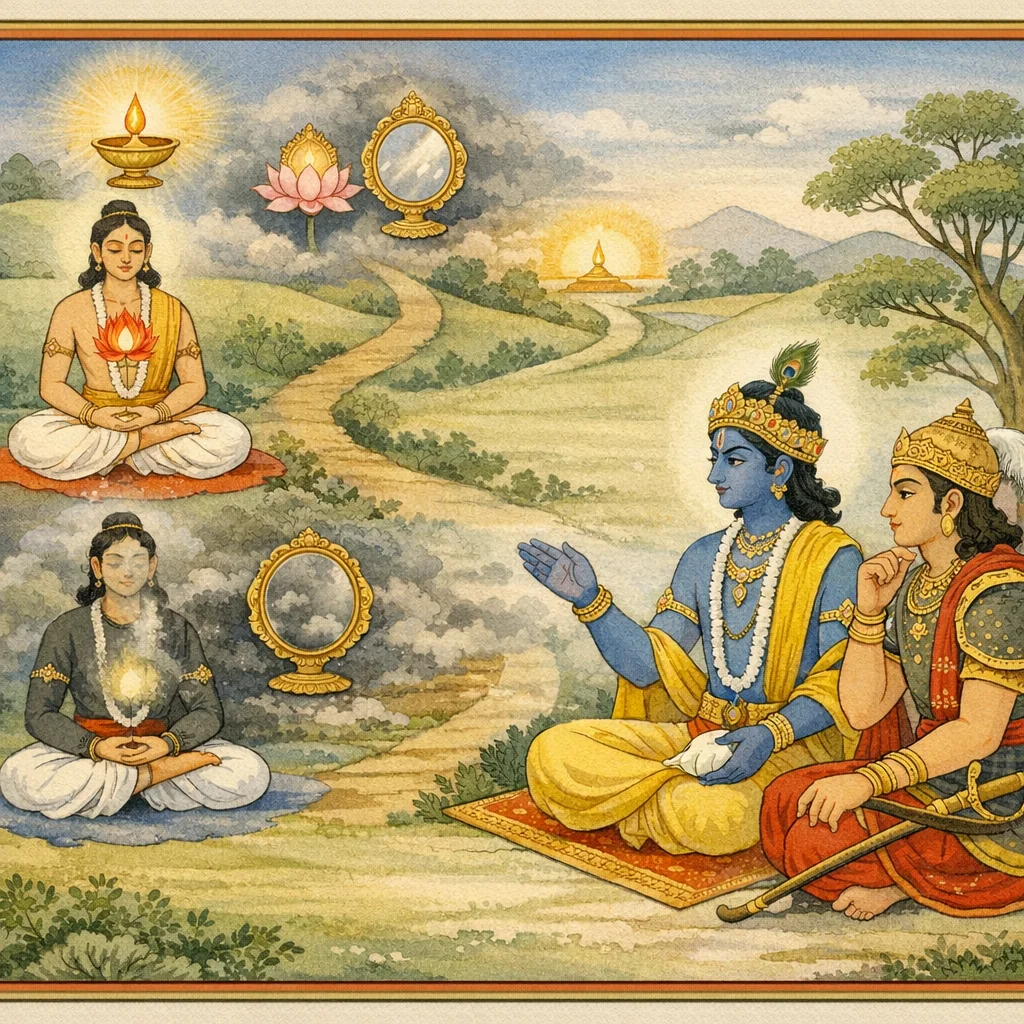
यतन्तो योगिनश्चैनं पश्यन्त्यात्मन्यवस्थितम् ।
यतन्तोऽप्यकृतात्मानो नैनं पश्यन्त्यचेतसः ॥ १५.११ ॥
yatanto yoginaś cainaṃ paśyanty ātmany avasthitam |
yatanto 'py akṛtātmāno nainaṃ paśyanty acetasaḥ || 15.11 ||

Para yogi yang bersungguh-sungguh berusaha melihat Ātman ini bersemayam dalam diri; namun mereka yang batinnya belum disucikan, yang tidak berakal budi, walau berusaha tetap tidak melihat-Nya.
प्रयत्नशील योगीजन इस आत्मा को अपने-आप में स्थित देखते हैं; परन्तु जिनका अन्तःकरण शुद्ध नहीं है, वे अचेत (अविवेकी) प्रयत्न करते हुए भी इसे नहीं देखते।
Striving yogins perceive this (principle) established in the self; but even while striving, the unrefined and undiscerning do not perceive it.
‘akṛtātman’ is variously rendered as ‘undisciplined,’ ‘unpurified,’ or ‘unintegrated’ mind; the philosophical point is that effort alone is insufficient without inner refinement and clarity.
FAQs
It distinguishes mere striving from skillful, integrated practice: scattered attention and unexamined habits can block insight even when one is ‘trying hard.’
Perception of the self requires a suitable cognitive instrument—clarity and steadiness—so the self is ‘seen’ as present in oneself rather than inferred externally.
Following 15.10, it explains why the subtle self is not universally recognized: yogic discipline and inner readiness function as conditions for discernment.
The verse supports combining effort with ethical and attentional training—e.g., consistent practice, reduced reactivity, and reflective study—rather than relying on intensity alone.