
Shloka 34
Karma Yoga — Karma Yoga
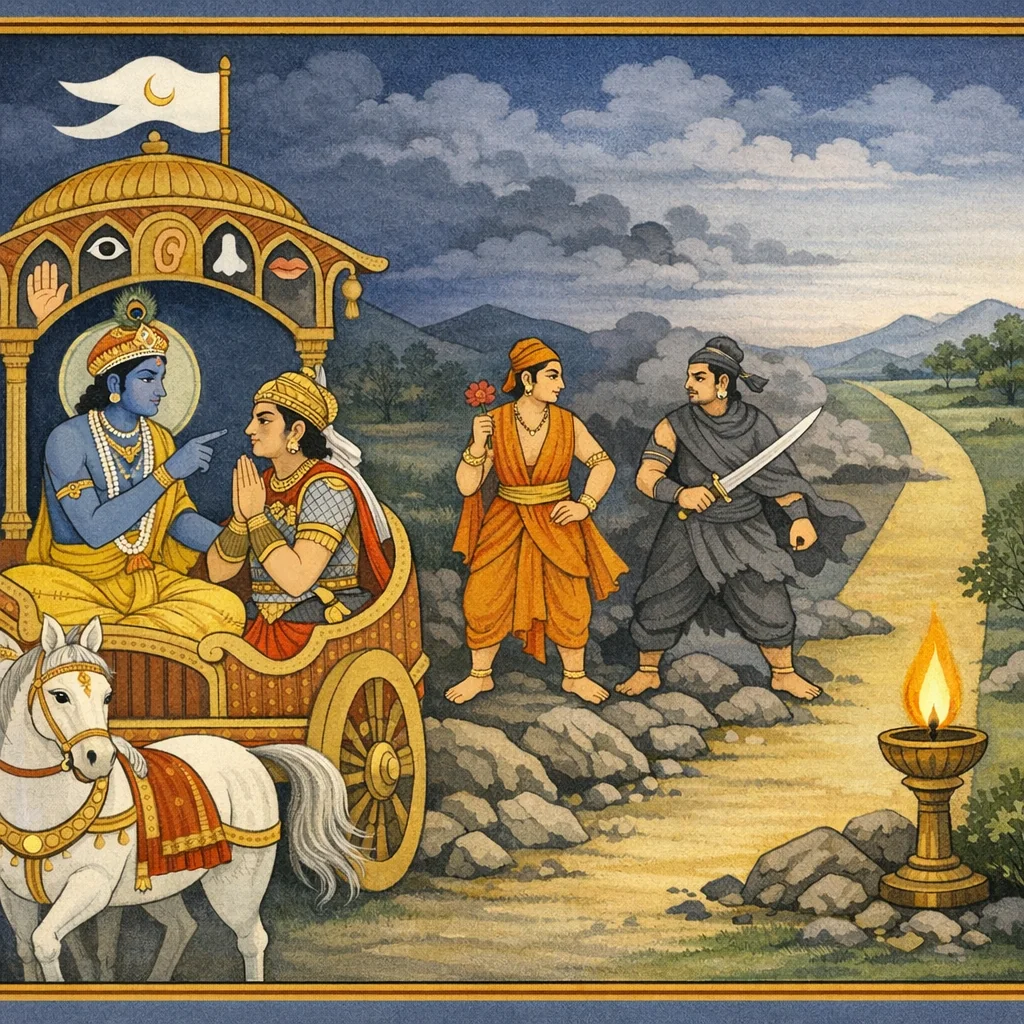
इन्द्रियस्येन्द्रियस्यार्थे रागद्वेषौ व्यवस्थितौ । तयोर्न वशमागच्छेत्तौ ह्यस्य परिपन्थिनौ ॥ ३.३४ ॥
indriyasya indriyasya arthe rāga-dveṣau vyavasthitau | tayor na vaśam āgacchet tau hy asya paripanthinau || 3.34 ||

Pada setiap indera dan objeknya, rāga (keterikatan) dan dveṣa (kebencian) telah tetap. Janganlah tunduk kepada keduanya, kerana keduanyalah penghalang di jalan seseorang.
Attraction and aversion are fixed with respect to each sense and its object; one should not come under their control, for they obstruct one’s path.
For each sense in relation to its object, attachment and repulsion are established; one should not submit to them, since they are hindrances.
Most translations align closely; interpretive differences lie in whether rāga/dveṣa are treated as morally blameworthy or as natural tendencies that become obstacles when they dominate.
FAQs
It frames craving and avoidance as default reactions in perception; psychological freedom is presented as not being governed by these reactions.
Within Sāṃkhya-influenced thought, sensory engagement is structured by guṇas, producing patterned likes/dislikes that cloud discrimination.
It continues the discussion on why disciplined action is needed: unexamined sense-reactions can derail ethical and contemplative aims.
Practice noticing impulses (attraction/aversion) before acting—e.g., pause, label the reaction, and choose responses aligned with values.