
Bhagavad Gita — Gunatraya Vibhaga Yoga, Shloka 24
Gunatraya Vibhaga Yoga
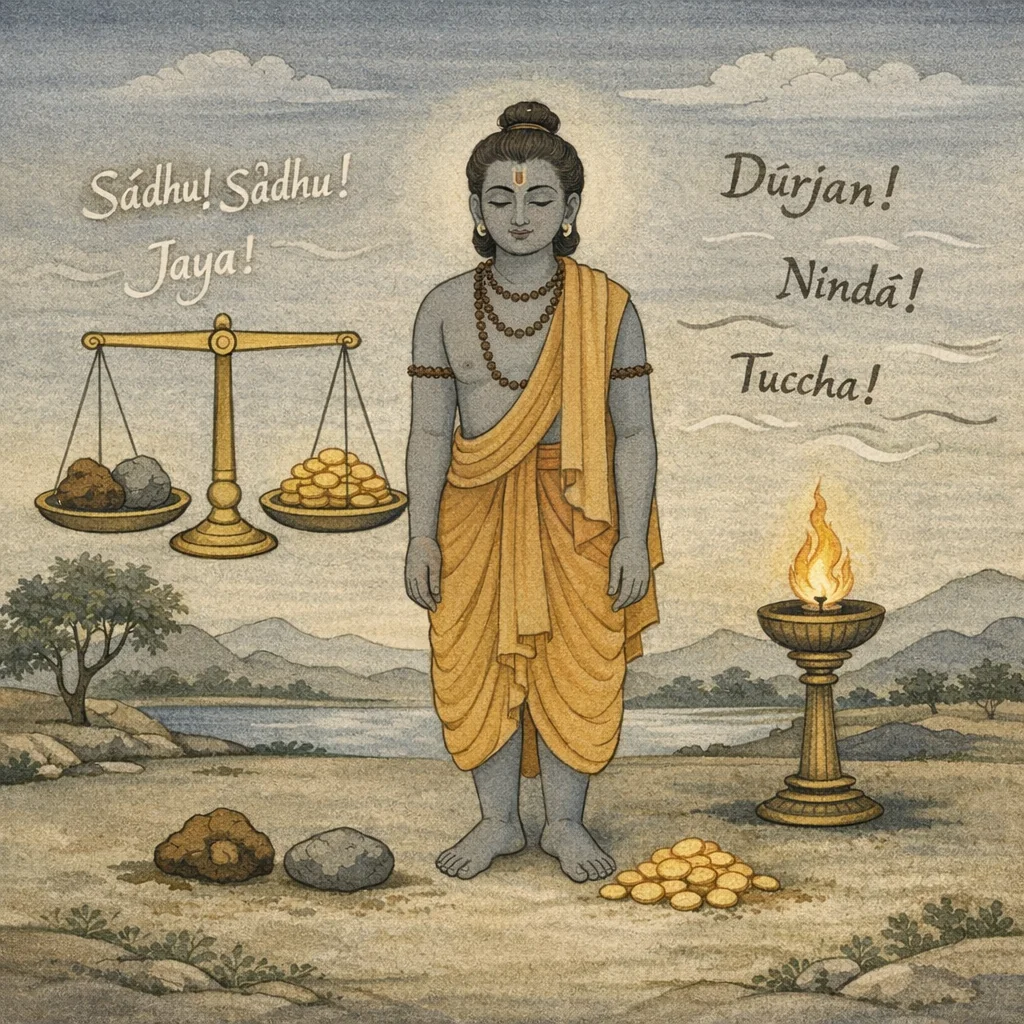
समदुःखसुखः स्वस्थः समलोष्टाश्मकाञ्चनः । तुल्यप्रियाप्रियो धीरस्तुल्यनिन्दात्मसंस्तुतिः ॥ १४.२४ ॥
sama-duḥkha-sukhaḥ svasthaḥ sama-loṣṭāśma-kāñcanaḥ | tulya-priyāpriyo dhīras tulya-nindātma-saṃstutiḥ || 14.24 ||

Seimbang dalam duka dan suka, teguh dalam diri; memandang segumpal tanah, batu dan emas sama; yang teguh, baginya yang menyenangkan dan yang tidak menyenangkan adalah setara; setara dalam celaan dan pujian diri.
Equal in pain and pleasure, self-possessed; regarding a clod, a stone, and gold alike; the steady one to whom the pleasant and unpleasant are the same; equal in blame and praise.
Even-minded in suffering and happiness, inwardly stable; regarding a lump of earth, a stone, and gold as the same; for whom the agreeable and disagreeable are equal—steadfast; for whom censure and self/personal praise are equal.
“Loṣṭa–aśma–kāñcana” is a standard triad for value-neutrality toward objects. “Ātma-saṃstuti” is sometimes translated as “praise of oneself” or “praise directed to him”; context supports the sense of being unaffected by commendation.
FAQs
It depicts reduced hedonic reactivity: pleasure and pain are experienced but do not dominate decision-making. Social feedback (praise/blame) also loses its power to destabilize.
Equanimity is presented as a sign of disidentification from guṇa-driven valuation. The steady person relates to phenomena without construing them as ultimately defining the self.
This verse expands the portrait of the guṇātīta with concrete examples—objects of value and social responses—showing how transcendence appears in ordinary life.
It supports practices of non-attachment: keep ethical priorities steady despite gains/losses and approval/disapproval, and cultivate reflective distance from consumerist or status-driven valuation.