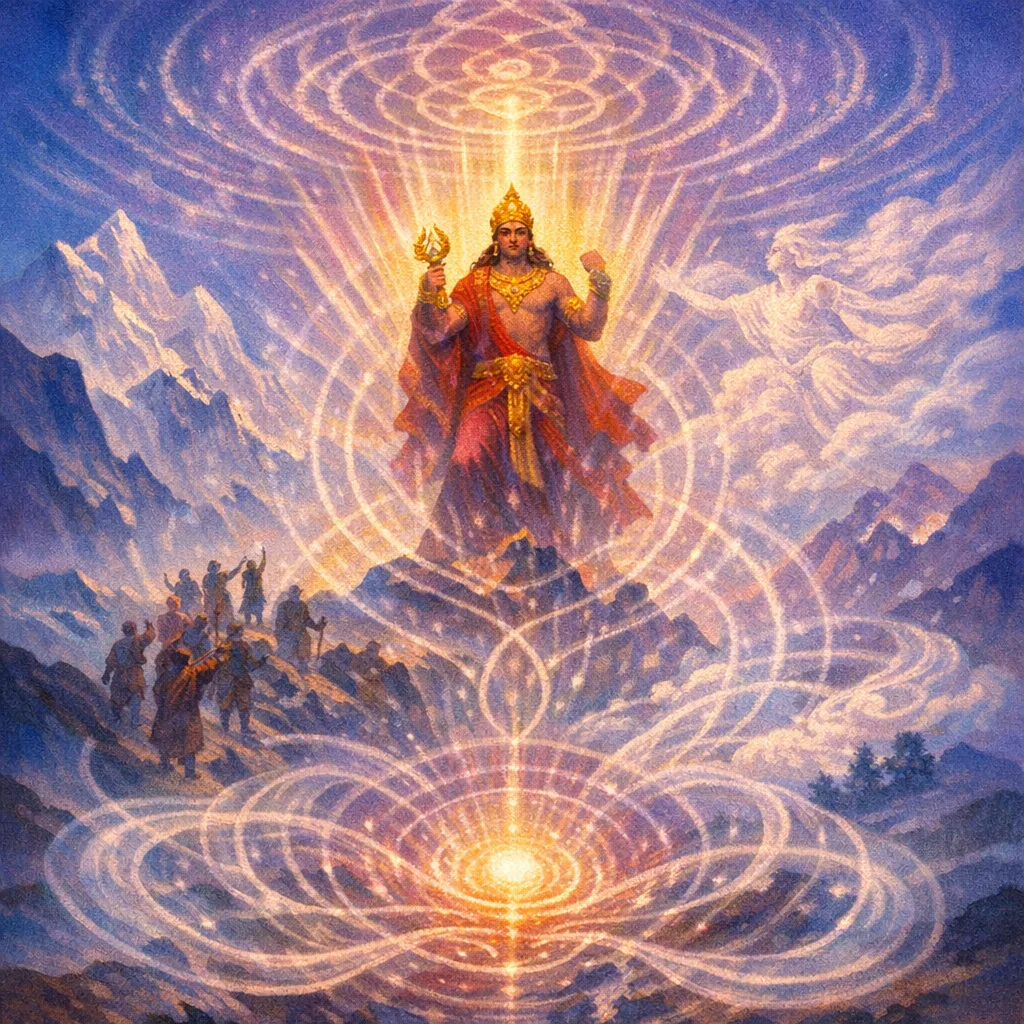
Dashati 11
Aindra praise seeking Indra’s favor and communal advance, with allied Vāta petitions for healing and life-breath
Indra
Uplifting and expansive—heroic Aindra praise tempered by a soothing restorative breath-motif in the Vāta verses
R̥ṣi attributions are not specified in the input; identification requires Ṛgveda concordance and the arcikā cross-index for this prapāṭhaka/daśati unit.
इंद्राची वीररसपूर्ण स्तुती करून, हविर्भाग स्वीकारून लोकांना सुमती (अनुकूल मन) व समाजबल देण्यासाठी त्याला महान वर्धक व रक्षक म्हणून आवाहन केले जाते. पुढे वाताला प्राणधारक, आरोग्यदायी शक्ती मानून प्राणाचे रक्षण करावे, संकटांवर ‘पार’ नेावे, आणि सतत जीवन टिकविण्यासाठी आवश्यक असलेले गुप्त ‘अमृत’/पोषक सार प्रदान करावे अशी याचना केली जाते—यज्ञवाणीच्या सामर्थ्याने दैवी कृपा देहातील जीवनशक्तीशी जोडली जाते.
Mantras
Mantra 1
वात आ वातु बेषजं शम्भु मयोभु नो हृदे प्र न अयूंषि तारिषत्
वात (वायू) येथे औषधरूपाने वाहो—शिवकारी, आनंददायक; आमच्या हृदयात तो आमची आयुष्ये पूर्णपणे वाढवो, आम्हांला दीर्घायुषी करो.
Mantra 2
उत वात पितासि न उत भ्रातोत नः सखा स नो जीवातवे कृधि
आणि हे वात! तू आमचा पिता आहेस; आमचा भ्राता आहेस; आमचा सखा आहेस: म्हणून आम्हांला जगण्याचे वरदान दे, जीवन प्रदान कर.
Mantra 3
यददो वात ते गृहे3 ऽमृतं निहितं गुहा तस्यो नो देहि जीवसे
हे वात! तुझ्या गृही गुहेत गुप्त ठेवलेले अमृत-निधान असेल, तर त्यातील अंश आम्हांला जीवनधारणेसाठी दे, जगण्यासाठी प्रदान कर.
Frequently Asked Questions
It links ritual praise and offering with divine help: Indra is asked to grant favorable support and strength for the communities, while Vāta is asked to heal, protect the life-breath, and prolong life.
Even in Indra-centered groupings, allied petitions occur for practical welfare. Vāta represents prāṇa and healing; invoking him complements Indra’s protective power by securing health and longevity for the sacrificer.
It points to a concealed life-sustaining essence—often understood as sacrificial potency/ojas (and by extension Soma-like vitality). The singer asks Vāta to bestow that sustaining power ‘for living’ (jīvase).