
Shloka 24
Karma Yoga — Karma Yoga
उत्सीदेयुरिमे लोका न कुर्यां कर्म चेदहम् । संकरस्य च कर्ता स्यामुपहन्यामिमाः प्रजाः ॥ ३.२४ ॥
utsīdeyur ime lokā na kuryāṁ karma ced aham | saṅkarasya ca kartā syām upahanyām imāḥ prajāḥ || 3.24 ||

मी जर कर्म केले नाही, तर हे लोक नष्ट होतील; मी वर्णसंकराचा कर्ता होईन आणि या प्रजांना हानी पोहोचवीन.
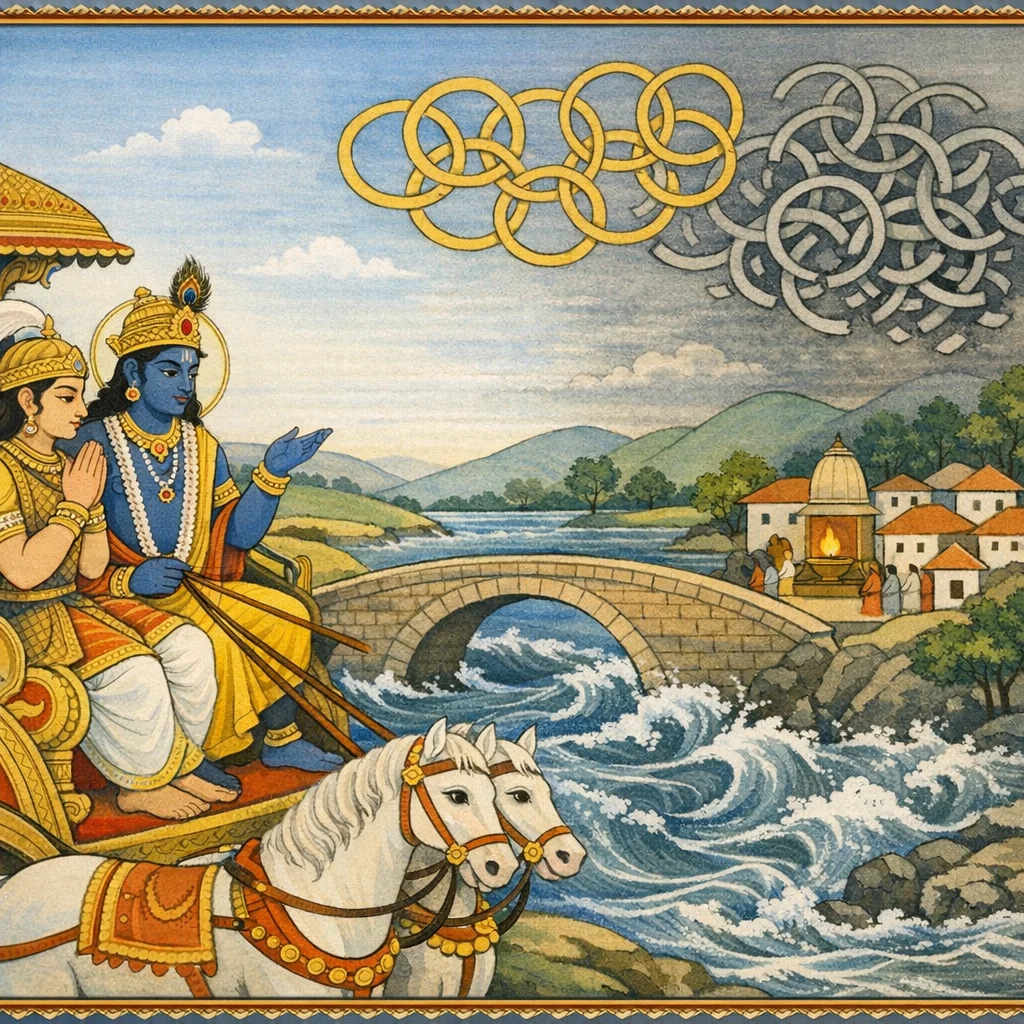
These worlds would fall into ruin if I did not perform action; I would become the agent of social confusion and would harm these beings.
These communities would collapse if I did not do action; I would be a maker of mixture/disorder, and I would undermine these creatures.
Saṅkara is often read traditionally as ‘varṇa-saṅkara’ (social/role confusion), while a literal academic gloss can keep it broader as ‘mixing’ or ‘disorder.’ The ethical point remains: neglect by exemplars destabilizes collective life.
FAQs
It highlights how perceived abandonment of duty by respected figures can trigger demoralization and norm breakdown in groups.
Even if the ultimate self is untouched, embodied life operates through causal and social networks; wise action can preserve conducive conditions for ethical and spiritual progress.
Krishna strengthens the case that action is not merely personal striving but also a stabilizing force within the world of relationships and institutions.
Public-facing roles (teachers, officials, managers) can treat consistent duty as a form of stewardship that prevents organizational drift.