
Bhagavad Gita — Gunatraya Vibhaga Yoga, Shloka 13
Gunatraya Vibhaga Yoga
अप्रकाशोऽप्रवृत्तिश्च प्रमादो मोह एव च । तमस्येतानि जायन्ते विवृद्धे कुरुनन्दन ॥ १४.१३ ॥
aprakāśo 'pravṛttiś ca pramādo moha eva ca | tamasy etāni jāyante vivṛddhe kurunandana || 14.13 ||

कुरुनंदना, तम वाढला असता अप्रकाश (प्रकाशाचा अभाव), अप्रवृत्ती, प्रमाद आणि मोह—ही सर्व लक्षणे उत्पन्न होतात.
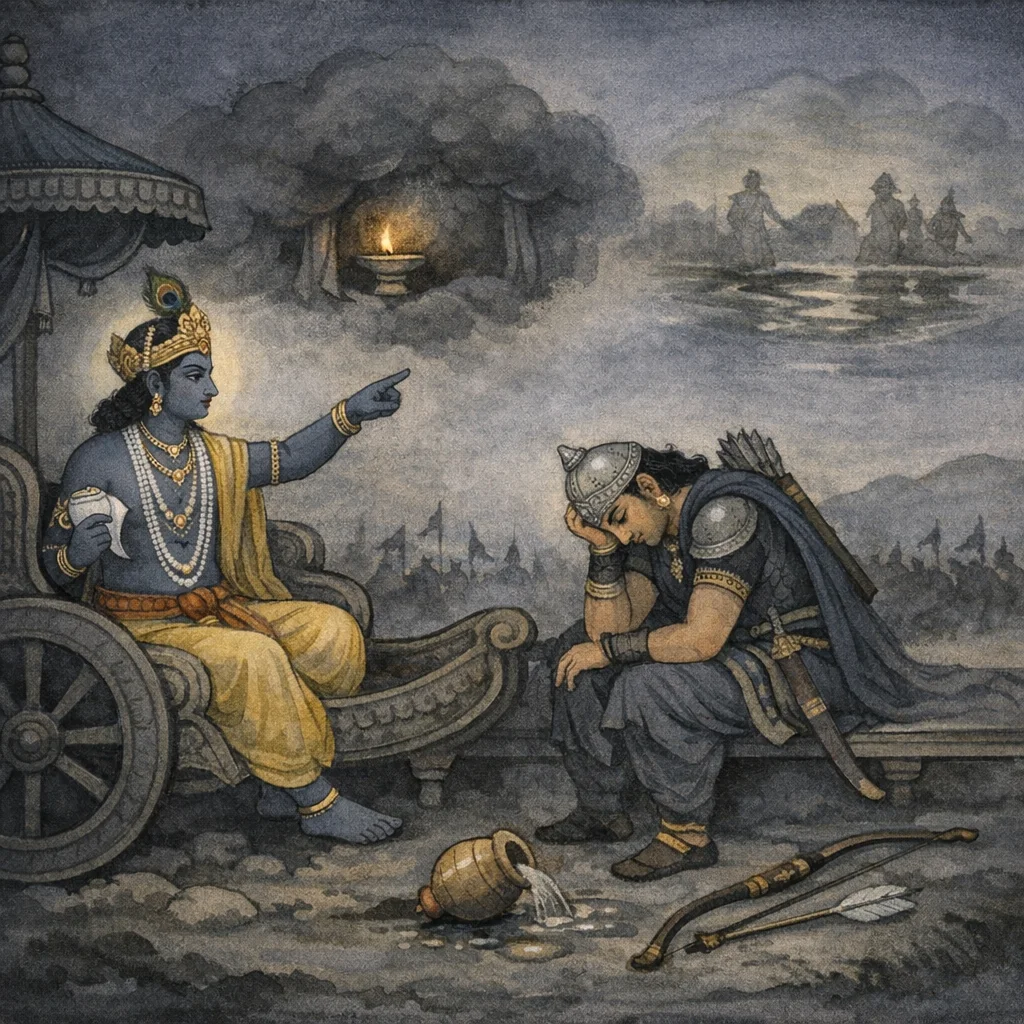
Darkness (lack of light), inactivity, negligence, and delusion—these arise when tamas increases, O joy of the Kurus.
Non-illumination, non-engagement, heedlessness, and bewilderment arise when tamas is intensified.
Aprakāśa is often translated metaphorically as ‘darkness’ but can be read as ‘absence of clarity.’ Apravṛtti may be ‘inactivity’ or ‘withdrawal from purposeful engagement’ rather than contemplative withdrawal.
FAQs
The verse links tamas with reduced clarity and initiative: confusion, avoidance of purposeful tasks, and lapses in attentiveness and responsibility.
Tamas is the guṇa most associated with concealment of discernment, limiting the mind’s capacity to accurately apprehend and respond.
It completes the triad of ‘signs of dominance’ for sattva (14.11), rajas (14.12), and tamas (14.13).
It can inform mental-health-adjacent self-reflection: when clarity and engagement drop, supportive routines and accountability can counter tamasic drift.