
Shloka 17
Dhyana Yoga — Atma Samyama Yoga
युक्ताहारविहारस्य युक्तचेष्टस्य कर्मसु । युक्तस्वप्नावबोधस्य योगो भवति दुःखहा ॥ ६.१७ ॥
yuktāhāra-vihārasya yukta-ceṣṭasya karmasu | yukta-svapnāvabodhasya yogo bhavati duḥkha-hā || 6.17 ||

ज्याचा आहार-विहार युक्त आहे, कर्मांत युक्त प्रयत्न आहे, तसेच ज्याचे झोपणे-जागणे युक्त आहे—त्याचा योग दुःखाचा नाश करणारा होतो.
जिसका आहार-विहार युक्त है, कर्मों में युक्त चेष्टा है तथा जिसका सोना-जागना युक्त है—उसका योग दुःख का नाश करने वाला होता है।
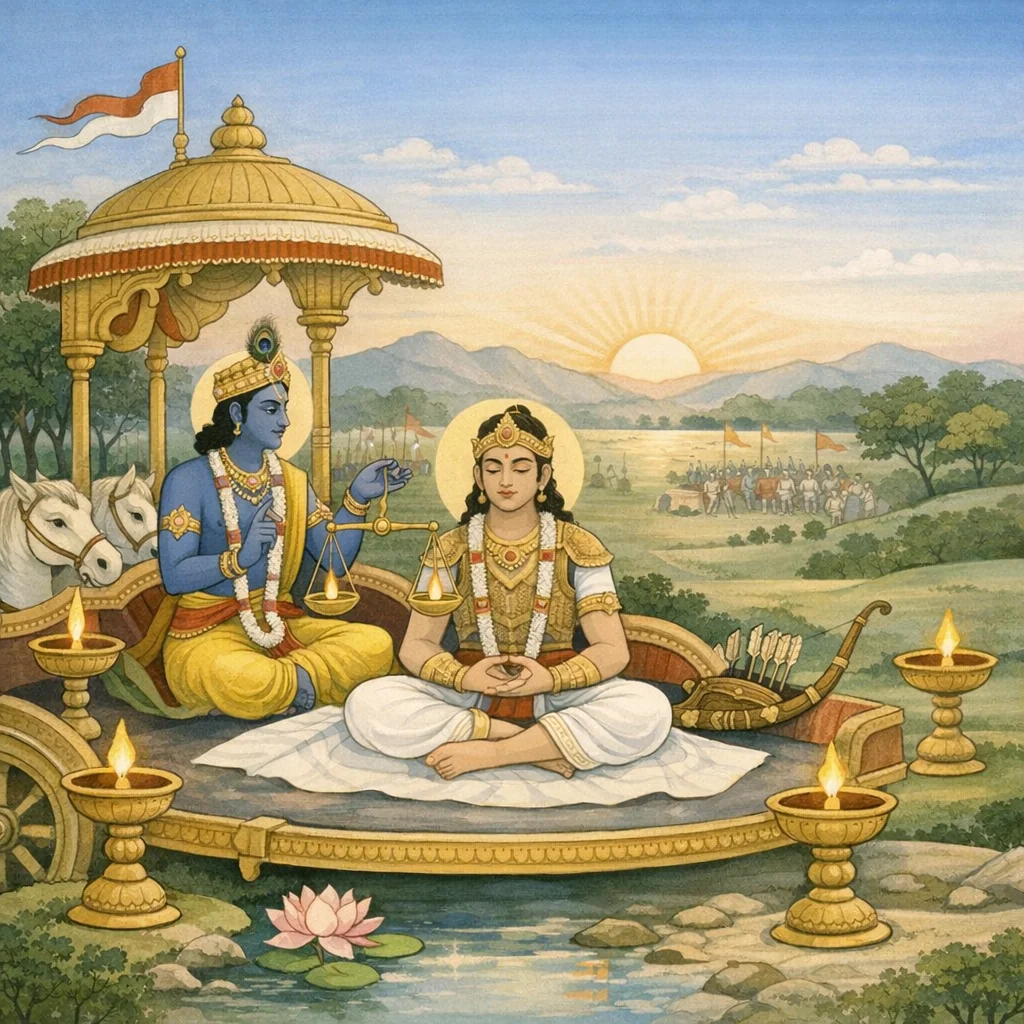
For one who is regulated in food and recreation, regulated in effort in actions, and regulated in sleep and waking, yoga becomes a remover of suffering.
‘Duḥkha-hā’ is sometimes rendered as ‘destroyer of sorrow’ in devotional idiom; academically it can be read as a pragmatic claim: balanced regimen makes yogic practice effective in alleviating distress rooted in mental instability.
FAQs
It links well-regulated habits to reduced distress: balanced routines stabilize arousal and attention, making contemplative practice more effective and emotionally protective.
By reducing agitation and inertia, regulation supports the mind’s capacity to rest in clarity, which the tradition associates with recognizing the Self beyond suffering.
Verses 6.16–6.17 form a pair: first rejecting extremes, then positively defining the balanced regimen that makes yoga ‘work’ as a transformative discipline.
Adopt sustainable routines: moderate nutrition, healthy recreation, consistent sleep, and measured effort at work—so meditation is supported rather than undermined by lifestyle.