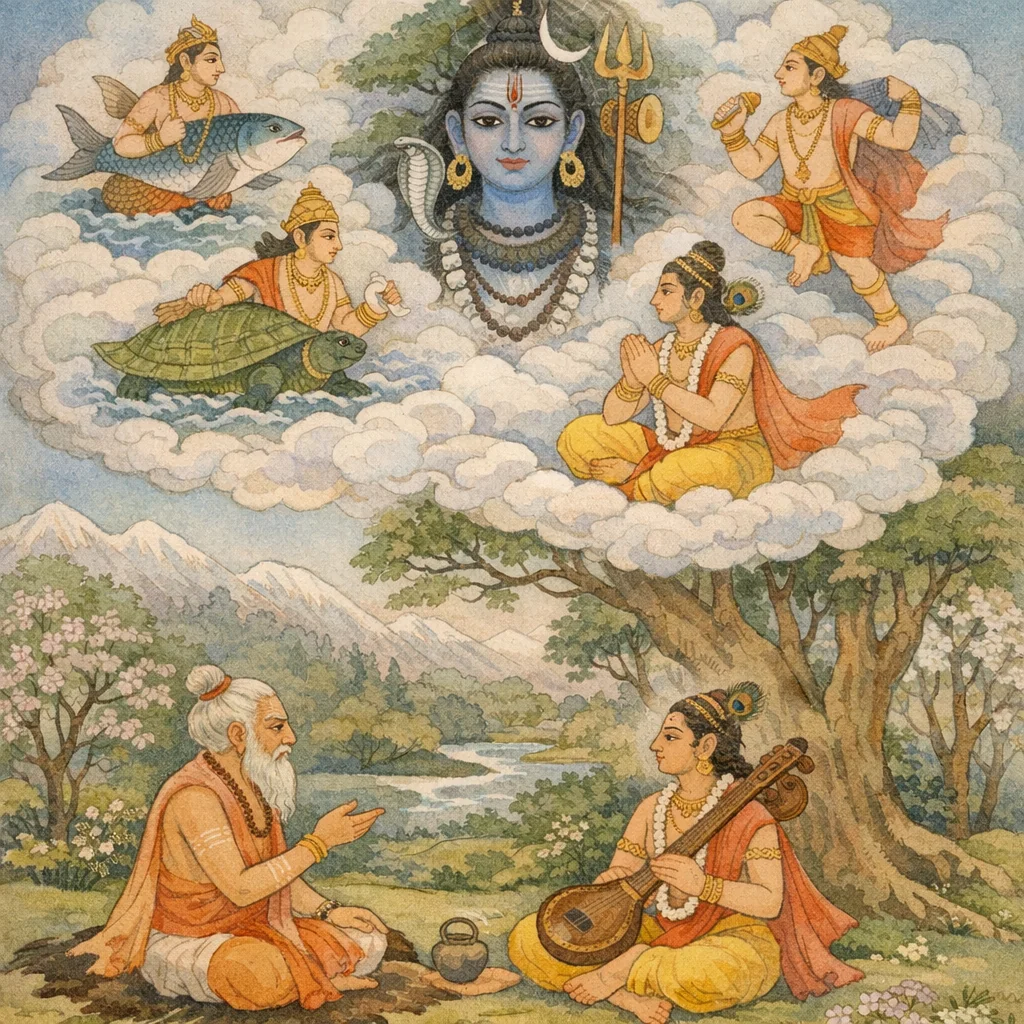
Adhyaya 61: The Second Sin-Destroying Hymn (Pāpaśamana Stava) and Syncretic Praise of Hari-Hara
द्वितीय-पापशमन-स्तवः (Dvitīya-Pāpaśamana-Stavaḥ)
Syncretic Praise of Hari-Hara
വാമനപുരാണത്തിലെ 61-ാം അധ്യായത്തിൽ പുലസ്ത്യ ഋഷി നാരദനോട് ‘ദ്വിതീയ പാപശമന-സ്തവം’ ഉപദേശിക്കുന്നു; അതിന്റെ സമ്യഗധ്യയനവും ജപവും പാപനാശകരമാണെന്ന് പ്രസ്താവിക്കുന്നു. അധ്യായം പ്രധാനമായും നമസ്കാരങ്ങളുടെ സ്തുതിമാലയാണ്; ഇവിടെ വൈഷ്ണവ-ശൈവ പ്രതീകങ്ങൾ സമന്വയത്തോടെ ഒഴുകുന്നു—മത്സ്യ, കൂർമ, ഹയഗ്രീവ, ത്രിവിക്രമ, നാരായണ, ഗരുഡാസന എന്നിവയ്ക്കൊപ്പം ശ്രീകണ്ഠ/നീലകണ്ഠ, കപർദി, ത്രിനയന, കാലാഗ്നി, രുദ്രദേവേശ തുടങ്ങിയ ശിവനാമങ്ങളും. അവസാനം നിരാകാര, നിരഞ്ജന തുടങ്ങിയ നിർഗുണ വിശേഷണങ്ങൾ കൊണ്ട് സ്തുത്യ ദേവതയെ സമ്പ്രദായപരിധികൾക്കപ്പുറം സർവ്വാതീതമായി സ്ഥാപിക്കുന്നു. സമാപനത്തിൽ സംകീർത്തനം, സ്മരണം, ശ്രവണം എന്നിവയെ ‘ബഹു-പാപ-നാശക’ മോക്ഷസാധനങ്ങളായി മഹത്വപ്പെടുത്തുന്നു; തീർത്ഥവിവരണം കുറവും ഹരിഹര-സൗഹൃദ ഭക്തിവ്യാകരണമാണ് മുഖ്യം।
Divine Beings
Mortal & Asura Figures
Key Content Points
- Pulastya-to-Nārada transmission: the sage presents a second “sin-destroying hymn,” asserting that proper study and recitation lead to pāpa-nāśa.
- Iconographic catalog as syncretic theology: a continuous sequence of namas-kāras spans Vaiṣṇava avatāras (Matsya, Kūrma, Trivikrama, Hayagrīva) and Śaiva forms/epithets (Trinayana, Kapardin, Kālāgni, Rudradeveśa), implying Hari-Hara concord.
- Soteriology of sound and memory: the closing verse elevates saṃkīrtana (chanting), smaraṇa (remembering), and śravaṇa (hearing) as purificatory practices with ‘bahu-pāpa-nāśana’ efficacy.
Shlokas in Adhyaya 61
Verse 1
इति श्रीवामनपुराणे षष्ठितमो ऽध्यायः पुलस्त्य उवाच द्वितीयं पापशमनं स्तवं वक्ष्यामि ते मुने येन सम्यगधीतेन पापं नाशं तु गच्चति
ഇങ്ങനെ ശ്രീ വാമനപുരാണത്തിലെ അറുപതാമത്തെ അധ്യായം സമാപ്തം. പുലസ്ത്യൻ പറഞ്ഞു—ഹേ മുനേ, പാപശമനം ചെയ്യുന്ന രണ്ടാമത്തെ സ്തവം ഞാൻ നിന്നോട് പറയും; അത് ശരിയായി പഠിച്ച്/പാരായണം ചെയ്താൽ പാപം തീർച്ചയായും നശിക്കുന്നു।
Verse 2
मत्स्यं नमस्ये देवेशं कूर्मं गोविन्दमेव च हयशीर्षं नमस्ते ऽहं भवं विष्णुं त्रिविक्रमम्
{"cosmic_form_present": false, "three_steps_described": false, "step_one_bhuloka": null, "step_two_bhuvarloka": null, "step_three_svarloka": null, "cosmic_scale_imagery": null, "universe_measurement": null}
Verse 4
ऊर्ध्वकेशं नृसिहं च रुपधारं कुरुध्वजम् कामपालमखण्डं च नमस्ये ब्राह्मणप्रियम्
{"recitation_mood": "solemn-sacred-topography", "suggested_raga": "Todi", "pace": "medium", "voice_tone": "grave, descriptive", "sound_elements": ["temple bell", "crackling fire for Hutāśana", "low damaru for Śiva", "wind over mountain ambience"]}
Verse 7
नमस्ये च गदापाणिं नमस्ये च कुशोशयम् अर्धनारीश्वरं देवं नमस्ये पापनाशनम्
ഗദാപാണിയെയും കുശപ്പുല്ലിന്മേൽ ശയിക്കുന്നവനെയും ഞാൻ നമസ്കരിക്കുന്നു; അർധനാരീശ്വര ദേവനെയും പാപനാശകനെയും വന്ദിക്കുന്നു.
Verse 8
गोपालं च सैवकुण्ठं नमस्ये चापराजितम् नमस्ये विश्वरूपं च सौगन्धिं सर्वदाशिवम्
ഞാൻ ഗോപാലനെയും സൈവകുണ്ഠനെയും അപരാജിതനെയും നമസ്കരിക്കുന്നു; വിശ്വരൂപനെയും സൗഗന്ധിയെയും സർവദാശിവനെയും വന്ദിക്കുന്നു.
Verse 63
पाञ्चालिकं हयग्रीवं स्वयम्भुवममरेश्वरम् नमस्ये पुष्कराक्षं च पयोगन्धिं च केशवम्
{"has_teaching": true, "teaching_type": "bhakti", "core_concept": "īśvara’s accessibility through many nāma-rūpa across kṣetra", "teaching_summary": "The divine is approached through multiple localized forms—protective (Rukmakavaca), sensory/ritual (Ghrāṇatarpaṇa), yogic (Mahāyoga), and supreme-personal (Puruṣottama)—indicating graded devotional entry points culminating in the Supreme Person.", "vedantic_theme": "Puruṣottama as the highest reality (parama-puruṣa) approached via saguṇa upāsanā", "practical_application": "Choose a practice suited to temperament: protective worship, disciplined sensory offerings, yoga-oriented devotion, and finally surrender to Puruṣottama as the integrating goal."}
Verse "
नमस्ये पद्मकिरणं नमस्ये वडवामुखम् कार्त्तिकेयं नमस्ये ऽहं बाह्लीकं शिखिनं तथा
I bow to Padmakiraṇa; I bow to Vaḍavāmukha. I bow to Kārttikeya; and likewise I bow to Bāhlīka and to Śikhin.
Verse No rivers, lakes, forests, or tīrthas are named in this verse
59
విప్రులు యజ్ఞములచే యజించు యజ్ఞేశ్వరుని, యజ్ఞసిద్ధికర్తను—ఆ సనాతన యజ్ఞపురుషుడైన విష్ణువును నేను ప్రణమించుచున్నాను।
Verse 19
श्रीकण्ठं वासुदेवं नीलकण्ठं सदण्डिनम् नमस्ये सर्वमनघं गौरीशं नकुलीस्वरम्
{"bali_present": false, "generosity_display": null, "daana_type": null, "shukracharya_interaction": null, "devotion_quality": null, "patala_reference": false}
Verse 25
अगस्तयं गरुडं विष्णुं कपिलं ब्रह्मवाङ्मयम् सनातनं च ब्रह्माणं नमस्ये ब्रह्मतत्परम्
ഞാൻ അഗസ്ത്യനെയും ഗരുഡനെയും വിഷ്ണുവിനെയും കപിലനെയും നമസ്കരിക്കുന്നു—ബ്രഹ്മം പവിത്രവാകായി പ്രത്യക്ഷപ്പെടുന്ന ബ്രഹ്മവാങ്മയസ്വരൂപനെ. കൂടാതെ പരബ്രഹ്മത്തിൽ തത്പരനായ സനാതന ബ്രഹ്മാവിനെയും പ്രണമിക്കുന്നു.
Verse 26
अप्रतर्क्यं चतुर्बाहुं सहस्रांशुं तपोमयम् नमस्ये धर्मराजानं देवं गरुडवाहनम्
തർക്കത്തിന് അഗമ്യൻ, ചതുര്ബാഹു, സഹസ്രകിരണപ്രഭയാൽ ദീപ്തൻ, തപോമയൻ—ഗരുഡവാഹനനായ ധർമ്മരാജ ദേവനെ ഞാൻ നമസ്കരിക്കുന്നു.
Verse 27
सर्वबूतगतं शान्तं निर्मलं सर्वलक्षणम् महायोगिनमव्यक्तं नमस्ये पापनाशनम्
{"bali_present": false, "generosity_display": null, "daana_type": null, "shukracharya_interaction": null, "devotion_quality": null, "patala_reference": false}
Frequently Asked Questions
By structuring a single continuous stava that alternates and interweaves Vaiṣṇava avatāra-names (e.g., Matsya, Kūrma, Trivikrama, Keśava) with explicitly Śaiva epithets (e.g., Trinayana, Kapardin, Rudradeveśa, Kālāgni), the chapter models a Harihara-compatible devotional practice: multiple sectarian iconographies are treated as valid manifestations within one purificatory address.
This chapter contains no explicit tīrtha catalogue or Kurukṣetra/Sarasvatī-basin topography; its sanctifying force is primarily liturgical rather than locational, grounding purification in recitation (saṃkīrtana), remembrance (smaraṇa), and hearing (śravaṇa) of the stava.
Pulastya emphasizes correct learning/study (samyag-adhyayana) of the hymn, and the concluding verse explicitly adds saṃkīrtana, smaraṇa, and śravaṇa as efficacious modes—treating the stava as a portable ritual instrument of purification independent of pilgrimage setting.