
Bhagavad Gita — Vibhuti Yoga, Shloka 13
Vibhuti Yoga
आहुस्त्वामृषयः सर्वे देवर्षिर्नारदस्तथा । असितो देवलो व्यासः स्वयं चैव ब्रवीषि मे ॥ १०.१३ ॥
āhus tvām ṛṣayaḥ sarve devarṣir nāradas tathā | asito devalo vyāsaḥ svayaṁ caiva bravīṣi me || 10.13 ||

എല്ലാ ഋഷിമാരും അങ്ങനെ തന്നെയാണെന്ന് പറയുന്നു; ദേവർഷി നാരദനും, അസിതനും, ദേവലനും, വ്യാസനും; ഭവാൻ തന്നെയും എനിക്കു അതേപോലെ പറയുന്നു.
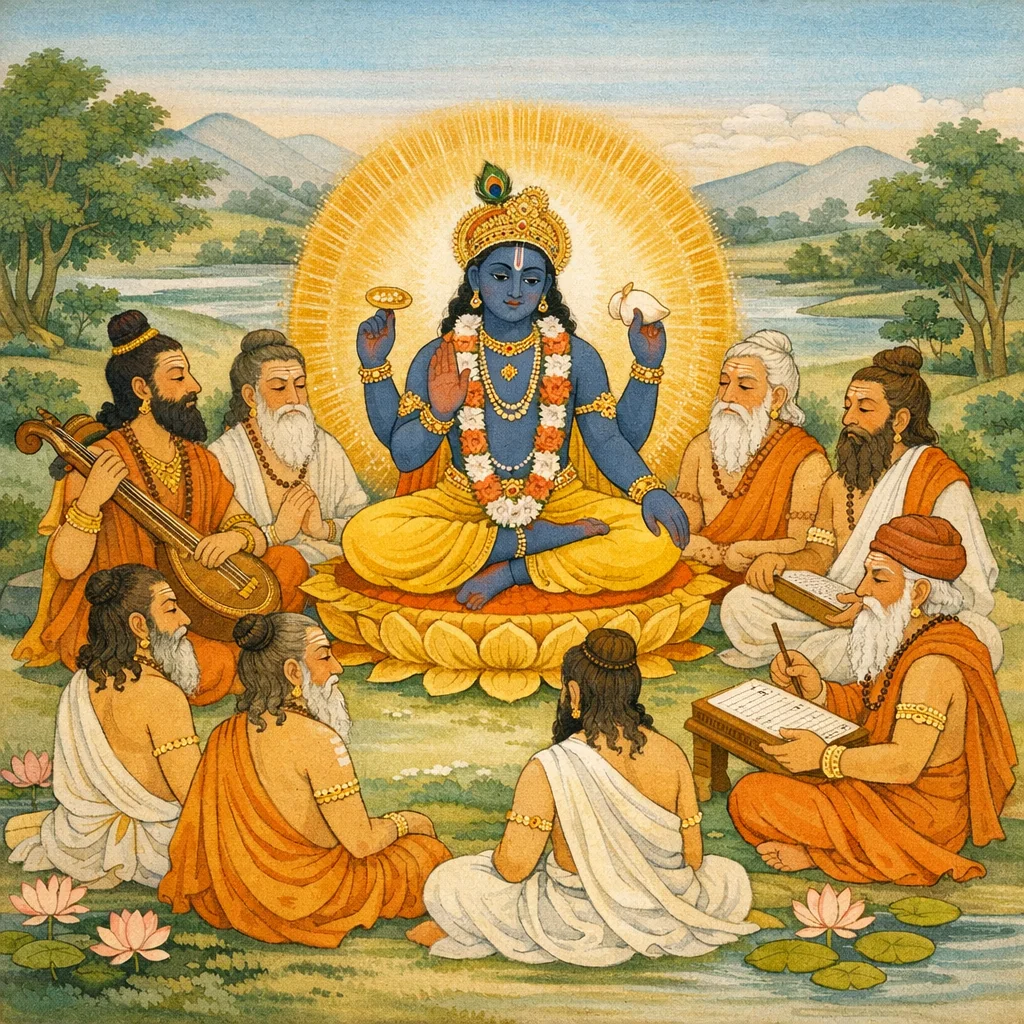
All the sages declare You (thus), as do the divine seer Nārada, Asita, Devala, and Vyāsa; and You Yourself also tell me so.
All the seers speak of You in this way—likewise the divine seer Nārada, Asita, Devala, Vyāsa—and You yourself also say this to me.
This verse functions as an appeal to testimony (śruti/smṛti-like authority and revered teachers). Differences among translations are minimal; the main scholarly note is its rhetoric of validation through recognized lineages.
FAQs
Citing trusted authorities can stabilize belief and reduce uncertainty, especially when personal experience aligns with respected testimony.
The verse does not add a new ontology; it supports claims about Krishna’s status by invoking recognized seers, implying that ultimate truths are accessible through both revelation and realized insight.
Arjuna strengthens his affirmation (10.12) by referencing established sages and Krishna’s own teaching, legitimizing the forthcoming exposition on divine manifestations.
It suggests a balanced approach to knowledge: combine critical reflection with engagement in credible traditions, mentors, and peer communities rather than relying solely on isolated opinion.