
Bhagavad Gita — Shraddhatraya Vibhaga Yoga, Shloka 5
Shraddhatraya Vibhaga Yoga
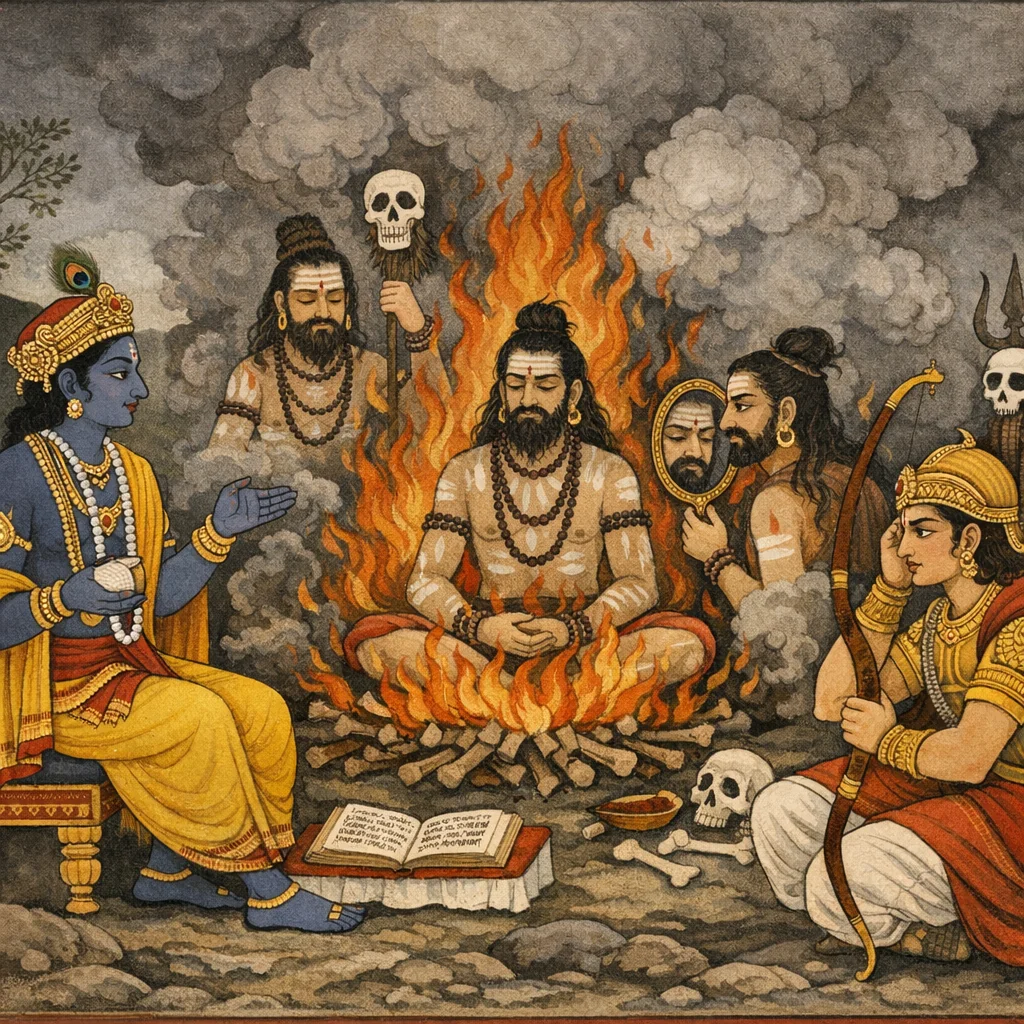
अशास्त्रविहितं घोरं तप्यन्ते ये तपो जनाः । दम्भाहंकारसंयुक्ताः कामरागबलान्विताः ॥ १७.५ ॥
aśāstra-vihitaṁ ghoraṁ tapyante ye tapo janāḥ | dambhāhaṅkāra-saṁyuktāḥ kāma-rāga-balānvitāḥ || 17.5 ||

ശാസ്ത്രവിധിയില്ലാതെ ഭീകരമായ തപസ്സു ചെയ്യുന്നവർ—ദംഭവും അഹങ്കാരവും ചേർന്നവരും, കാമം, രാഗം, ബലം എന്നിവയാൽ പ്രേരിതരുമായവർ—
जो लोग शास्त्रविधि से रहित घोर तप करते हैं और दम्भ तथा अहंकार से युक्त हैं तथा काम, राग और बल से भी युक्त हैं—
Those people who undertake severe austerities not enjoined by scripture, endowed with hypocrisy and egoism, and driven by desire, attachment, and (self-asserted) force—
This is the opening half of a longer characterization (continued in 17.6). ‘घोर’ is best rendered as ‘severe/harsh’ rather than sensational; the critique targets motivation (display, ego, craving) and lack of normative guidance, not disciplined asceticism per se.
FAQs
It critiques self-punishing or performative practices when fueled by ego, craving, and the need to display spirituality—suggesting such motivations can reinforce unhealthy self-concepts.
Austerity divorced from dharmic guidance and right intention is portrayed as not leading toward liberation; it may intensify attachment and identification rather than reduce it.
After classifying faith by guṇas, Krishna begins assessing practices; here he flags a category of austerity judged problematic due to its sources and lack of scriptural grounding.
It can be applied to evaluate any demanding self-improvement regimen: ask whether it is guided by wisdom and well-being, or by image-management, compulsion, and ego.