
Bhagavad Gita — Shraddhatraya Vibhaga Yoga, Shloka 13
Shraddhatraya Vibhaga Yoga
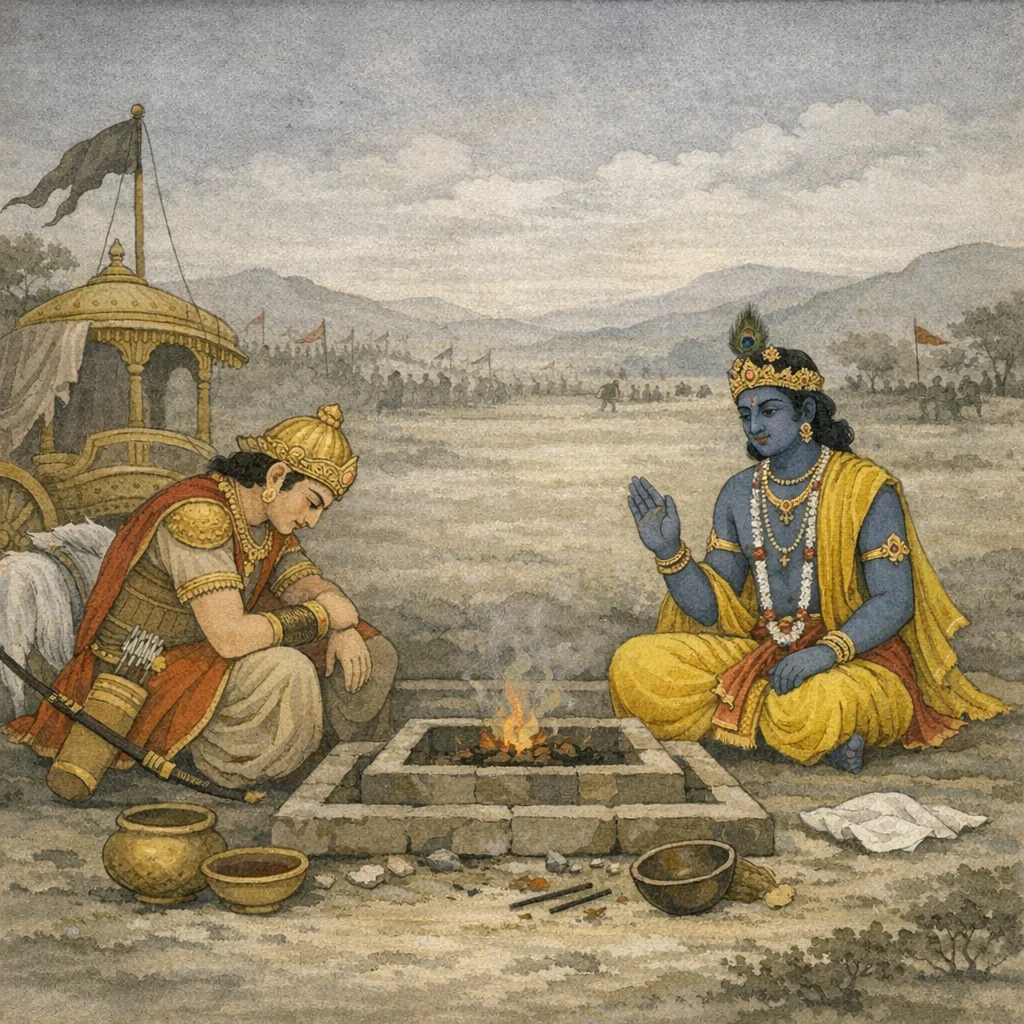
विधिहीनमसृष्टान्नं मन्त्रहीनमदक्षिणम् । श्रद्धाविरहितं यज्ञं तामसं परिचक्षते ॥ १७.१३ ॥
vidhi-hīnam asṛṣṭānnaṃ mantra-hīnam adakṣiṇam | śraddhā-virahitaṃ yajñaṃ tāmasaṃ paricakṣate || 17.13 ||

ശാസ്ത്രവിധിയില്ലാത്തതും, അന്നദാനമില്ലാത്തതും, മന്ത്രങ്ങളില്ലാത്തതും, ദക്ഷിണയില്ലാത്തതും, ശ്രദ്ദയില്ലാത്തതുമായ യാഗത്തെ താമസയാഗമെന്ന് പറയുന്നു.
जो यज्ञ शास्त्रविधि से रहित, अन्नदान से रहित, मन्त्र से रहित, दक्षिणा से रहित और श्रद्धा से रहित होता है, उसे तामस कहते हैं।
A sacrifice lacking prescribed procedure, lacking proper distribution of food, lacking mantra, lacking honorarium/gift, and lacking faith—this is called tamasic.
‘Asṛṣṭānna’ is variously glossed as ‘without food-offering’ or ‘without distribution of food (to participants/recipients).’ ‘Dakṣiṇā’ may be a priestly fee in ritual context, or more broadly a due gift; academic translations often keep it neutral as ‘gift/fee.’
FAQs
The verse treats ‘faith’ as committed attention and seriousness; when absent, actions become mechanical or careless, reflecting tamasic disengagement.
Tamas obscures understanding and order; the listed deficiencies portray a practice detached from both normative structure and inner orientation.
It completes the threefold classification of sacrifice (sattvic/rajasic/tamasic) following the earlier dietary triad.
It can be read as a critique of performative or poorly grounded practices—religious or secular—done without care, competence, or sincere commitment.