
Bhagavad Gita — Shraddhatraya Vibhaga Yoga, Shloka 1
Shraddhatraya Vibhaga Yoga
अर्जुन उवाच । ये शास्त्रविधिमुत्सृज्य यजन्ते श्रद्धयान्विताः । तेषां निष्ठा तु का कृष्ण सत्त्वमाहो रजस्तमः ॥ १७.१ ॥
arjuna uvāca | ye śāstra-vidhim utsṛjya yajante śraddhayānvitāḥ | teṣāṁ niṣṭhā tu kā kṛṣṇa sattvam āho rajas tamaḥ || 17.1 ||

അർജുനൻ പറഞ്ഞു: ഹേ കൃഷ്ണാ! ശാസ്ത്രവിധിയെ ഉപേക്ഷിച്ചിട്ടും ശ്രദ്ദയോടെ യജിക്കുന്നവരുടെ നിഷ്ഠ എങ്ങനെയതാണ്? അത് സാത്ത്വികമാണോ, രാജസികമാണോ, അല്ലെങ്കിൽ താമസികമാണോ?
अर्जुन बोले—हे कृष्ण! जो लोग शास्त्रविधि को छोड़कर श्रद्धायुक्त होकर यजन करते हैं, उनकी निष्ठा क्या है? क्या वह सात्त्विक है या राजसिक अथवा तामसिक?
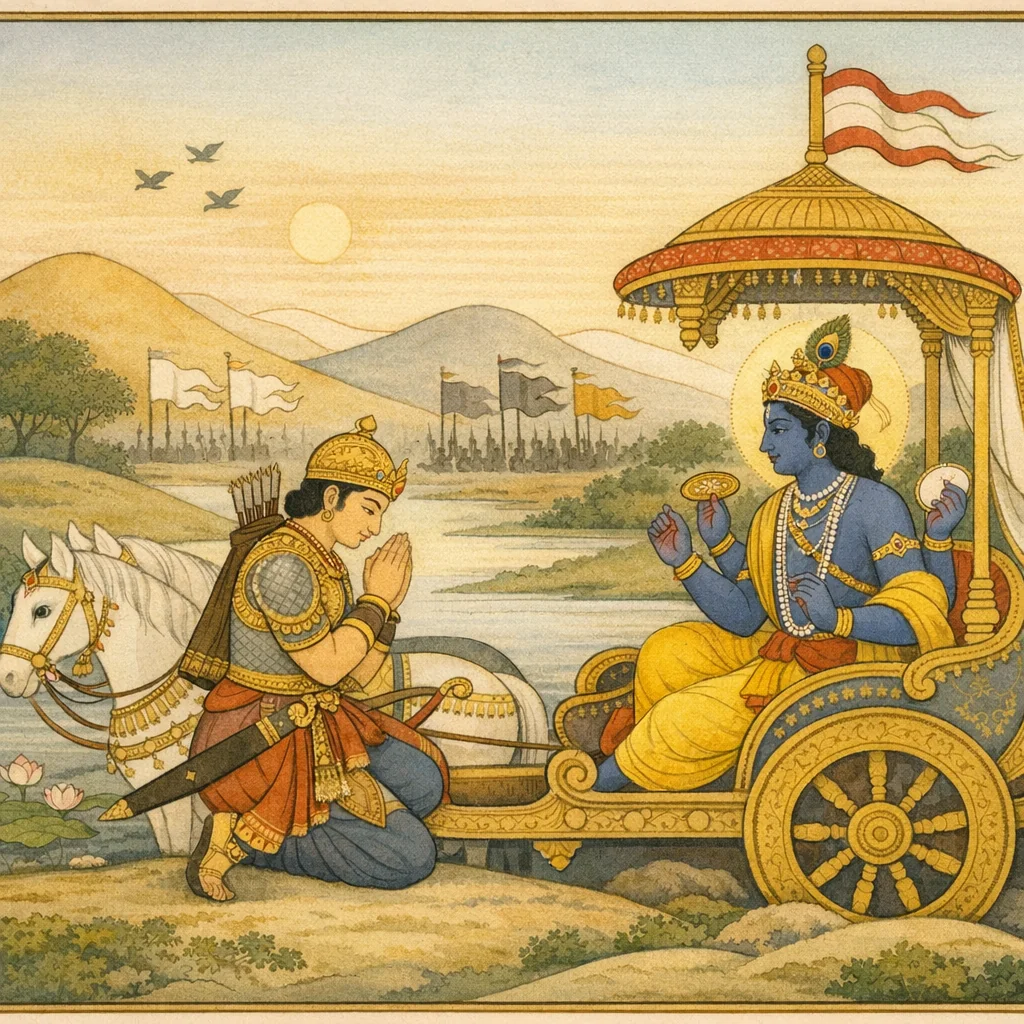
Arjuna said: Those who, setting aside scriptural injunction, worship with faith—what is their orientation/steadfastness, O Krishna? Is it sattva, rajas, or tamas?
‘यजन्ते’ is often translated as ‘worship/sacrifice,’ but can include broader religious practice. ‘निष्ठा’ may mean steadiness, commitment, or underlying disposition; the question frames Chapter 17’s typology of faith by the guṇas.
FAQs
Arjuna’s question distinguishes sincerity (faith) from discernment (norms), asking how underlying temperament (guṇas) shapes religious commitment.
The guṇa-framework implies that faith is not uniform; its quality affects spiritual outcomes by orienting the practitioner toward clarity, restlessness, or obscuration.
It directly follows 16.23–24 on śāstra as authority, probing what to make of faith-based practice that departs from injunction—setting up Krishna’s analysis in Chapter 17.
It invites reflection on whether one’s spiritual or ethical commitments arise from clarity and compassion, from egoic striving, or from confusion and habit.