
Shloka 3
Sankhya Yoga — Sankhya Yoga
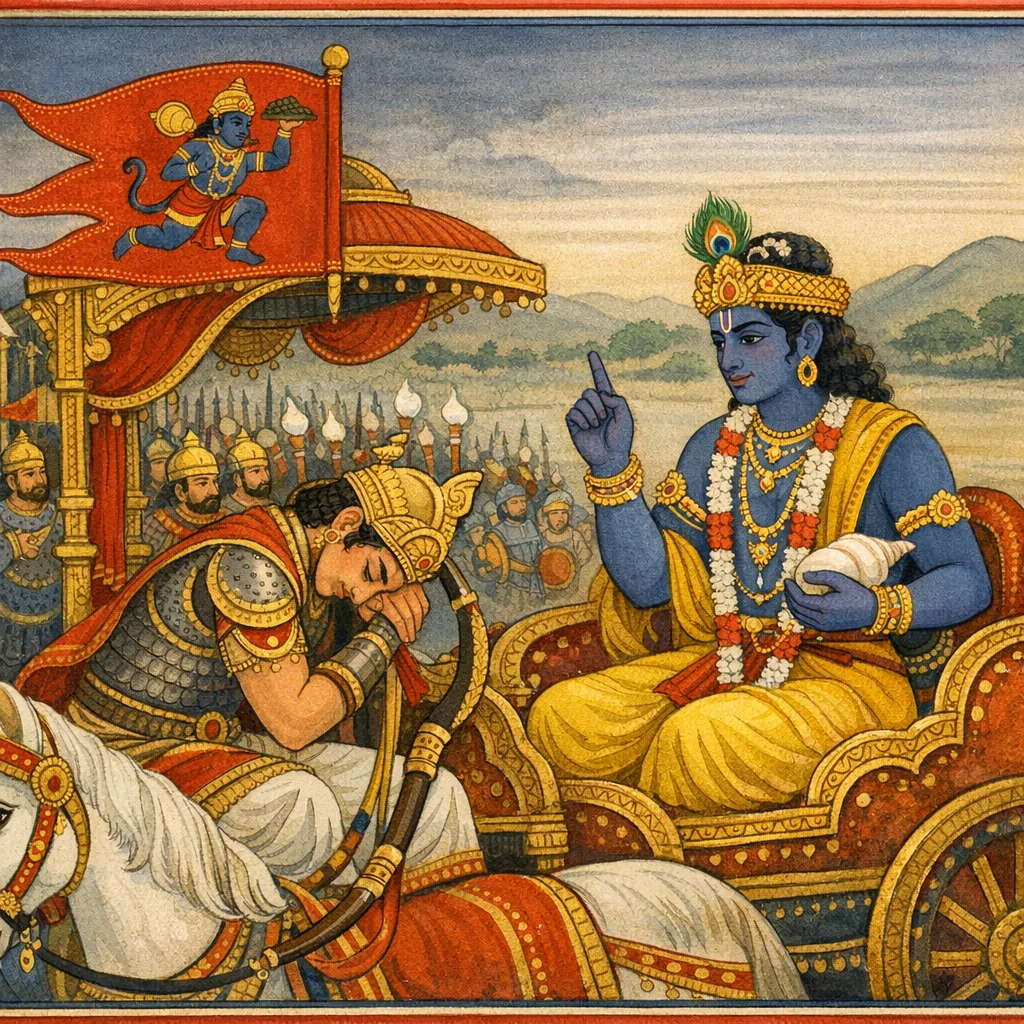
क्लैब्यं मा स्म गमः पार्थ नैतत्त्वय्युपपद्यते । क्षुद्रं हृदयदौर्बल्यं त्यक्त्वोत्तिष्ठ परन्तप ॥ २....
klaibyaṃ mā sma gamaḥ pārtha naitat tvayy upapadyate | kṣudraṃ hṛdayadaurbalyaṃ tyaktvottiṣṭha parantapa || 2.3 ||

ഹേ പാർഥ! ക്ളൈബ്യം (കൈര്യം) നീ ഒരിക്കലും സ്വീകരിക്കരുത്; അത് നിനക്കു യോജിക്കുന്നതല്ല. ഈ തുച്ഛമായ ഹൃദയദൗർബല്യം ഉപേക്ഷിച്ച് എഴുന്നേൽക്കുക, ഹേ പരന്തപ!
हे पार्थ! तू कायरता को मत प्राप्त हो; यह तुझमें शोभा नहीं देता। इस तुच्छ हृदय-दौर्बल्य को छोड़कर उठ खड़ा हो, हे परन्तप।
Do not fall into weakness (klaibya), O Pārtha; it does not befit you. Abandon this petty faintness of heart and arise, O scorcher of foes (parantapa).
Because the input is truncated, the final pāda should be confirmed. ‘klaibya’ is often rendered ‘cowardice/impotence’; academically it is best treated as ‘enervating weakness’ without importing unnecessary sexual connotations.
FAQs
Krishna targets the affective core—‘faintness of heart’—as an obstacle to clear judgment, urging Arjuna toward steadiness and agency.
The metaphysical teaching is not yet stated, but the verse prepares for it by demanding a stable inner posture from which discernment can arise.
It continues Krishna’s corrective response, shifting from critique (2.2) to exhortation (2.3).
It can be applied as encouragement to distinguish sensitivity from paralysis, and to act responsibly once one’s ethical commitments are clarified.