
Shloka 5
Karma Yoga — Karma Yoga
न हि कश्चित्क्षणमपि जातु तिष्ठत्यकर्मकृत् । कार्यते ह्यवशः कर्म सर्वः प्रकृतिजैर्गुणैः ॥ ३.५ ॥
na hi kaścit kṣaṇam api jātu tiṣṭhaty akarmakṛt | kāryate hy avaśaḥ karma sarvaḥ prakṛtijair guṇaiḥ || 3.5 ||

ഒരാളും ഒരിക്കലും ഒരു ക്ഷണവും കർമ്മമില്ലാതെ നില്ക്കുന്നില്ല; പ്രകൃതിയിൽ നിന്നുയർന്ന ഗുണങ്ങൾ എല്ലാവരെയും നിർബന്ധിച്ച് കർമ്മം ചെയ്യിക്കുന്നു.
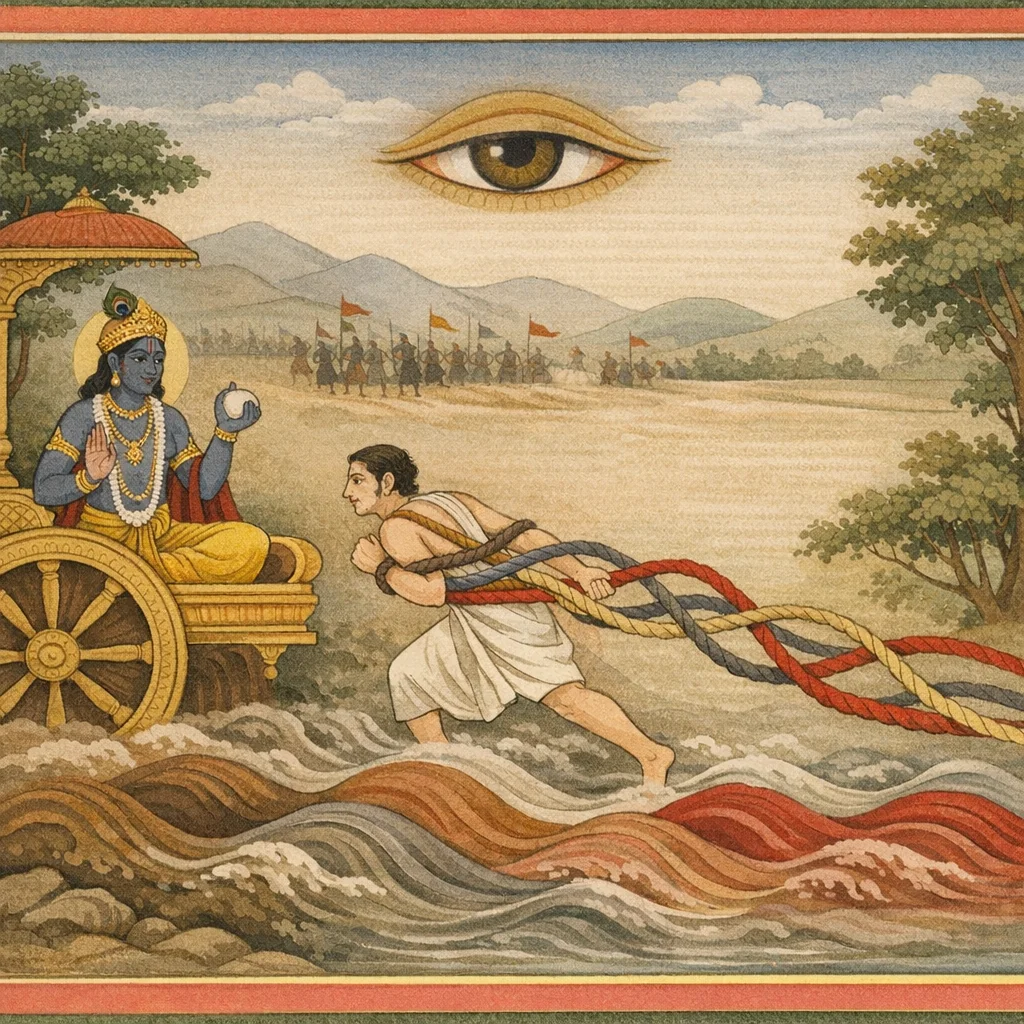
For no one ever remains even for a moment without performing action; everyone is compelled to act by the qualities born of nature.
Indeed, no one ever stands even for a moment without doing action; everyone is made to act, helplessly as it were, by the guṇas arising from nature (prakṛti).
The verse aligns with Sāṅkhya-Yoga psychology: guṇas (sattva/rajas/tamas) condition behavior. Some traditions stress ‘compelled’ as descriptive of ordinary embodied life, while allowing for a liberated agent’s non-identification with action.
FAQs
The verse observes that mental and bodily processes continue even when one tries to ‘do nothing.’ It highlights how habits and dispositions (akin to guṇas) drive behavior, implying that self-mastery requires understanding these drivers rather than denying them.
Action is attributed to prakṛti’s modalities, suggesting a layered account of agency: the empirical person acts under conditioning, while insight can relocate identity away from compulsive patterns.
It supports Krishna’s argument that Arjuna cannot resolve his dilemma by attempting inactivity; embodied life entails continuous functioning.
Recognize that behavior is shaped by temperament, environment, and conditioning. Practical change involves working with these factors—sleep, diet, community, training—rather than relying on willpower alone.