
Bhagavad Gita — Karma Yoga, Shloka 41
Karma Yoga
तस्मात्त्वमिन्द्रियाण्यादौ नियम्य भरतर्षभ । पाप्मानं प्रजहि ह्येनं ज्ञानविज्ञाननाशनम् ॥ ३.४१ ॥
tasmāt tvam indriyāṇy ādau niyamya bharatarṣabha | pāpmānaṁ prajahi hy enaṁ jñāna-vijñāna-nāśanam || 3.41 ||

അതിനാൽ, ഭാരതശ്രേഷ്ഠാ, ആദ്യം ഇന്ദ്രിയങ്ങളെ നിയന്ത്രിച്ച്, ജ്ഞാനവും വിജ്ഞാനവും നശിപ്പിക്കുന്ന ഈ പാപകാരകത്തെ നീ തീർച്ചയായും ഉപേക്ഷിക്ക.
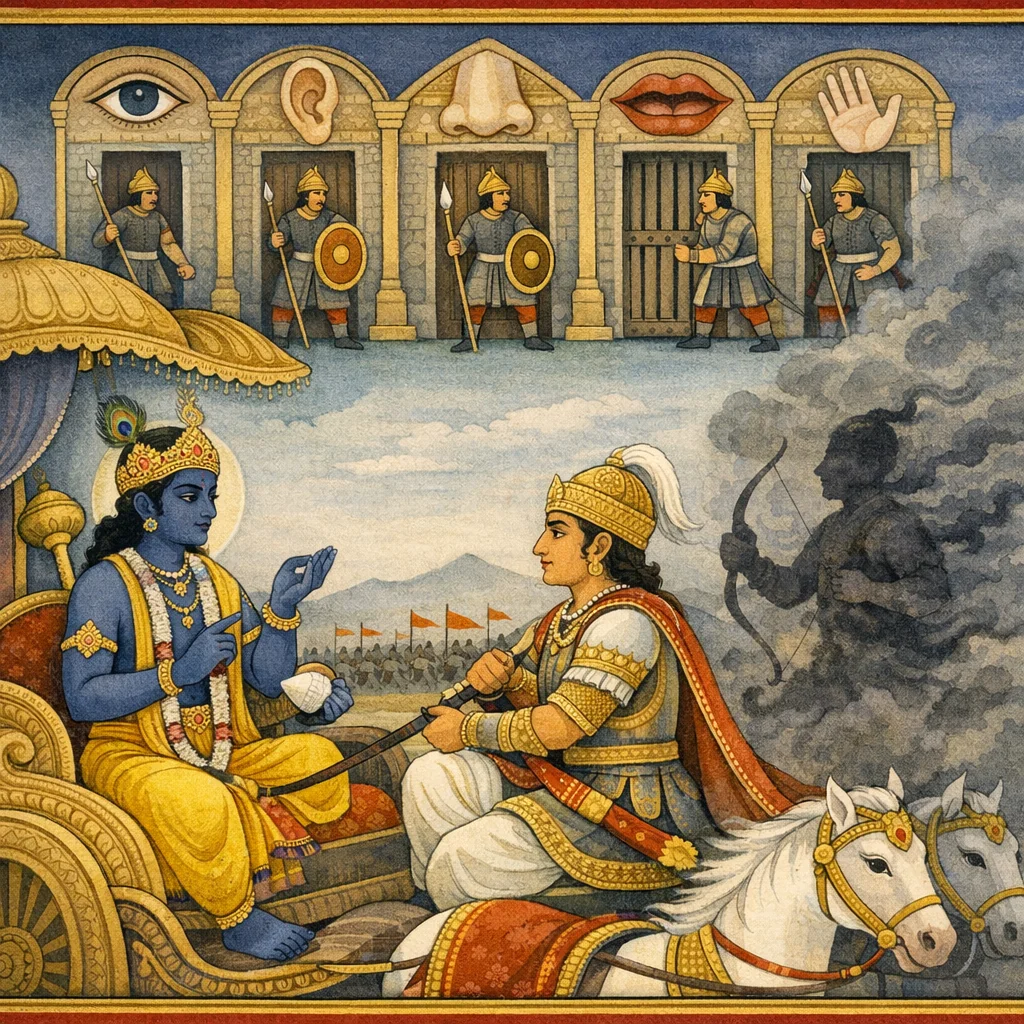
Therefore, O best of the Bharatas, first restrain the senses and cast off this harmful factor which destroys knowledge and realized understanding.
Therefore, having first regulated the senses, O Bharatarṣabha, dispel this harmful tendency, the destroyer of knowledge and practical discernment.
‘Pāpman’ can be read as ‘evil’ in devotional contexts; academically it may be rendered ‘harmful defilement/tendency.’ ‘Jñāna-vijñāna’ is often distinguished as theoretical knowledge vs lived/realized understanding.
FAQs
It recommends starting with manageable behavioral levers (sensory regulation) to reduce impulsive loops that undermine judgment.
By stabilizing the instruments (senses/mind), the embodied agent can allow knowledge to function without being veiled by rajas-driven desire.
This is the transition from diagnosis (desire as obstacle) to method (discipline beginning with the senses).
Set boundaries around stimuli (media, consumption), build routines, and use attention-training practices to support clearer decisions.