
Bhagavad Gita — Gunatraya Vibhaga Yoga, Shloka 23
Gunatraya Vibhaga Yoga
उदासीनवदासीनो गुणैर्यो न विचाल्यते । गुणा वर्तन्त इत्येव योऽवतिष्ठति नेङ्गते ॥ १४.२३ ॥
udāsīna-vad āsīno guṇair yo na vicālyate | guṇā vartanta ity eva yo ’vatiṣṭhati neṅgate || 14.23 ||

ഗുണങ്ങളാൽ ചലിക്കപ്പെടാത്തവനായി, ഉദാസീനനെന്നപോലെ ഇരിക്കുന്നു; ‘ഗുണങ്ങളേ പ്രവർത്തിക്കുന്നുള്ളൂ’ എന്ന ബോധത്തിൽ അവൻ സ്ഥിരനായി നിലകൊള്ളുന്നു, കുലുങ്ങുന്നില്ല.
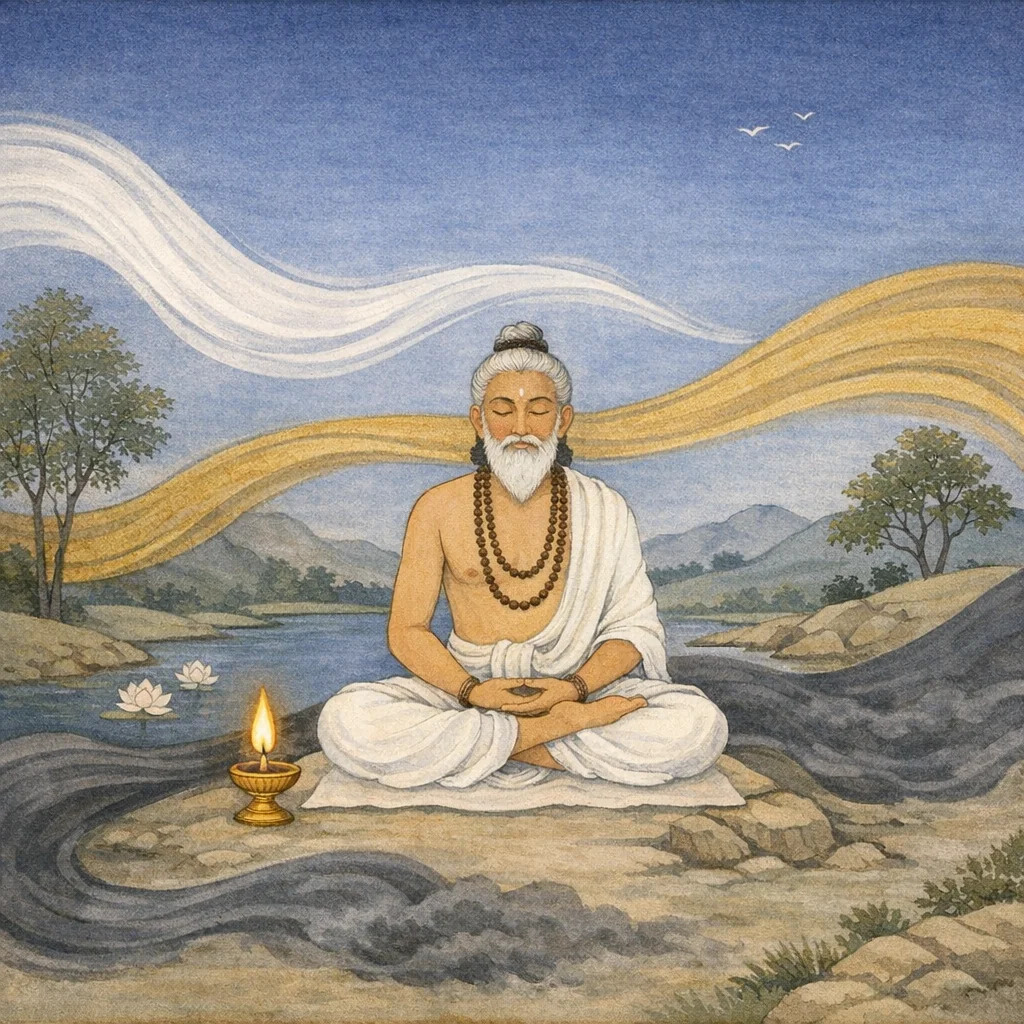
Seated as if indifferent, he is not shaken by the guṇas; thinking ‘the guṇas alone operate,’ he remains steady and does not waver.
Remaining as though neutral, one who is not disturbed by the guṇas—holding (the view) ‘the guṇas proceed’—stands firm and does not move.
“Udāsīna-vat” can be misunderstood as apathy; traditional exegesis typically clarifies it as inner detachment rather than lack of care. The line “guṇā vartante” echoes the agency shift also found in 3.27.
FAQs
It describes a stance of observation: emotions and impulses occur, but they do not dislodge one’s center. The cognitive reframe “these are patterns operating” reduces identification.
The verse implies a distinction between the witnessing principle and prakṛti’s modalities. The guṇātīta remains established in the witness-like standpoint while guṇas continue their functions.
It continues Krishna’s list of traits, deepening 14.22 by specifying the inner posture (udāsīna-vat) and the explanatory insight (“guṇā vartante”).
As a practice cue: when strong moods arise, note them as conditioned processes (“this is a state passing through”) and return to steady attention rather than reacting impulsively.