
Bhagavad Gita — Gunatraya Vibhaga Yoga, Shloka 18
Gunatraya Vibhaga Yoga
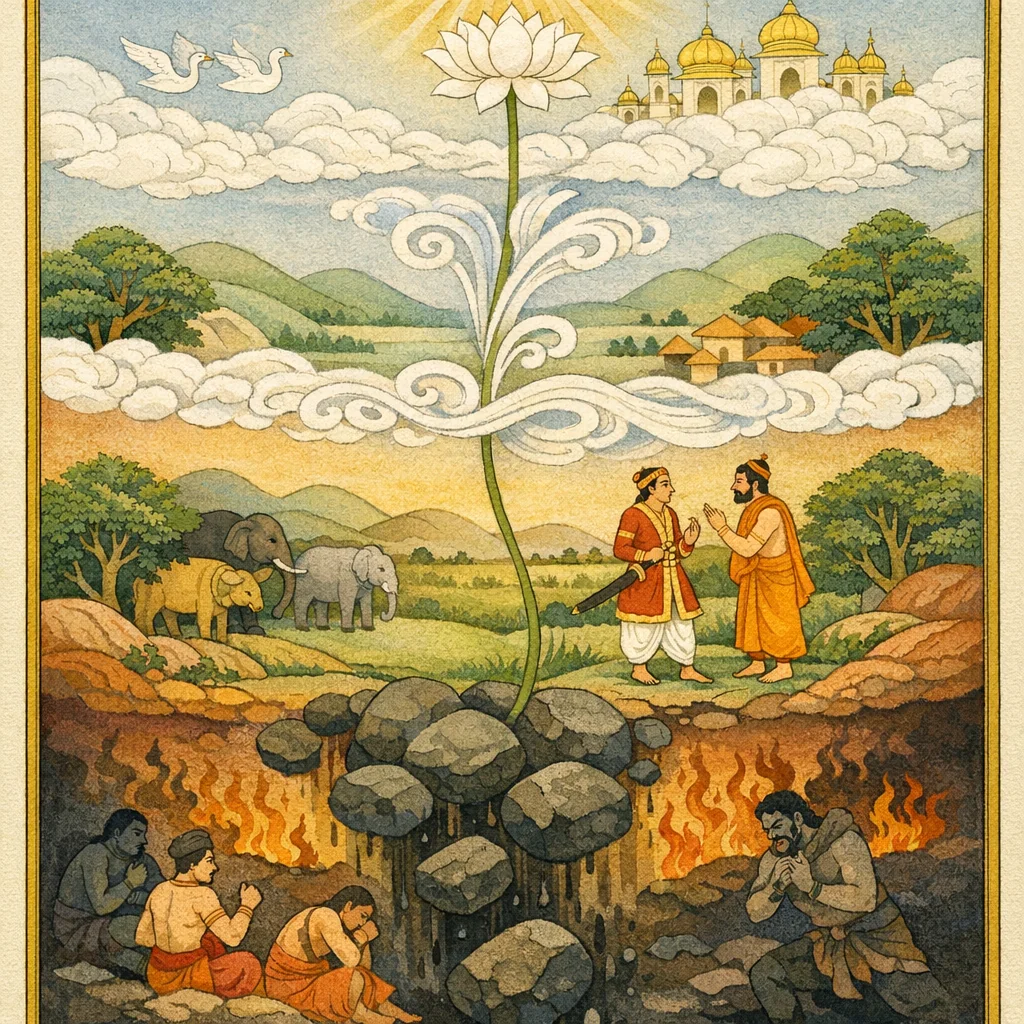
ऊर्ध्वं गच्छन्ति सत्त्वस्था मध्ये तिष्ठन्ति राजसाः । जघन्यगुणवृत्तिस्था अधो गच्छन्ति तामसाः ॥ १४.१८ ॥
ūrdhvaṃ gacchanti sattva-sthā madhye tiṣṭhanti rājasāḥ | jaghanya-guṇa-vṛtti-sthā adho gacchanti tāmasāḥ || 14.18 ||

സത്ത്വത്തിൽ സ്ഥാപിതരായവർ മേലോട്ടു ഗമിക്കുന്നു; രജസ്സിൽ ഉള്ളവർ മദ്ധ്യത്തിൽ നിലകൊള്ളുന്നു; അധമഗുണമായ തമസ്സിന്റെ പ്രവൃത്തിയിൽ സ്ഥാപിതരായവർ താഴോട്ടു പോകുന്നു.
Those established in sattva go upward; the rajasic remain in the middle; those established in the lowest quality’s activity (tamas) go downward.
Those abiding in sattva proceed upward; the rajasic stand in the middle; those situated in the activity of the lowest quality, the tamasic, go downward.
Traditional readings often interpret “upward/middle/downward” as higher/lower rebirths or elevated/degraded states of consciousness. Academic readings may keep the spatial metaphor while noting it can signify hierarchical valuation of states rather than literal geography.
FAQs
“Upward” can be read as movement toward clarity, stability, and ethical refinement; “downward” as increased confusion and inertia. The verse maps how dominant tendencies shape one’s overall direction.
In a karmic-rebirth framework, it suggests that guṇa-dominance conditions post-mortem trajectories. In a non-literal register, it describes graded states within embodied life.
After naming the characteristic products of each guṇa (14.17), the text states their broader “directional” consequences, reinforcing the evaluative structure of the chapter.
Use it as a diagnostic: if habits increase clarity and compassion, one is “moving upward”; if habits increase restlessness or dullness, one is stagnating or declining. It encourages intentional cultivation of supportive routines.